Esta parte aún no se ha traducido, por lo que se muestra en inglés.
Historia
The Ulytau pastures became part of the lands of Jochi, Genghis Khan’s eldest son, after the Mongol campaigns of 1219-12241. Jochi died before his father: the authors of a 2022 study follow the chronicler al-Qarshi, who gives 622 AH (1225), and treat the previously accepted 1227 as an error1. Legendary accounts in works of the 15th and 16th centuries say he died while hunting, and Kazakh legends recorded in the late 19th and early 20th centuries tell that he died on a hunt for kulans, the wild asses of the steppe1. Kazakhstan’s tentative-list text for UNESCO describes Ulytau as the burial ground of Genghis Khan’s descendants and of the Golden Horde’s rulers after the Mongol conquest2.
The first written mention of the mausoleum dates from 15821. In 1946 the archaeologist Alkei Margulan opened two burials inside it, robbed in 1929: the first held a wooden box, human and animal bones, a camel skull and scraps of leather, cloth and banner; the second, another skeleton and a box on a tiled floor1. Drawing on the legends and the finds, Margulan took the first burial to be Jochi’s and dated the building to 1228; Kazakhstan’s 2020 State List also gives the 13th century1,3. Radiocarbon dating published in 2022 placed the burial box at about 1245, after Jochi’s death, and the building in the 14th century; its authors think Jochi lies elsewhere, buried secretly as Chinggisid custom required1.
Arquitectura
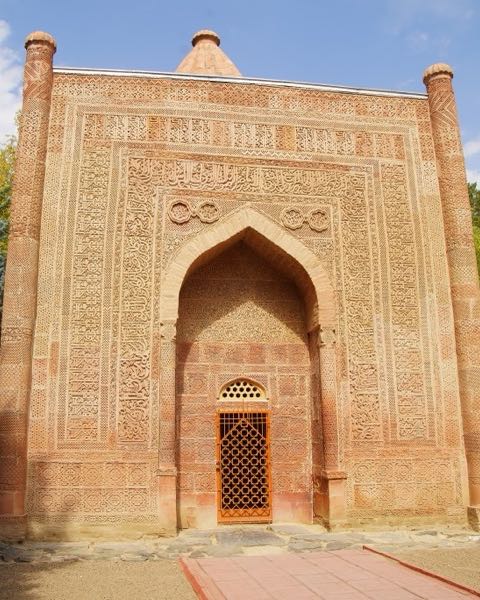
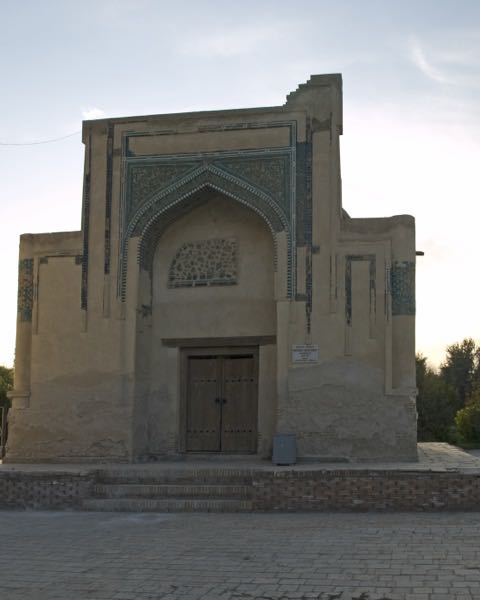
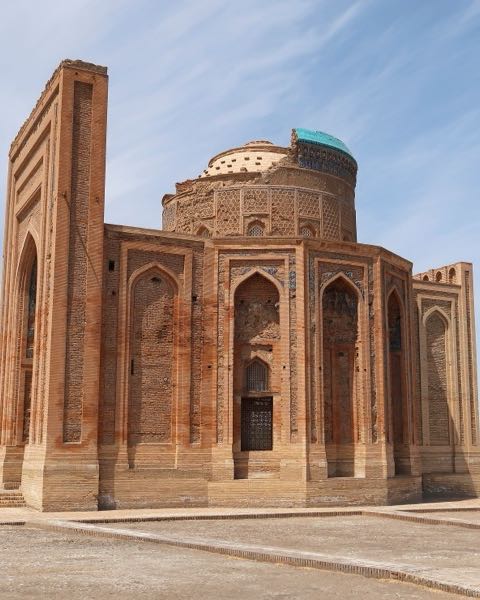
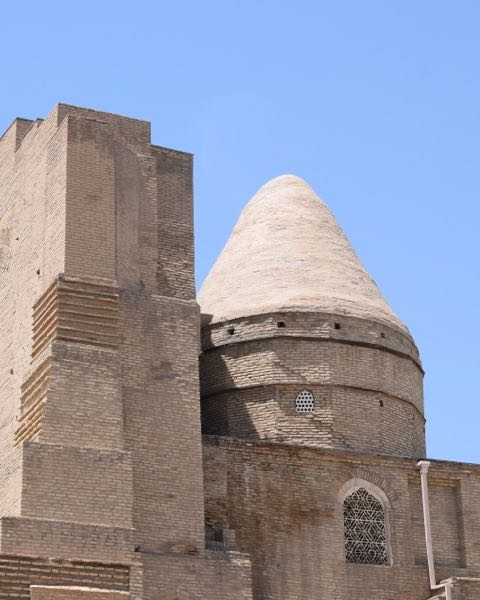
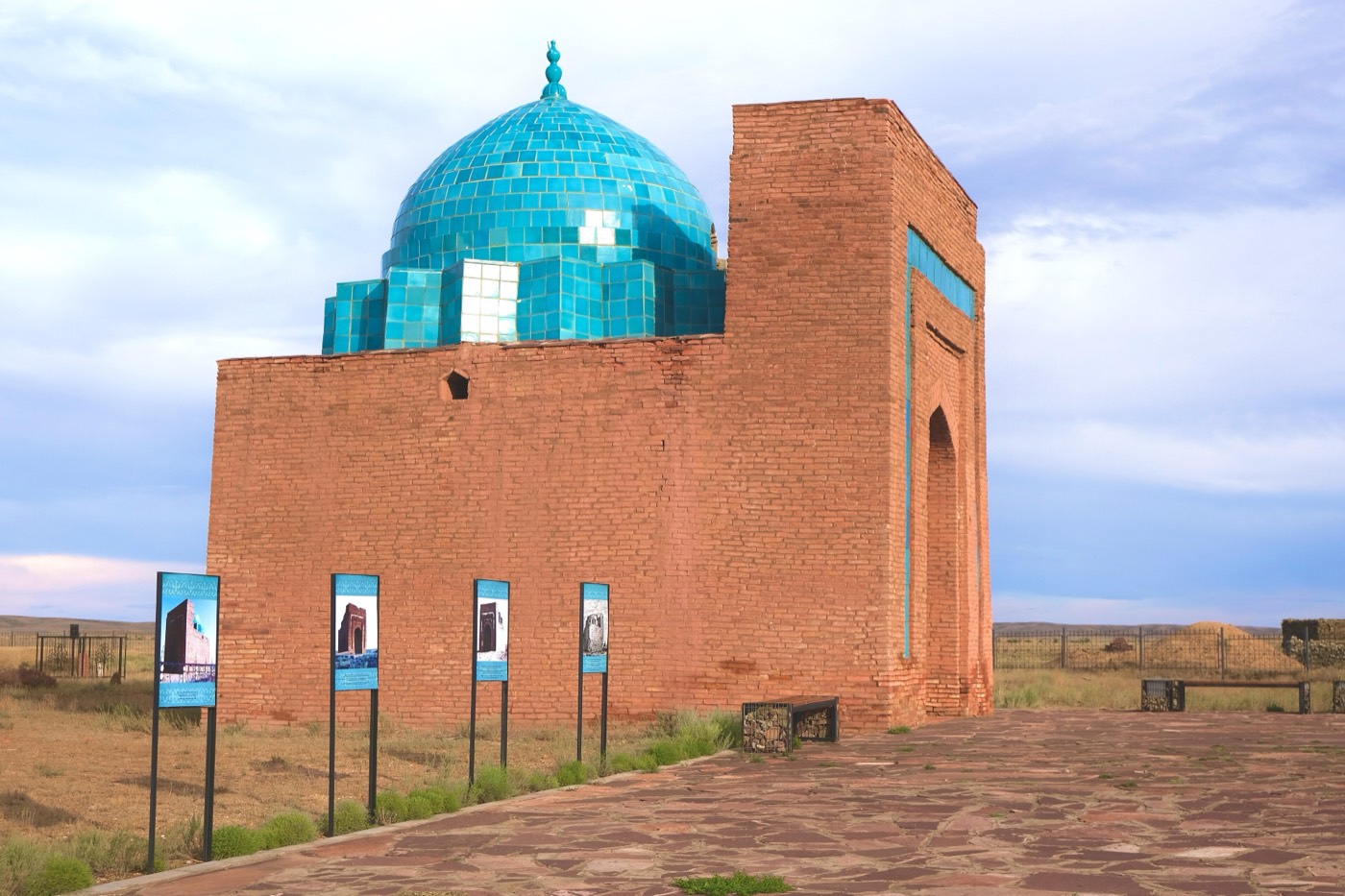
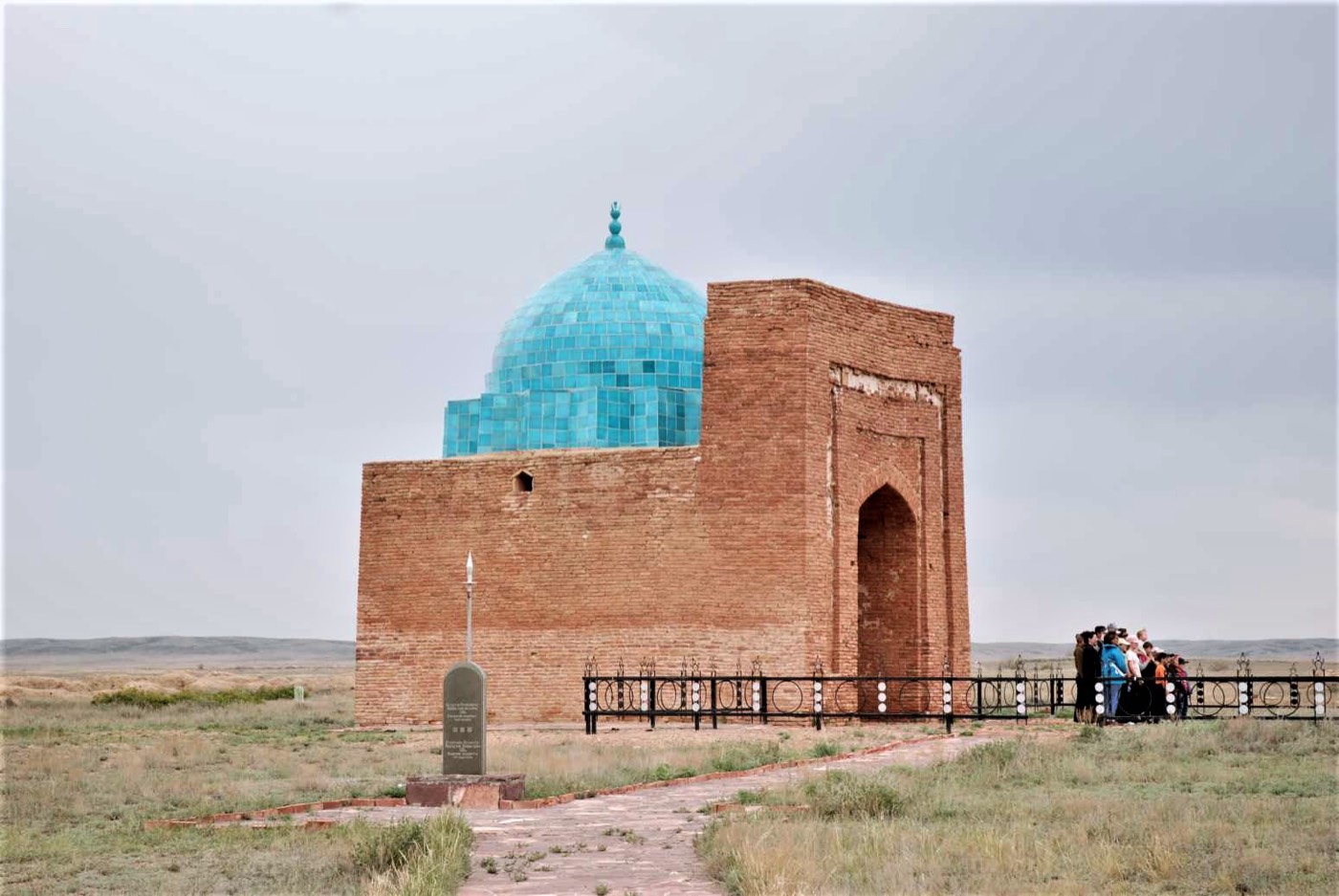
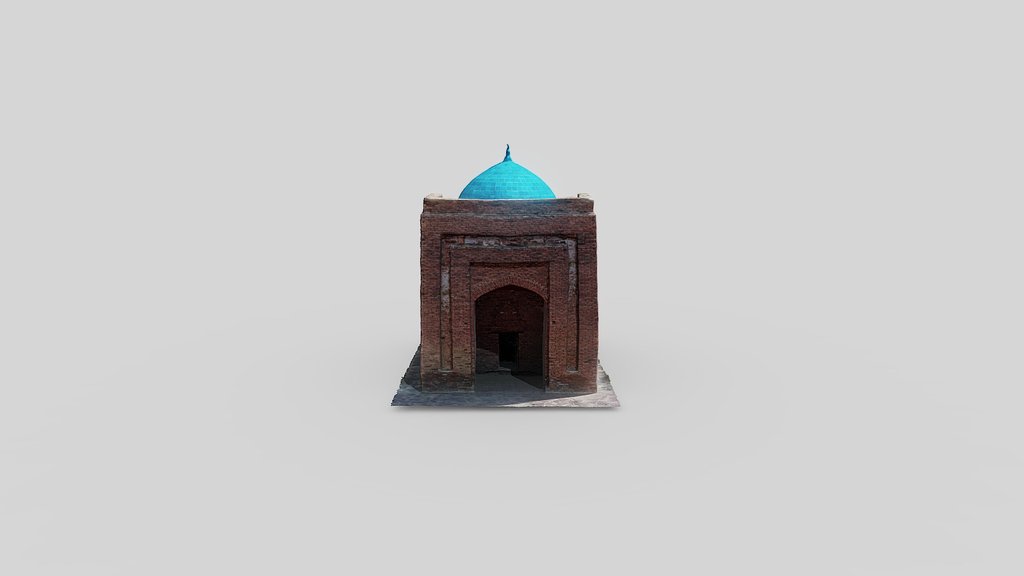
The mausoleum is a single-chamber building of fired brick, made of a portal and a domed room1. Its double dome, of sphero-conical shape, rests on a star-shaped drum and is faced with bright blue glazed tiles1. Restoration revealed two building stages; the second, the raising of the outer dome, most likely dates from the Timurid period1. Radiocarbon dates from the wooden door threshold (about 1330) and a façade beam (about 1350) also point to two phases of work in the 14th century: the earlier may mark the construction and the later the completion of the façade1.
Margulan, who surveyed the Kengir valley, dated its group of mausoleums to the 13th century or earlier and compared the tombs of Jochi and Alasha Khan with the 11th-12th-century mausoleums of Karakhan and Aisha Bibi, as a 2024 review of his work notes4. The 2022 study adds that Islamic mausoleums over the graves of khans and nobles appear in the Golden Horde after Islam became its official religion in the early 14th century1.
Interior
The building holds a single chamber, and both burials opened in 1946 lay inside it; the bottom of the second was lined with tiles, two of them bearing inscriptions1. The box of the first was made of pine, a wood that does not grow in the Ulytau hills and was probably brought from elsewhere1. Two wooden bars joined by crosspieces, which a local man said had lain across that grave, were interpreted as a funeral bier, an object of Muslim burial practice1. The study reads the camel skull in the same grave as a blend of Islamic and pre-Islamic rites, and sees in the whole burial a Muslim of the Golden Horde1.
Qué observar
- The blue-tiled outer dome on its star-shaped drum, most likely a Timurid-period addition1.
- A single brick chamber under a double dome; radiocarbon dates point to two building stages in the 14th century1.
- The legend of Jochi’s death on a kulan hunt, told in Kazakh tales recorded around 19001.
- The 1946 finds from the robbed graves: a pine burial box and a camel skull1.
Visita
- The mausoleum was listed as no. 249 in Kazakhstan’s 2020 State List of monuments of history and culture of republican significance, under the village of Malshybai in Ulytau District; that order lost force in July 20253.
- It stands about 45-50 km north-east of the town of Zhezkazgan1,3.
- The surrounding Ulytau area has been on Kazakhstan’s UNESCO Tentative List as the “Cultural Landscape of Ulytau” since 20212.
Información oficial: Ulytau National Historical, Cultural and Natural Museum-Reserve, named in UNESCO’s tentative-list entry as manager of the Ulytau landscape; the mausoleum was listed as a monument of republican significance in 2020Cómo llegarAbrir en OpenStreetMapVisitas guiadas en Distrito de Ulytau