Bu bölüm henüz çevrilmediği için İngilizce gösteriliyor.
Tarihçe
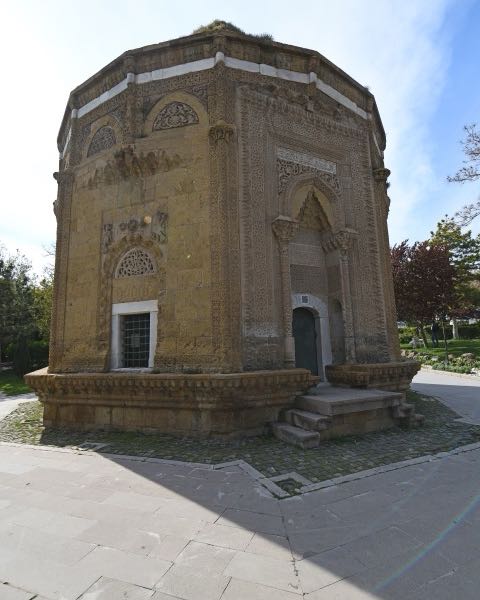
Döner Kümbet, also known as the Şah Cihan Hatun Kümbeti, is a stone tomb tower on Talas Avenue in Kayseri, opposite the Seyyid Burhanettin cemetery1. The ministry's Kültür Portalı calls it one of the most beautiful Seljuk works in Kayseri1. A two-line inscription in thuluth script above the door states that the tomb belongs to the fortunate Şah Cihan Hatun and asks God to grant her His good pleasure3,4. It names no sultan, lineage or date, and does not say who paid for the building3,6. The title “Şah” suggests that she belonged to the ruling family, and some scholars identify her as a daughter of Sultan Alaeddin Keykubad I3. Other sources say nothing is known of her as a historical figure1,2.
As the inscription is undated, the tomb is dated by its style2,3. Albert Gabriel proposed about 1275–1276, comparing it with tombs at Niğde and Ahlat; many writers followed him, but the TDV encyclopedia calls this date unfounded and places the tomb in the late 13th century1,2. Most researchers date it to about 1260–1285, while Kayseri Metropolitan Municipality gives the first quarter of the 14th century3,4. Its popular name Döner, “turning”, is linked to its many-sided, rounded form, with ten of its twelve faces almost alike1,5; a local legend says the tomb itself revolves7. After the road to Talas exposed it, later structures were cleared and the General Directorate of Foundations restored it5.
Mimari
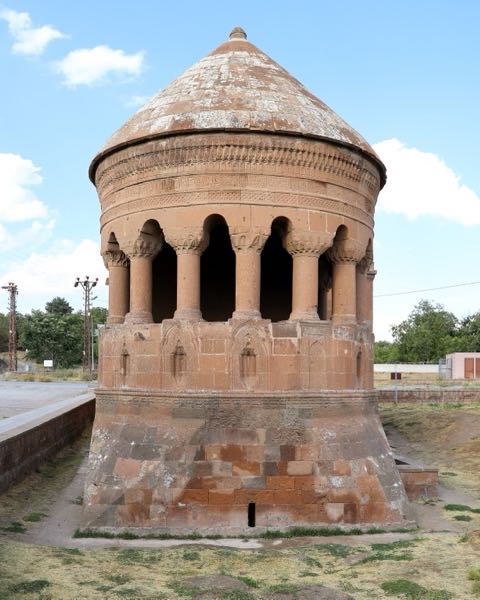
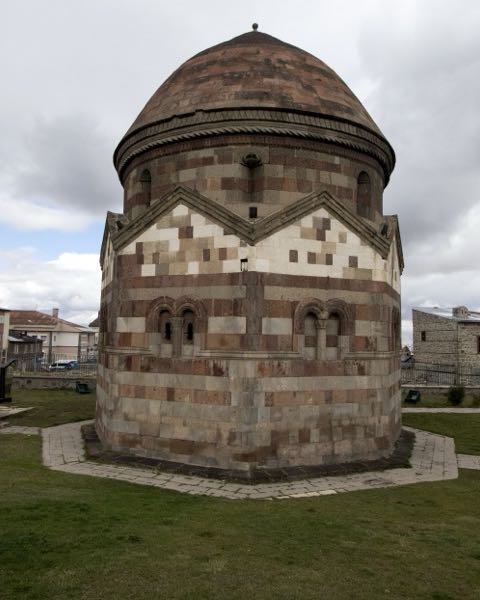
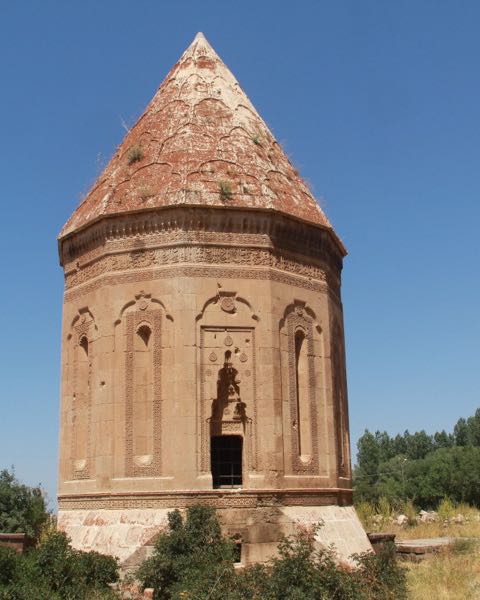
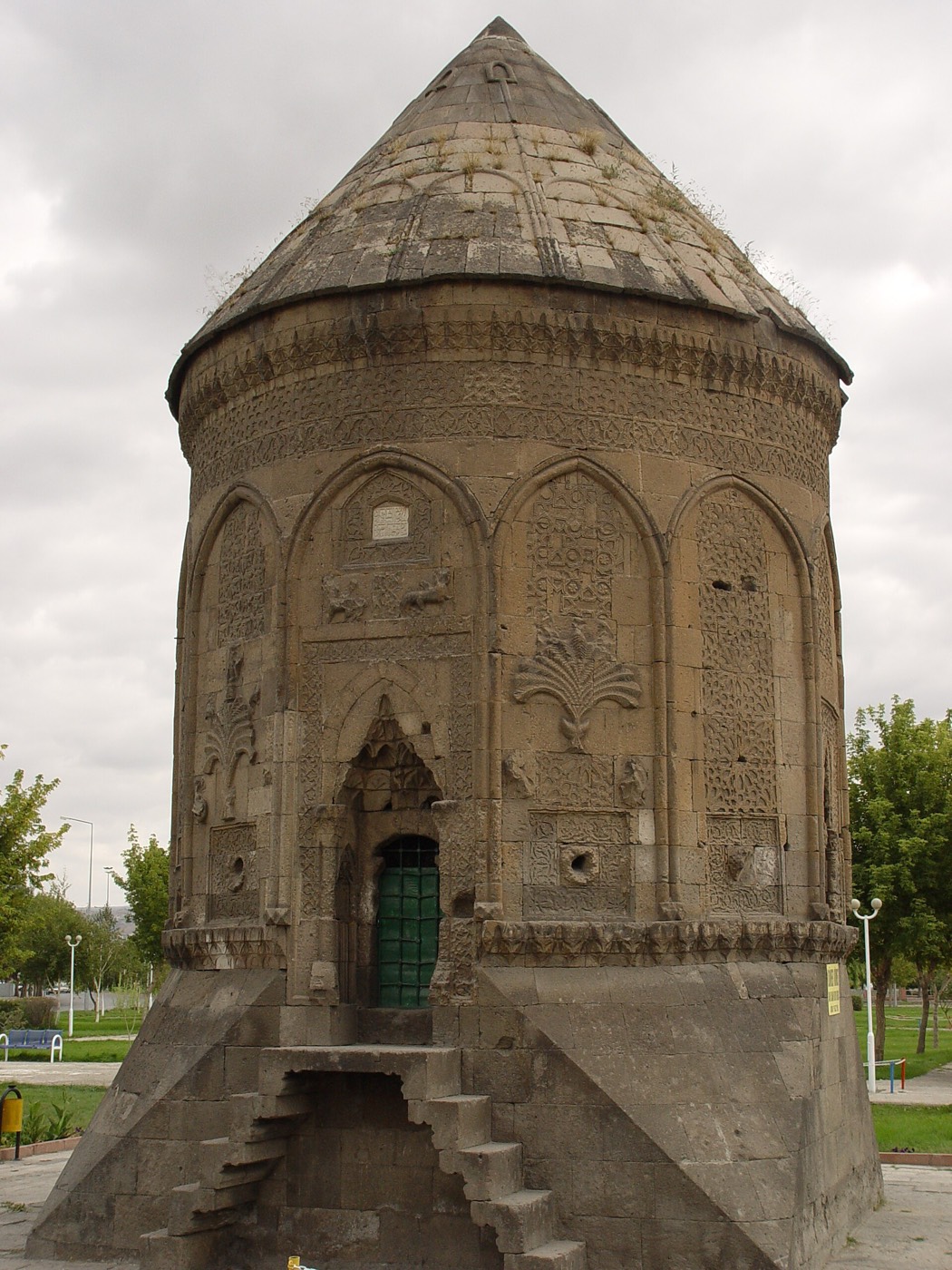
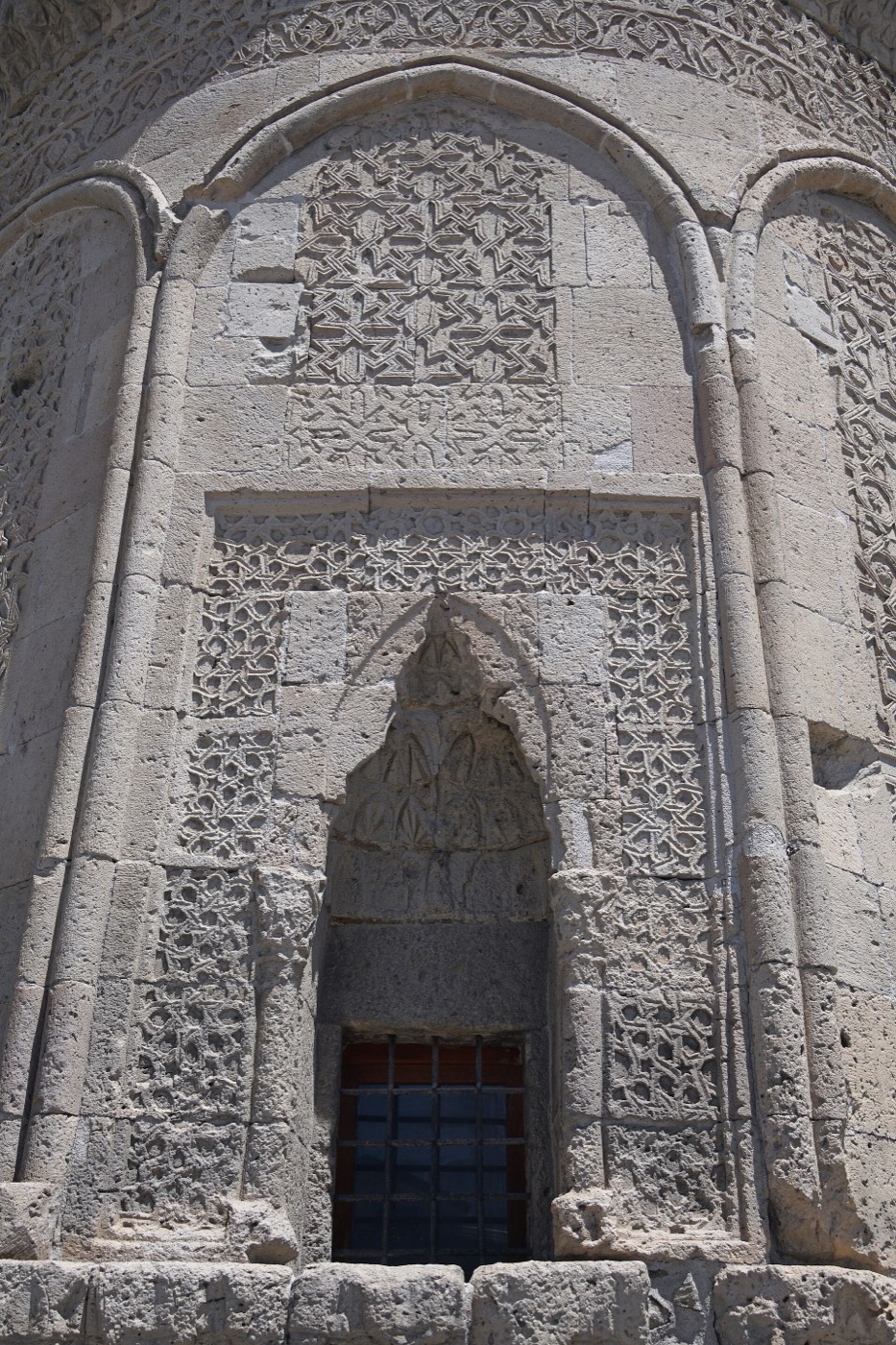
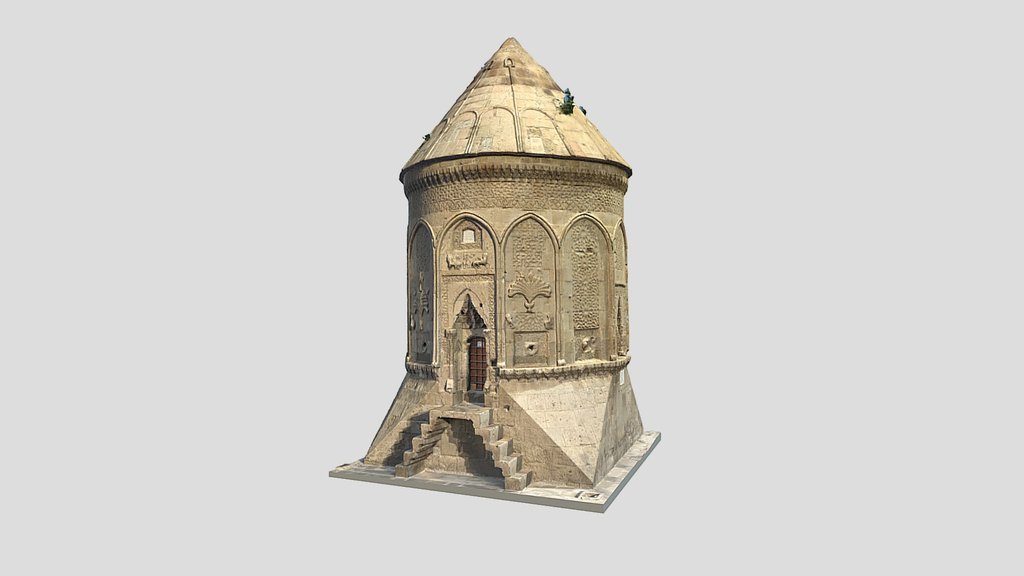
The tomb rises from a high square plinth, about 6.40 × 6.40 m, whose chamfered corners turn it into a twelve-sided form2. Three rows of muqarnas lead up to the body, which is twelve-sided outside, round inside and built entirely of cut stone1,3,5. It is covered by a dome inside and, outside, by a conical stone roof set on a muqarnas cornice1,4. Each face holds a panel framed by roll mouldings that meet in a pointed arch1,2. Above the panels run two carved bands, one geometric and one floral2,5. Windows on the east and west sides, flanked by small colonnettes, end in muqarnas hoods2,3.
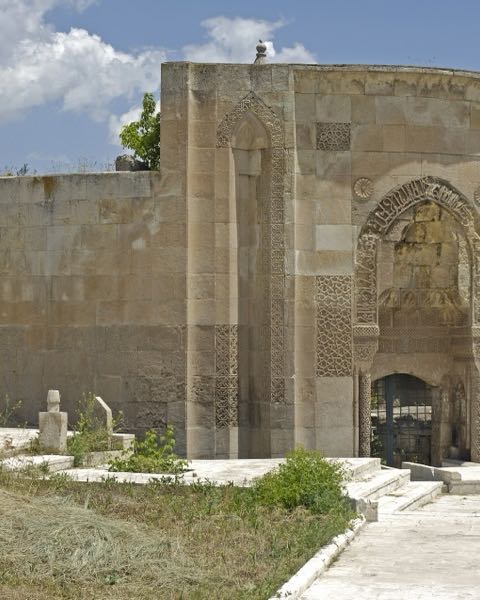
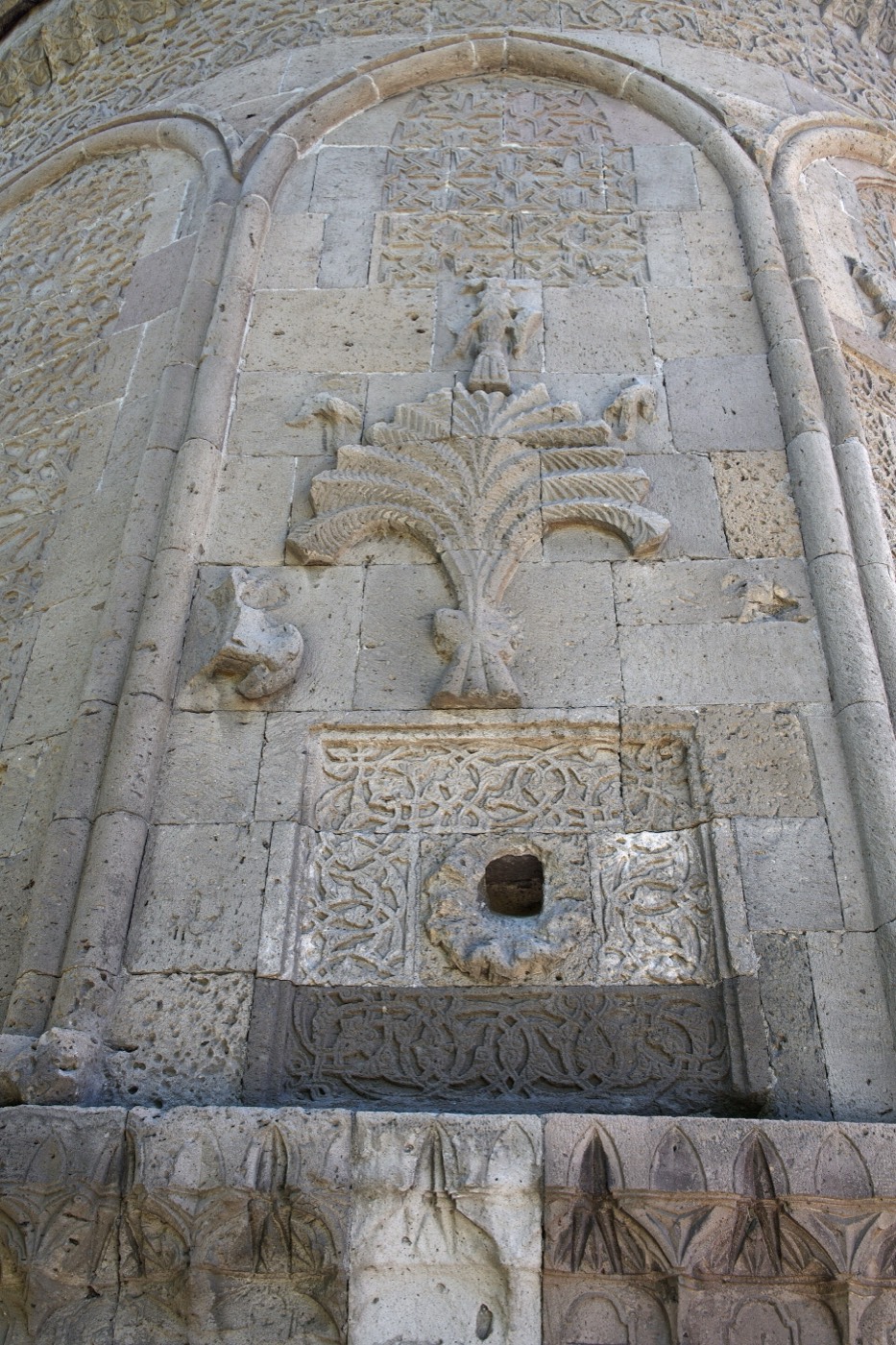
The entrance, on the north side, is raised above ground level and reached by a small double stair of five steps, completed during a 20th-century restoration2,5,7. Its niche, flanked by colonnettes, ends in a pointed arch with muqarnas2. The tomb, which recalls a monumental tent, stands out for its abundant figural carving1. Above the door, two damaged winged animals, read as human-headed leopards or as winged lions, seem to have flanked a double-headed eagle1,3,7. On the faces either side of the portal are palm trees, or trees of life; the one on the left is topped by a double-headed eagle and flanked by lions, now damaged1,3,7. Inside, a tall, narrow mihrab with a muqarnas hood stands almost opposite the entrance, and the dome is laid in a spiral of stone courses2,5,7. Whether the plinth contains a burial chamber is disputed2,5.
Dikkat çeken ayrıntılar
- Above the door, beneath the inscription: damaged winged animals that once flanked a double-headed eagle1,2,7
- Left of the portal: a palm tree, or tree of life, topped by a double-headed eagle1,7
- Twelve pointed-arched panels framed by roll mouldings, ten of them with near-identical geometric carving1,2
- Muqarnas cornices where the plinth meets the body and beneath the conical stone roof1,3
- East and west windows framed like small portals, with colonnettes and muqarnas hoods2,3
Ziyaret
- It stands on Talas Avenue at the Kartal junction in the Melikgazi district of central Kayseri, opposite the Seyyid Burhanettin cemetery1.
- It belongs to a group of Seljuk-period tombs south-east of the old city walls, including the Sırçalı, Emir Ali and Ali Cafer tombs3.
Resmî bilgi: Republic of Türkiye Ministry of Culture and Tourism (Kültür Portalı)Yol tarifiOpenStreetMap haritasında açınKayseri için rehberli turlar