Esta parte ainda não foi traduzida, por isso aparece em inglês.
História
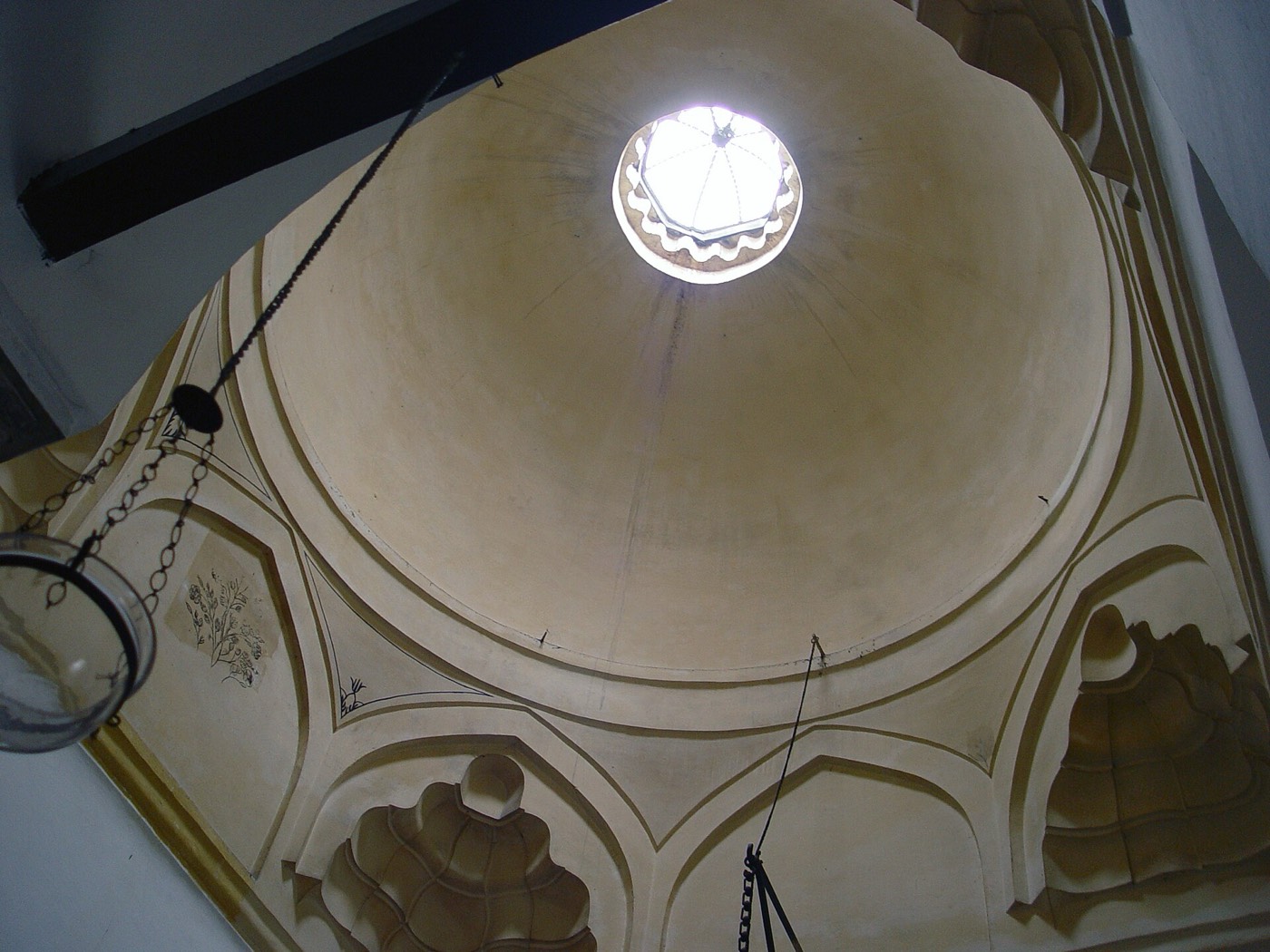
Murad II, a son of Mehmed I, ruled the Ottoman state from 1421 to 1444 and again from 1446 to 14515. In Bursa he built the last of the sultans' complexes in the city, centred on a mosque begun in May 1425 and finished in November 14262,4,8. He fell ill after his son Mehmed's wedding at Edirne and died on 3 February 1451, aged forty-eight5. His will of 1446 asked for burial in Bursa beside his late son Ali, under a four-walled tomb open at the top so that rain would fall on him, and forbade burying any of his descendants beside him5. Mehmed II built the tomb in 14514,9.
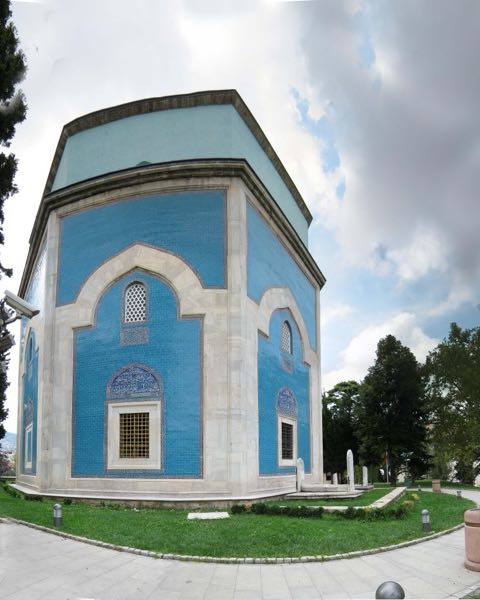
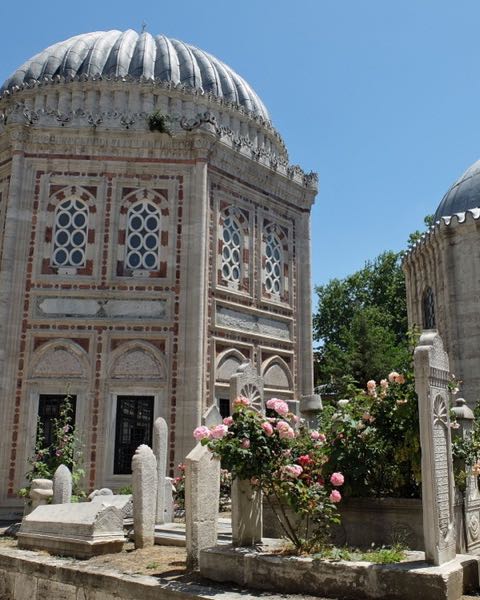
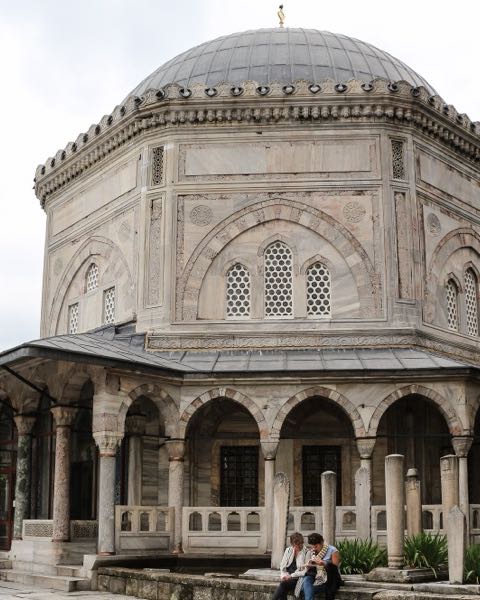
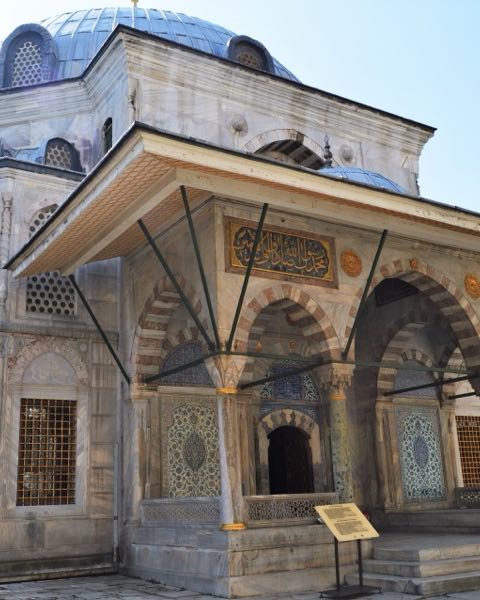
The garden around the mosque became a dynastic cemetery (hazire); ICOMOS calls it the first example of a hazire with twelve tombs of Murad II's family inside a complex3. Its tombs were built in the 15th and 16th centuries for wives, children and grandchildren of four sultans, and for members of the court2,4. Mehmed II's son Şehzade Mustafa (d. 1474) lies in a hexagonal tomb dated to 1479, which in 1499 also received Cem Sultan, who had died in Italy in 1495 after a long exile that followed his struggle for the throne with his brother Bayezid II6,10. Süleyman I's son Şehzade Mustafa, strangled at Konya Ereğlisi in 1553, was moved into the tomb Selim II built for him in 15734.
Arquitetura
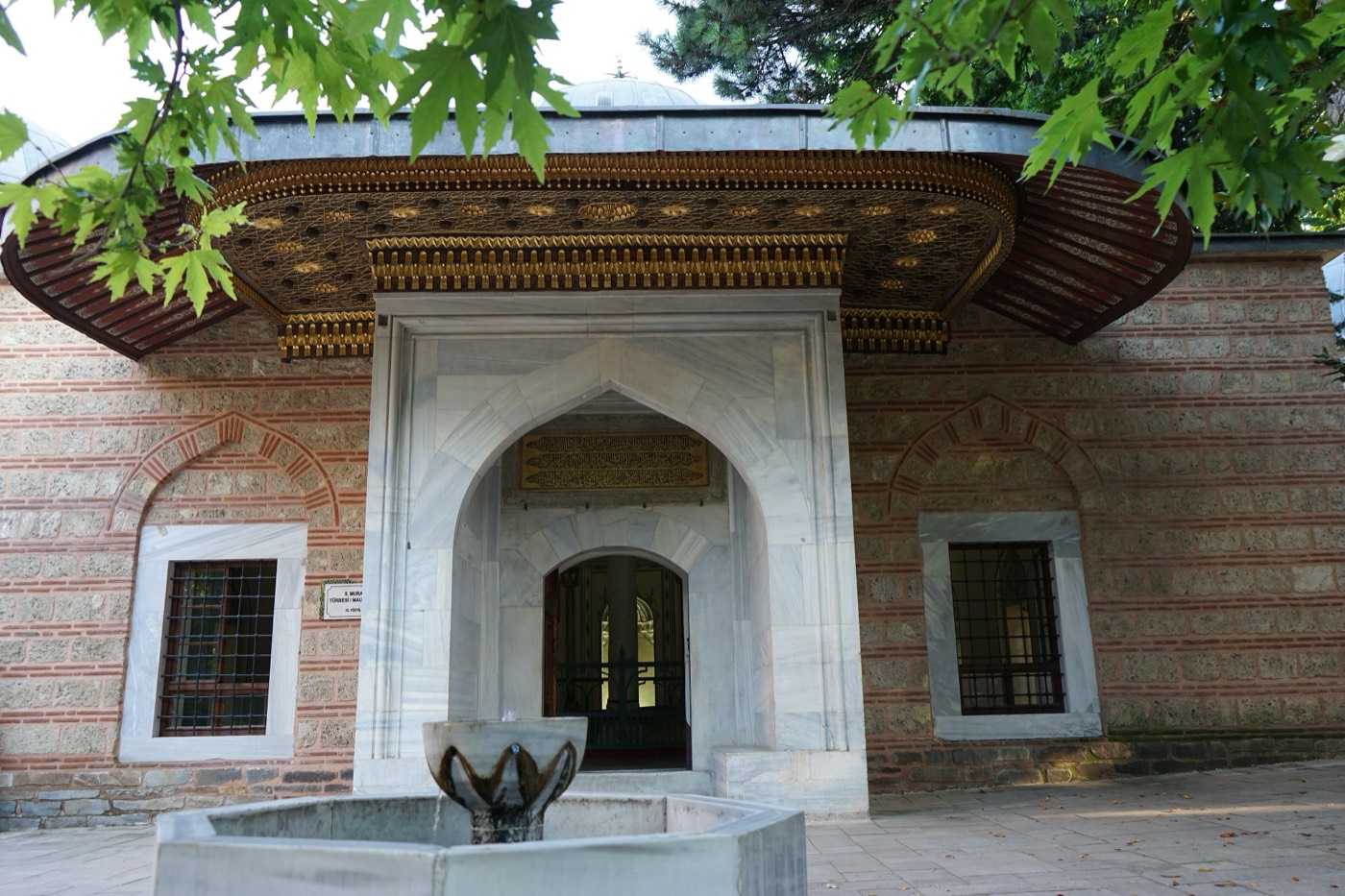
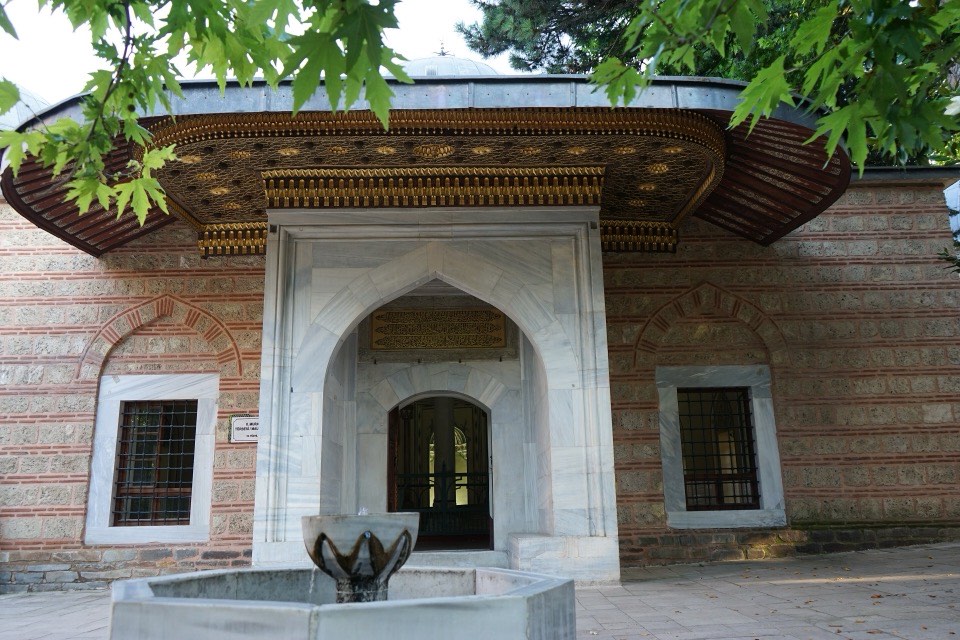
Murad II's tomb is a plain building of alternating stone and brick courses, made of two nested squares, 13.45 m and 6.90 m a side, with a gallery 3.25 m wide between them2,4. The inner square has a dome on squinches, carried by pointed arches on four piers and four columns with reused bases and capitals4. The dome was left open at the top, and the gallery was meant for Qur'an reciters (hafız)4. Over the entrance projects a wooden eave painted with kalem işi decoration; the nomination file and the Bursa Metropolitan Municipality single out its gilded nail heads, twelve-pointed stars and muqarnas, and the carved door leaves2,4,12. TDV's article on tombs draws attention to the light-filled domed design of Murad II's tomb, made at the sultan's own wish, and calls it one of the very few examples of its kind in Ottoman architecture, leaving aside the open tombs favoured by the ulema7.
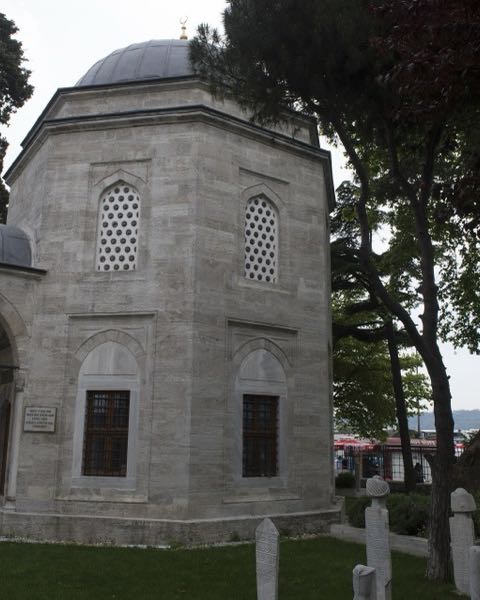
The other tombs range from small domed buildings to open canopies2,4. Hüma Hatun's modest hexagon of 1449 was built by Murad II for the mother of Mehmed II; the hexagonal tomb of Şehzade Mustafa and Cem Sultan, which TDV calls the most richly decorated of the group, has a marble entrance hall under a deep wooden eave; and Şehzade Ahmed's octagon of 1513, whose architect TDV names as Alâeddin, has carved wooden (kündekâri) door leaves2,4,6,13. The tombs of Ebe Hatun, said to be Mehmed II's midwife, and of the Saraylılar ('people of the palace') are open on all sides2,4. During restoration begun by the Bursa Metropolitan Municipality, 15th- and 16th-century painted decoration came to light in the dome of Şehzade Mahmud's tomb2.
Interior
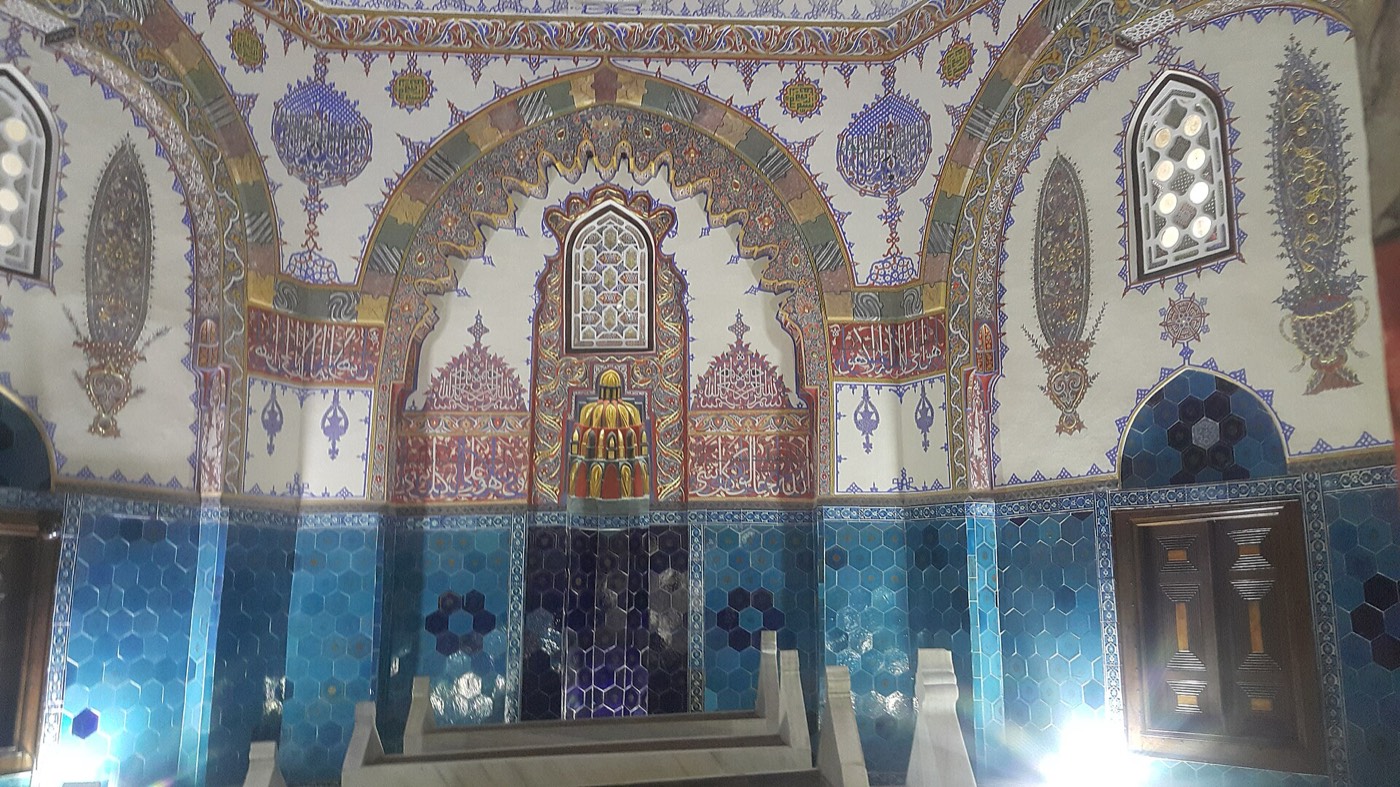
Murad II's tomb has no decoration inside4. Under the opening of the dome lies the sultan's grave, covered with earth; TDV and the nomination file say he was buried directly in the ground, and Kültür Portalı notes that there is no other grave in the hall2,4,9. A door made from a former window in the east wall leads to a domed annex, the tomb of Sultan Alâeddin, with the cenotaphs of Murad II's sons Alâeddin, Ahmed and Orhan and his daughter Şehzade Hatun4,9. Cem Sultan's tomb is lined up to the lower windows with turquoise hexagonal tiles framed in gold, and its upper walls and dome are painted6,10. Şehzade Mustafa's tomb is faced to a height of 3 m with 16th-century Iznik tiles, under an inscription band with the Throne Verse4,11.
O que observar
- The opening at the top of Murad II's dome, left so that rain would fall on his grave4,9.
- The painted wooden eave over Murad II's door, with gilded nail heads and twelve-pointed stars2,4,12.
- Cem Sultan's tomb, which TDV calls the most richly decorated of the Muradiye tombs4.
- Şehzade Mustafa's tomb, lined to 3 m with 16th-century Iznik tiles4,11.
- Ebe Hatun's tomb, an open canopy said to shelter the grave of Mehmed II's midwife4.
Visita
- The tombs stand in the garden (hazire) of the Muradiye Mosque, in the Muradiye quarter of Bursa, which takes its name from the complex2,4,8.
- They belong to the Muradiye (Murad II) Külliye component of the World Heritage property 'Bursa and Cumalıkızık: the Birth of the Ottoman Empire', inscribed in 20141.
- ICOMOS noted in 2014 that the mosque and the tombs were the only parts of the complex still used for their original purpose3.
Informações oficiais: General Directorate of Foundations (Vakıflar Genel Müdürlüğü), owner of the tombs; the nomination file's 2012 inventory names the Bursa Metropolitan Municipality as responsible for their upkeepComo chegarAbrir no OpenStreetMapVisitas guiadas: Bursa