Dit deel is nog niet vertaald en wordt daarom in het Engels getoond.
Geschiedenis
From the mid-18th century Junagadh, in Kathiawar, was ruled by the Babi family: Sher Khan Babi, the last Mughal faujdar (military governor) of the Sorath region, made himself independent there and took the title of Nawab Bahadur Khan3. Muhammad Mahabat Khan came to the throne in 1851, at about fourteen, after the death of his elder brother3,4. His mother’s faction controlled him in his early years, until he escaped with his brother-in-law Shaikh Baha-ud-din to the protection of a British political officer4. Baha-ud-din later served as his vizier3. Mahabat Khanji attended the Imperial Darbar at Delhi in 1877 and died on 29 September 1882; his son Bahadur Khanji succeeded him3.
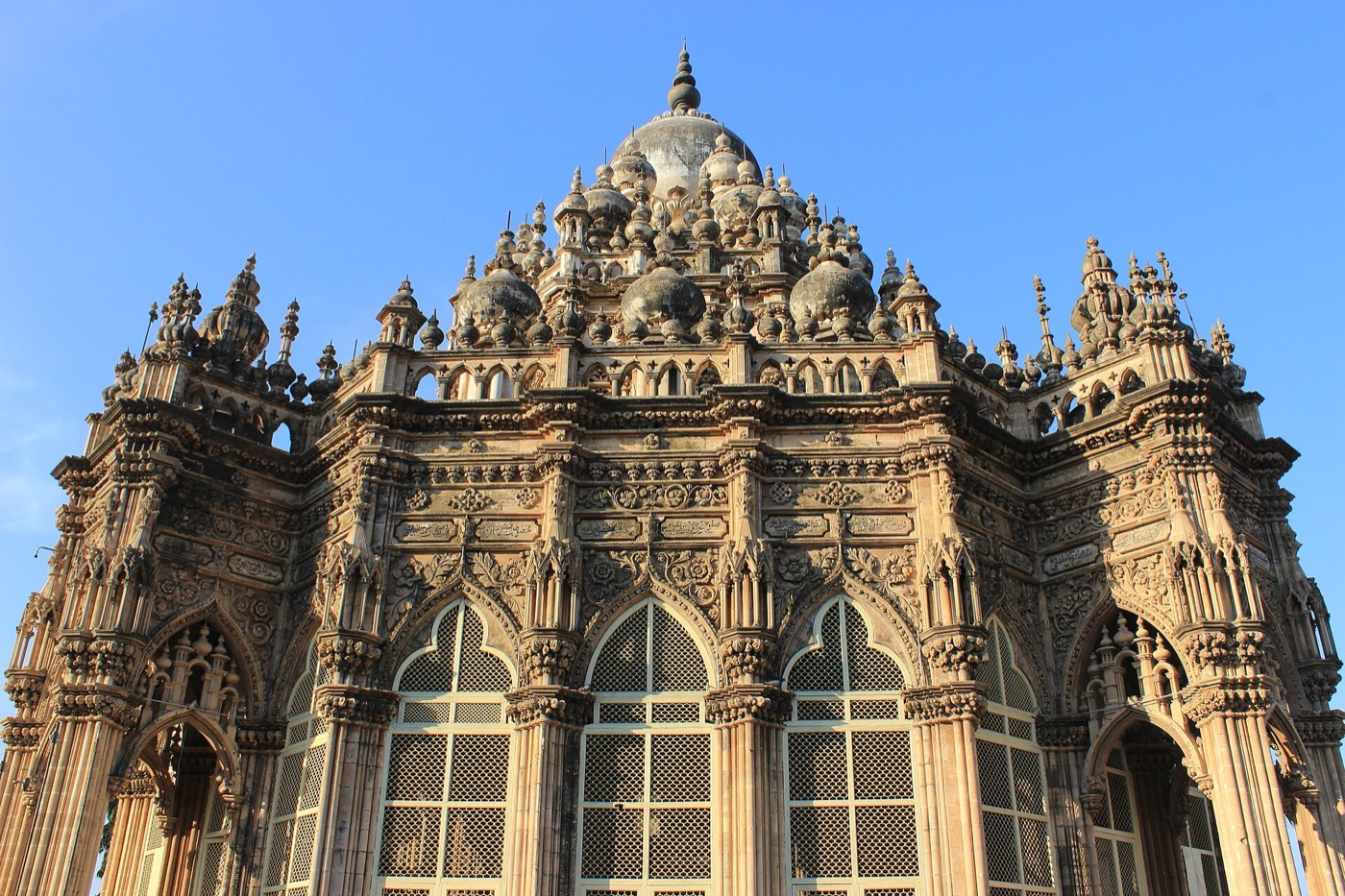
Gujarat Tourism and India’s Ministry of Tourism say that Mahabat Khanji began the mausoleum in 1878 and that it was finished in 1892 under Bahadur Khanji1,2. Watson’s official Statistical Account of Junagadh, published in 1884, reported that a mausoleum and a mosque in memory of the late Nawab were being built “at a very large expense”3. The tomb holds Mahabat Khanji’s grave1. North of it stands a second mausoleum, the Bahauddin Maqbara or Vizier’s Maqbara, which the vizier Shaikh Bahauddin Husain Bhar built in 1891-18961. Both tombs stand a few steps from the town’s Jama Masjid1.
Architectuur
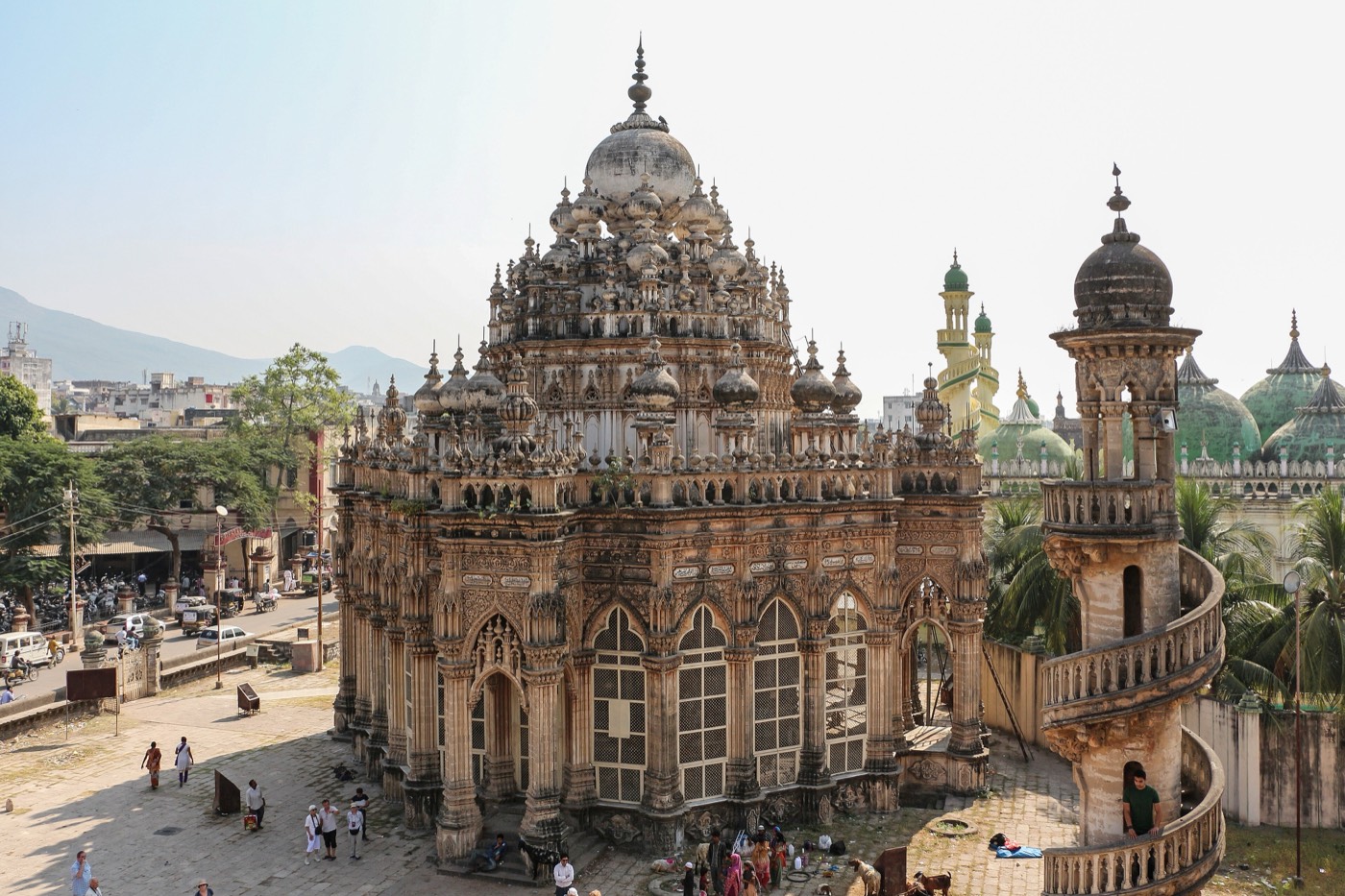
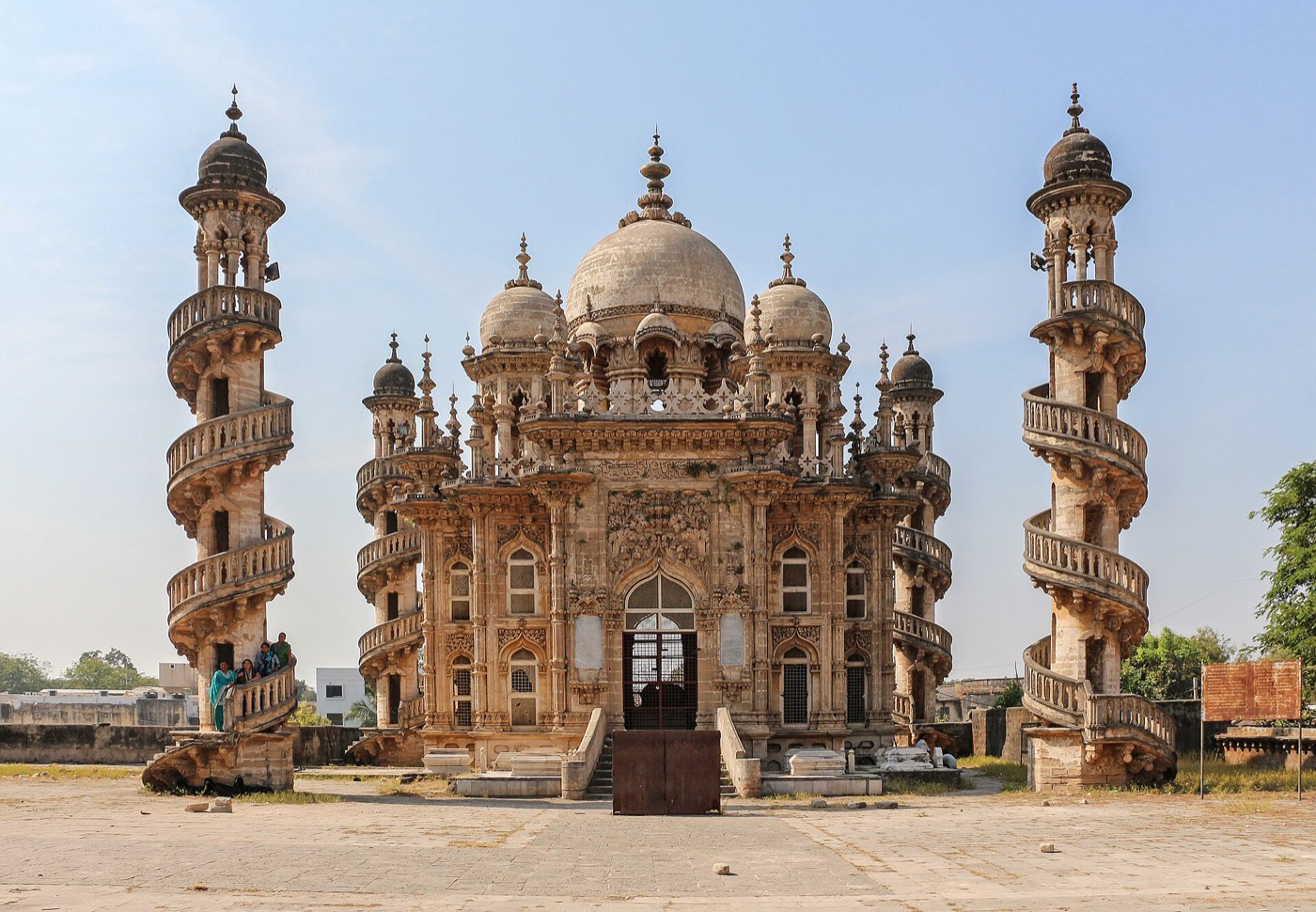
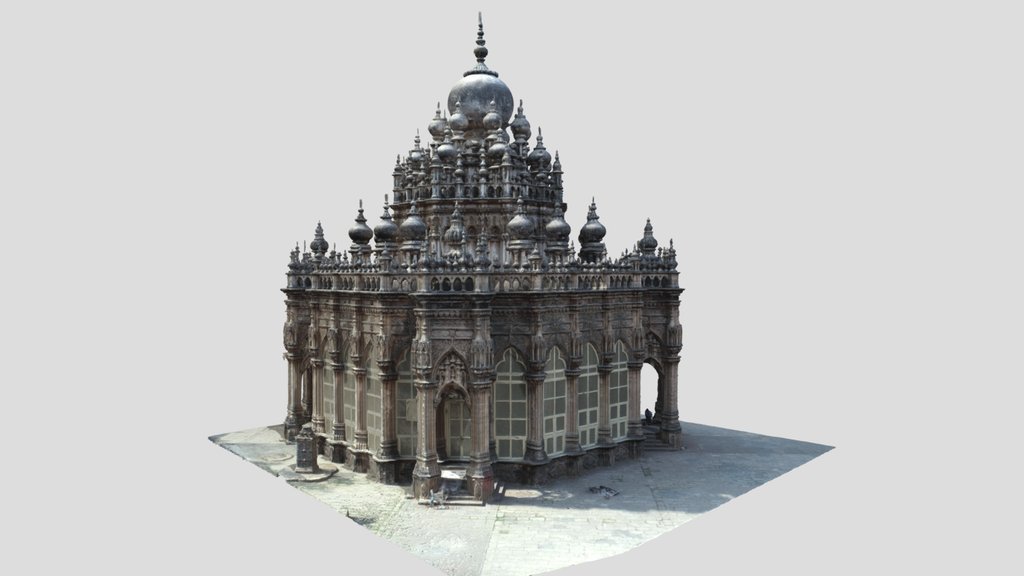
The two tombs combine Indo-Islamic, Gothic and European forms1. Their façades and arches are carved inside and out and have a yellowish light-brown finish, with onion-shaped domes, French windows, sculpture, marble columns and tracery, and marble jalis (pierced screens)1. One of the tombs has four minarets, each with a staircase winding around its outside1. The neighbouring Jama Masjid follows the same style, with onion domes and minarets ringed by external spiral stairs1.
Interieur
Waar u op kunt letten
Bezoek
- The Mahabat Maqbara, the Bahauddin Maqbara and the Jama Masjid stand within a few steps of each other1.
- The Mahabat Circle, a circle of shops in front of the Nawab’s palace, is among the new buildings that Watson listed in 18843.
Officiële informatie: Visitor information from Gujarat Tourism and India’s Ministry of Tourism (Incredible India); the protecting authority could not be confirmed in an official sourceRoutebeschrijvingOpenen in OpenStreetMapRondleidingen in Junagadh