Turbehتربة

Een atlas van islamitische mausolea

PlaatXVvan CIII

Gonbad-e Alavian

قبة علويانگنبد علویان Gonbad-e ʿAlaviyān

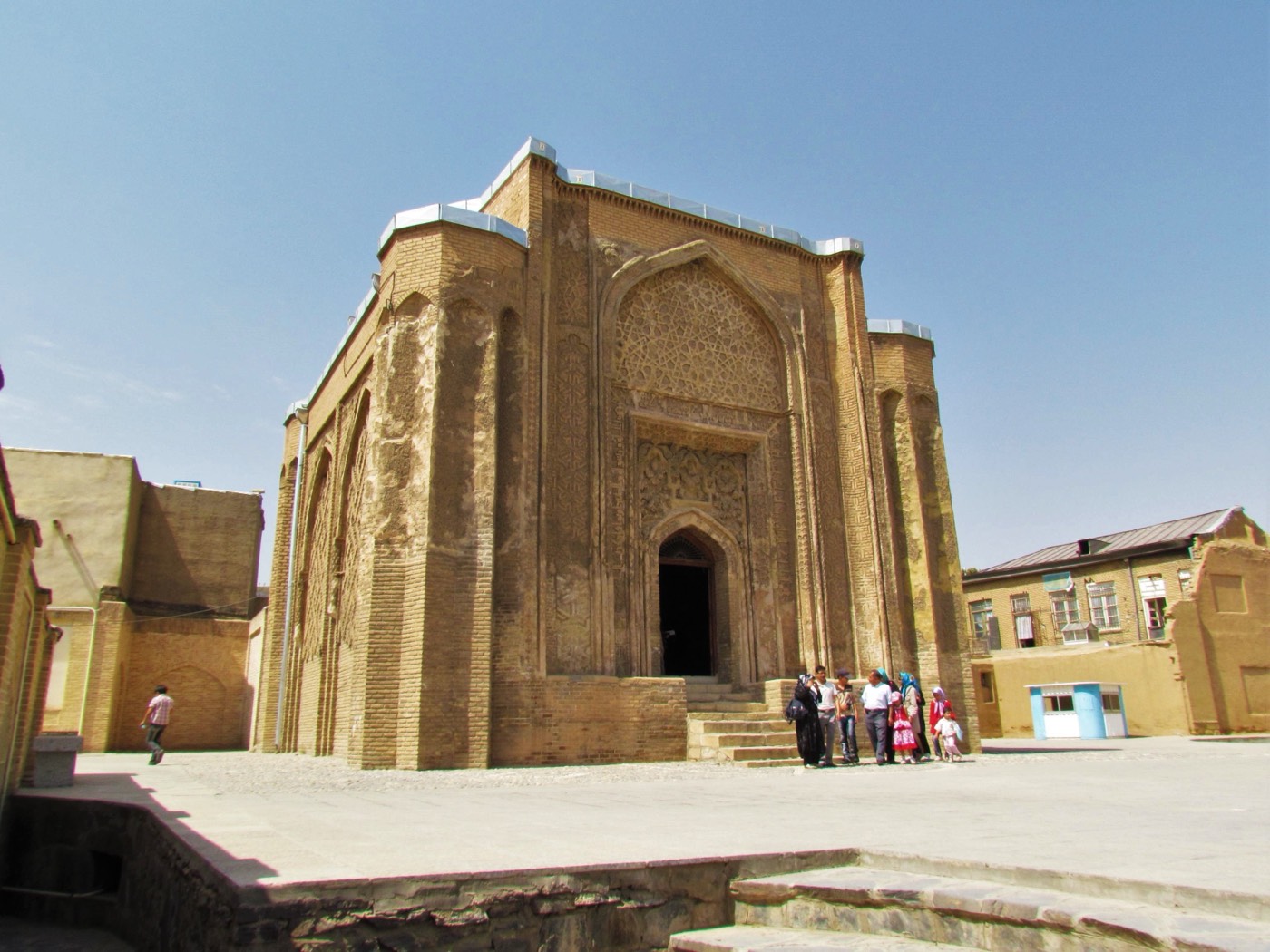
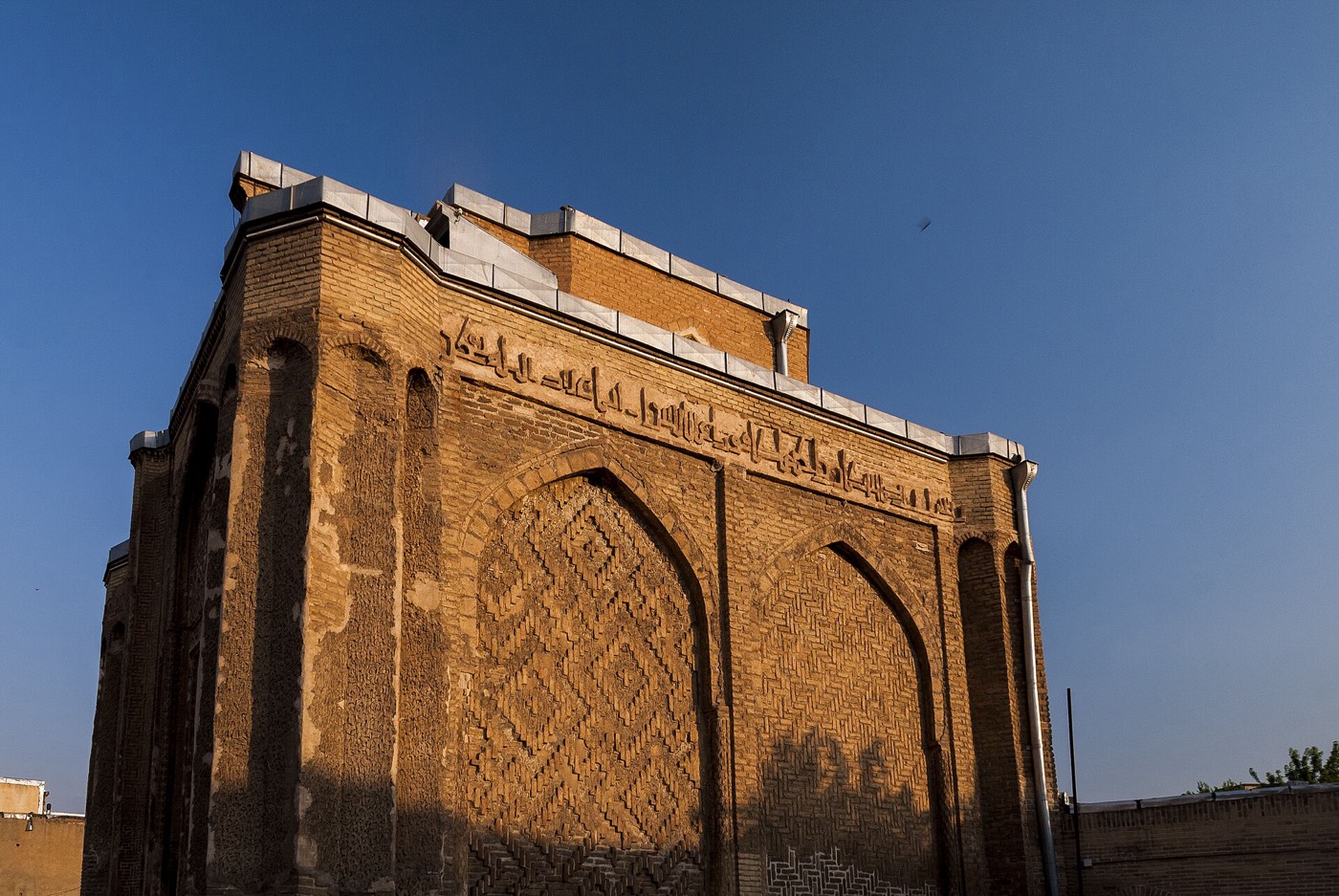
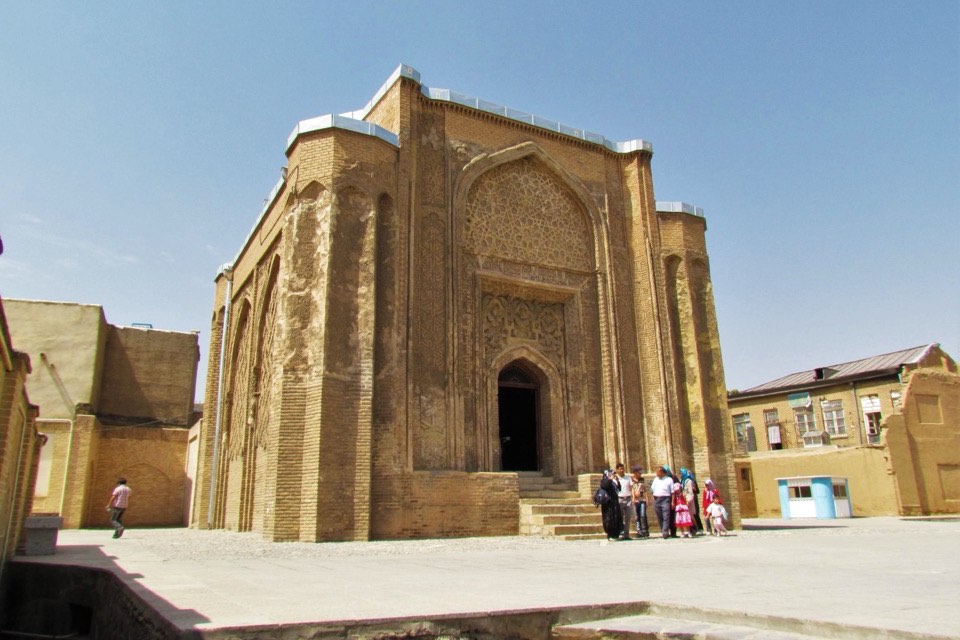
Een vierkante bakstenen graftombe in Hamadan, bekend als het mausoleum van de familie ’Alawiyan, binnen en buiten versierd met stucwerk in hoogreliëf; onderzoekers dateren het gebouw tussen de 12e en het begin van de 14e eeuw1,2.

Gebouwd
ca. 1150–1315 n.Chr.
ca. 544–715 AH
No dated inscription survives1. Iranica dates the building to the 12th century by comparison with Seljuk monuments and R. Shani’s 1996 monograph to the late 12th century; Archnet gives a range from the late 12th century to the 14th, and Donald Wilber proposed about 1315, so the years shown span that range1,2,3.
Periode
Seltsjoekse of Ilkhanidische periode (omstreden)
Opdrachtgever
Waarschijnlijk de familie ’Alawiyan uit Hamadan; de geraadpleegde bronnen noemen geen stichter
Gebouwd voor
Leden van de familie ’Alawiyan, van wie er twee in de crypte begraven liggen
Materialen
Gebakken baksteen, met gesneden stucwerk in hoogreliëf, terracotta en pleisterwerk
Binnenruimte
8 bij 8 m1
Locatie
Hamadan, Iran
Gonbad-e Alavian
Foto: Saba Garshasbi · CC BY-SA 4.0 · Wikimedia Commons

Kijkzaal

360°-foto uit Google Maps

Gonbad-e Alavian: Interieur (360°-foto)

Sleep om rond te kijken · scrol of knijp om te zoomen · dubbelklik om u te verplaatsen

  • Interieur (360°-foto): 360°-foto door Mohammadreza Ahmadpour (2016-11) via Google Maps

Dit deel is nog niet vertaald en wordt daarom in het Engels getoond.

Geschiedenis

Gonbad-e Alavian stands about 200 m west of the Hegmataneh mound, and Iranica calls it the most significant architectural monument of Hamadan1. It is known as the mausoleum of the ’Alawiyan family, who, in the words of Sylvia Matheson’s archaeological guide to Persia, virtually ruled Hamadan for some two hundred years1. Two members of the family are buried in its crypt, reached by a staircase inside the building1. Mohammad-Taqi Mostafavi believed that it was first built as the family’s khanaqah, a Sufi lodge, in which some of them were later buried, and Archnet describes it only as assumed to be a mausoleum1,2.

No dated inscription survives, so the date rests on comparison1. Iranica places the building in the 12th century because of its close likeness to Seljuk monuments such as Gonbad-e Sorkh in Maragheh, dated 542 AH (1147-48)1. Ernst Herzfeld published it in 1922 in a study of the architecture of the Ilkhans, and Donald Wilber proposed a date of about 13151,2. R. Shani’s 1996 monograph on the building, A Monumental Manifestation of the Shi’ite Faith in Late Twelfth-Century Iran, places it in the late 12th century3. Archnet sums up the range as late 12th-century Seljuk to 14th-century Ilkhanid2.

Architectuur

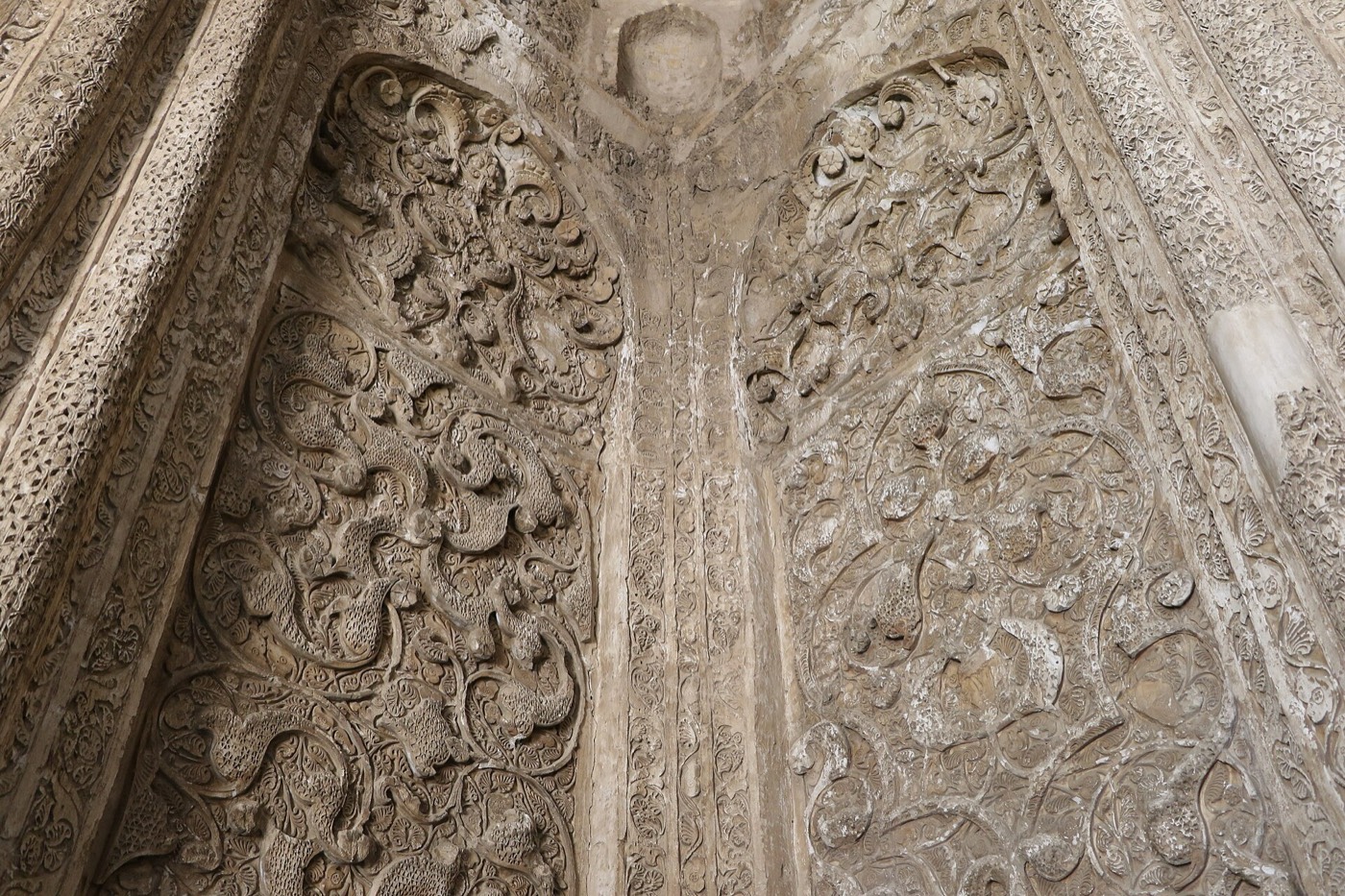
The building is a square, fairly massive block of baked brick, square inside as well, with an unusual star-shaped flange projecting from each outer corner and rising lower than the main mass1,2. Its facade was once covered with stucco in high relief, with leaves, blossoms, vines and tendrils in interlaced patterns; Arthur Upham Pope called it the most complete example of stucco encrustation that survives in Persia1. Terracotta and stucco also form inscriptions on the exterior, set among geometric patterns and patterned brick bonding2.

Interieur

The single chamber measures 8 m by 8 m1. Its walls are plastered and richly decorated with carved stucco, in places in high relief1,2. A staircase inside the building leads down to the crypt with the tombs of two members of the ’Alawiyan family1. The dome that once covered the chamber is lost2.

Waar u op kunt letten

  1. High-relief stucco of leaves, blossoms, vines and tendrils on the facade1.
  2. The star-shaped flanges projecting from the outer corners2.
  3. Inscriptions in terracotta and stucco among geometric brick patterns2.
  4. Carved stucco in high relief on the walls of the 8 m square chamber1,2.

Bezoek

  • The building stands about 200 m west of the Hegmataneh mound1.
  • The Hegmataneh mound, the site of ancient Ecbatana, was inscribed on the UNESCO World Heritage List in 20244.
  • The tombs of Avicenna and Baba Taher are also in Hamadan1.

Bronnen

  1. Encyclopaedia Iranica (Ali Mousavi and EIr; vol. XI, fasc. 6, pp. 612-615): HAMADĀN vii. MONUMENTS
  2. Archnet (MIT / Aga Khan Trust for Culture): Gunbad-i Alaviyyan
  3. Bridges 2011: Mathematics, Music, Art, Architecture, Culture (conference proceedings), pp. 497-500 (Carol Bier; reference 28 lists R. Shani, A Monumental Manifestation of the Shi’ite Faith in Late Twelfth-Century Iran: The Case of the Gunbad-i ‘Alawiyan, Hamadan, Oxford Studies in Islamic Art XI, Oxford University Press, 1996): Taking Sides, But Who’s Counting? The Decagonal Tomb Tower at Maragha
  4. UNESCO World Heritage Centre: Hegmataneh (property 1716)

Beelden en 3D