این بخش هنوز ترجمه نشده است و به همین دلیل به انگلیسی نمایش داده میشود.
تاریخچه
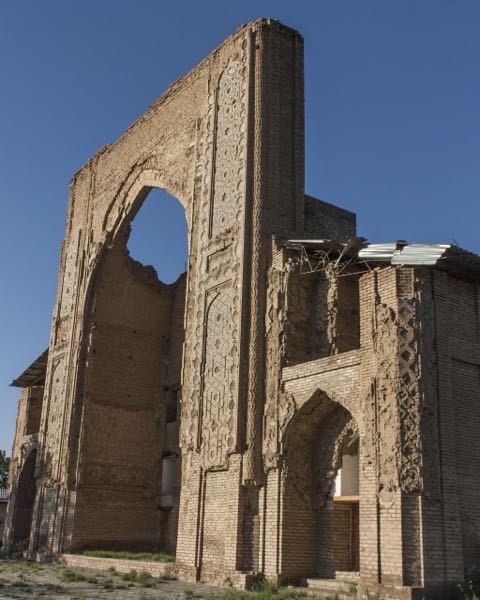
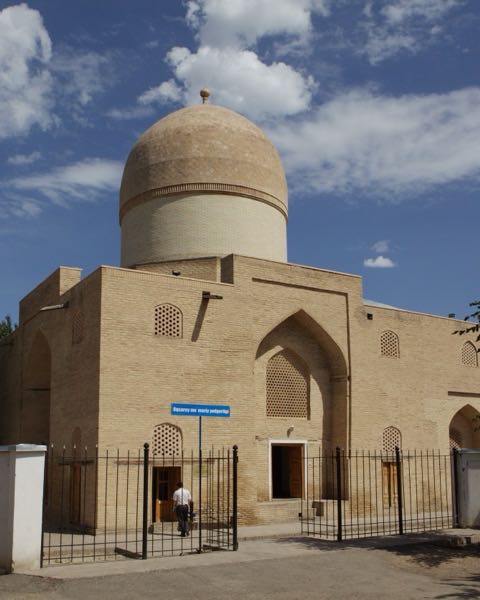
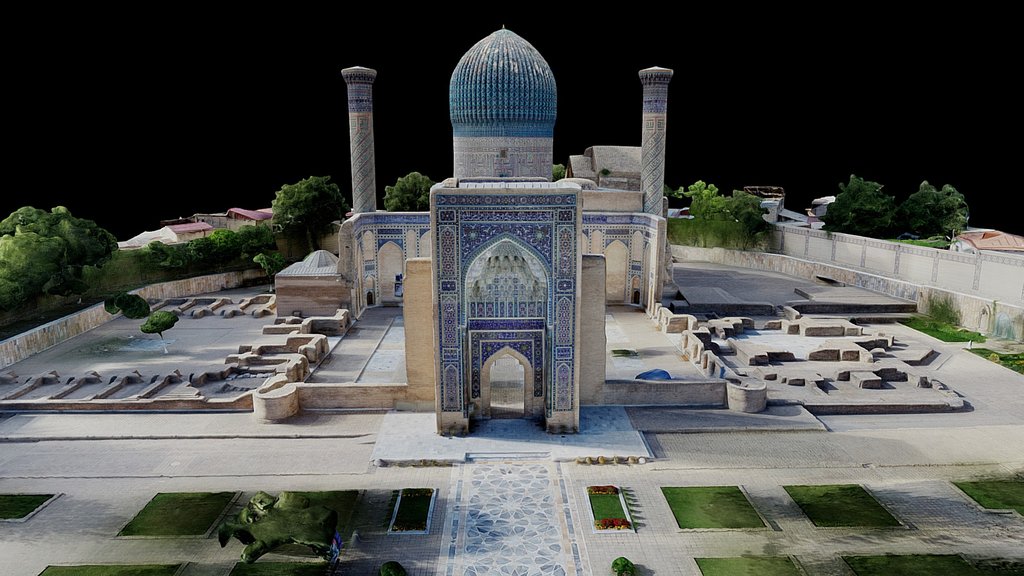
Gur-e-Amir stands beside an earlier complex of Timur’s grandson Muhammad Sultan from the late 14th century: a two-storey madrasa and a domed khanaqah (Sufi lodge) around an open courtyard2,3. Muhammad Sultan, the son of Timur’s son Jahangir, was Timur’s heir presumptive; he died in 14032,5,6. In August 1404 Timur commissioned a mausoleum for him, completed that same year2,3. Timur died at Otrar in February 1405, and his embalmed body was brought to Samarkand4. His grandson Khalil Sultan, newly proclaimed ruler there, chose Muhammad Sultan’s mausoleum for the burial rather than the family necropolis at Shahrisabz4,5. Other members of his family were later buried there too, making it the dynastic mausoleum of the Timurids2,3.
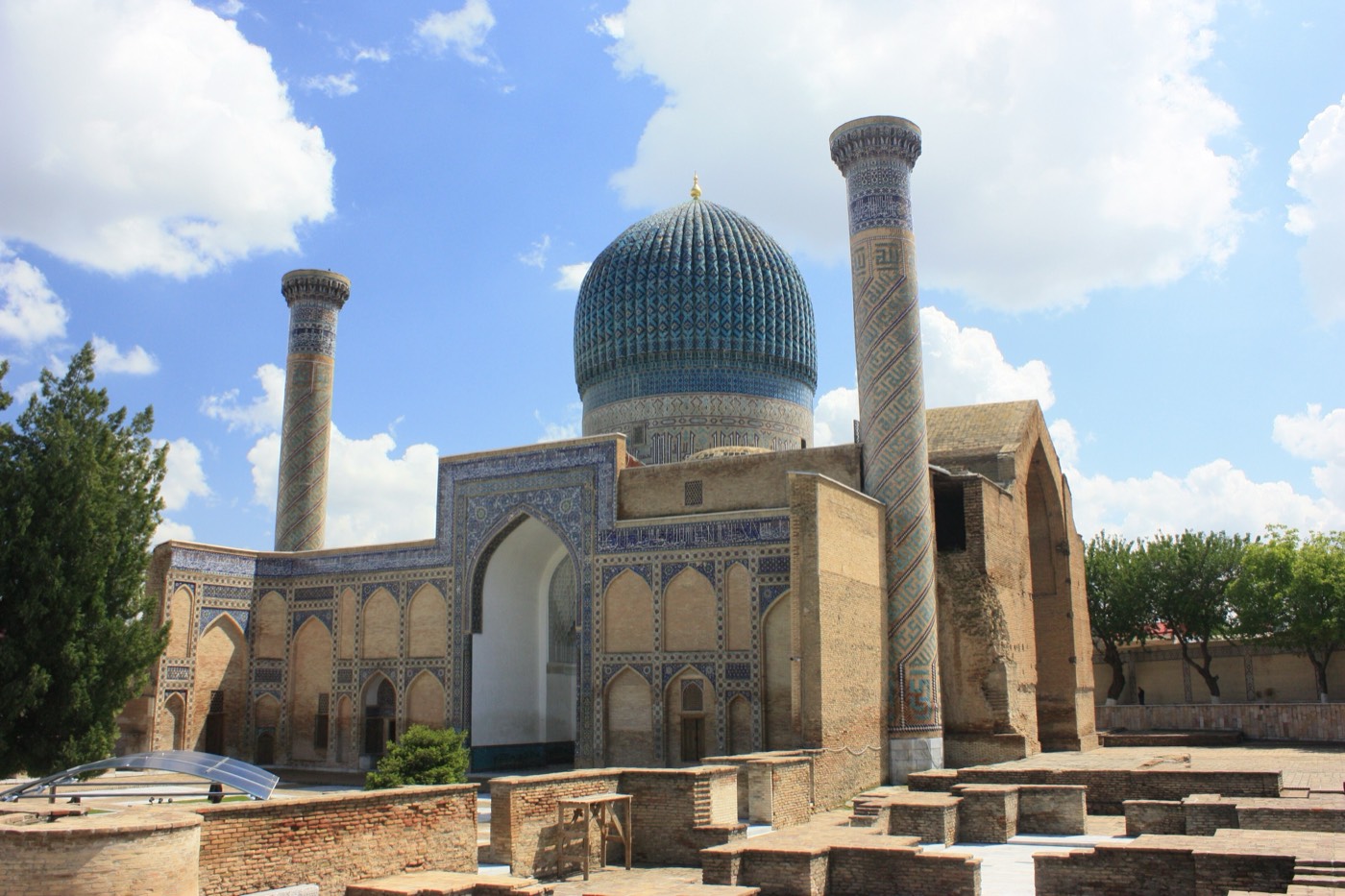
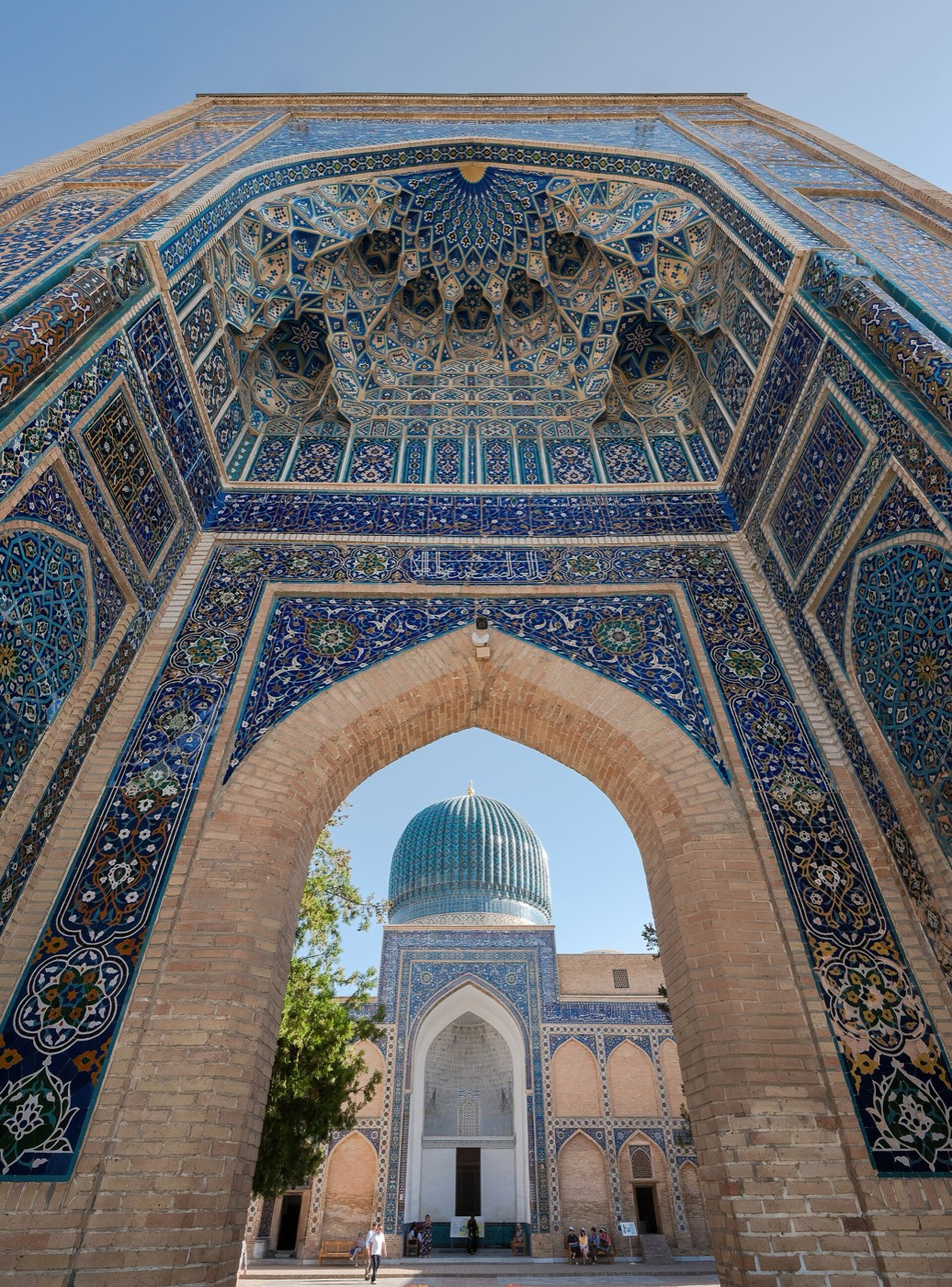
The hall’s cenotaphs commemorate Timur, his sons Shah Rukh and Miranshah, his grandsons Muhammad Sultan and Ulugh Beg, and his spiritual companion Sayyid Baraka2. In 1425 Ulugh Beg added an eastern gallery, still the main entrance2. For Timur’s cenotaph he obtained a single block of jade from Khotan7. By the late 17th century the madrasa was abandoned and the khanaqah dome had collapsed; a minaret fell in 1886 and another in 19032. In 1941 a Soviet commission opened Timur’s tomb and found the skeleton of a powerfully built man, taller than average, whose lameness affected his right side4. Soviet-era restorations and works for Timur’s 660th birth anniversary in 1996 rebuilt parts of the ensemble, replacing many original tiles with modern copies2,11.
معماری
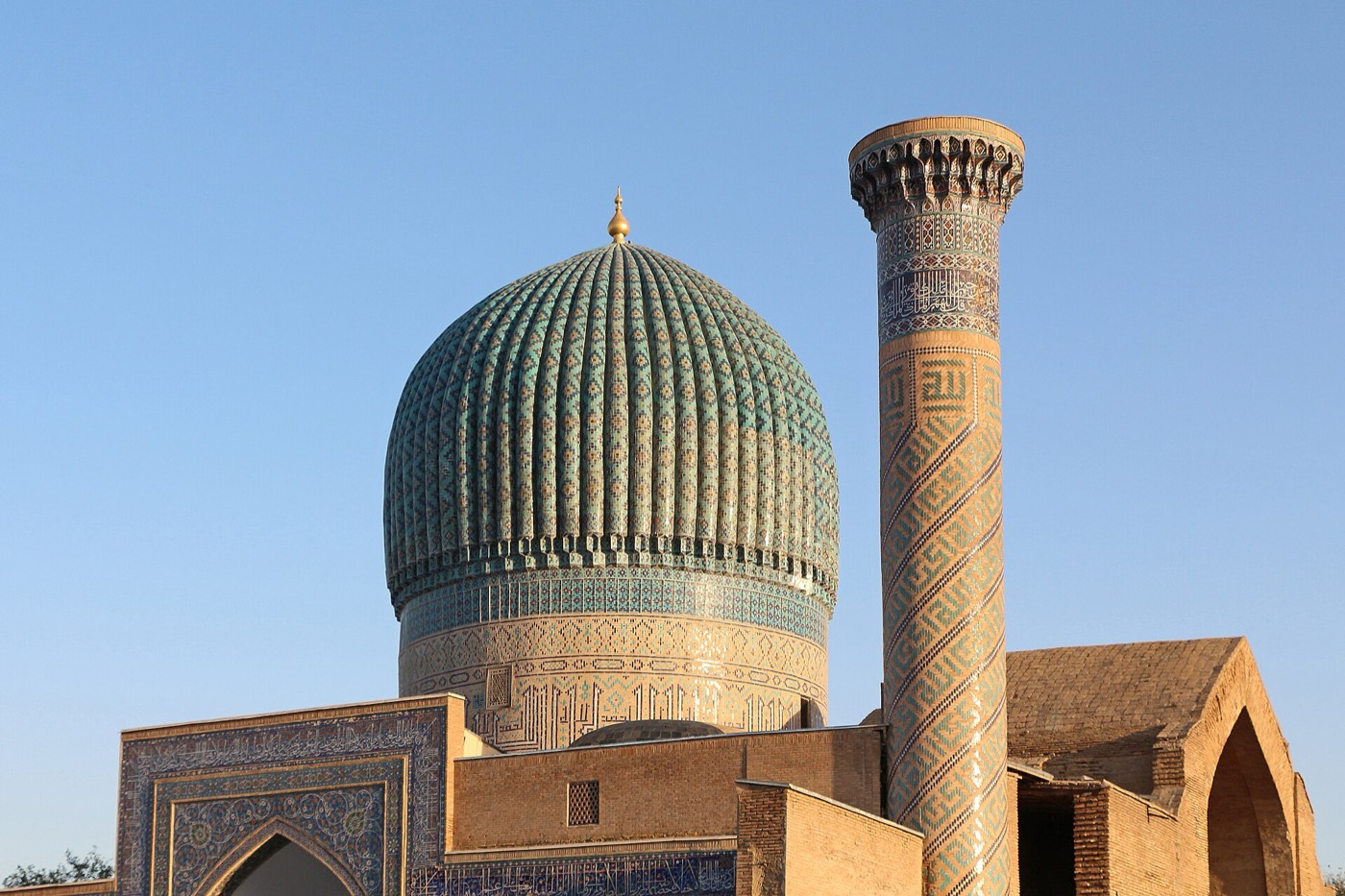
The mausoleum is an octagonal building crowned by a ribbed dome clad in turquoise tiles, with a monumental inscription around the drum that reads “God is eternal”2,7. Its outer walls are patterned in glazed and unglazed brick, and its inscriptions in plain and square Kufic are dated 14047,10. MIT’s course notes say the double-shell dome gives the interior harmony and the exterior height8. A tiled portal bears the signature of the builder, Muhammad ibn Mahmud al-Banna al-Isfahani8.
Inside, the hall has an onyx dado and an inscription band painted in gold on jasper, while the upper walls and the muqarnas vaults are decorated with painted and gilded moulded paper (papier-mâché)2,7. UNESCO credits Samarkand’s Timurid masters with an influence that reached the Safavids in Iran, the Mughals in India and even the Ottomans1.
درون بنا
The 360° photo and the 3D scan of the hall show the main chamber: an onyx dado at the bottom, a muqarnas cornice above it, and upper walls with papier-mâché details in gold and blue2. In the centre a carved marble screen surrounds the cenotaphs of Timur, Shah Rukh, Miranshah, Muhammad Sultan, Ulugh Beg and Sayyid Baraka; Timur’s is the jade one among cenotaphs of marble2,7. These only mark the graves: the actual burials, with marble tombstones, lie in the crypt below, which is closed to the general public and appears in the third 3D scan2,7. The 3D scans come from Global Digital Heritage, which digitised Timur’s mausoleum in a campaign launched in June 202112.
آنچه باید دید
- Timur’s jade cenotaph among the marble ones, cut from a single block obtained by Ulugh Beg7.
- The ribbed turquoise dome and the huge inscription around its drum, meaning “God is eternal”2,7.
- The onyx dado, muqarnas cornice and gold-and-blue papier-mâché of the hall2.
- The builder’s signature of Muhammad ibn Mahmud al-Banna al-Isfahani on a tiled portal8.
- Ulugh Beg’s eastern gallery of 1425, still the main entrance2.
بازدید
- The cenotaphs stand in the main hall; the actual graves are in the crypt below, which is closed to the general public2.
- The main entrance is through Ulugh Beg’s eastern gallery of 14252.
- Uzbekistan’s official tourism portal links to an online virtual tour of the mausoleum13.
اطلاعات رسمی: State Samarkand Historical-Architectural Reserve, under Uzbekistan’s culture ministry and the Samarkand regional government (as described by UNESCO)مسیریابیباز کردن در OpenStreetMapتورهای همراه با راهنما در سمرقند