این بخش هنوز ترجمه نشده است و به همین دلیل به انگلیسی نمایش داده میشود.
تاریخچه
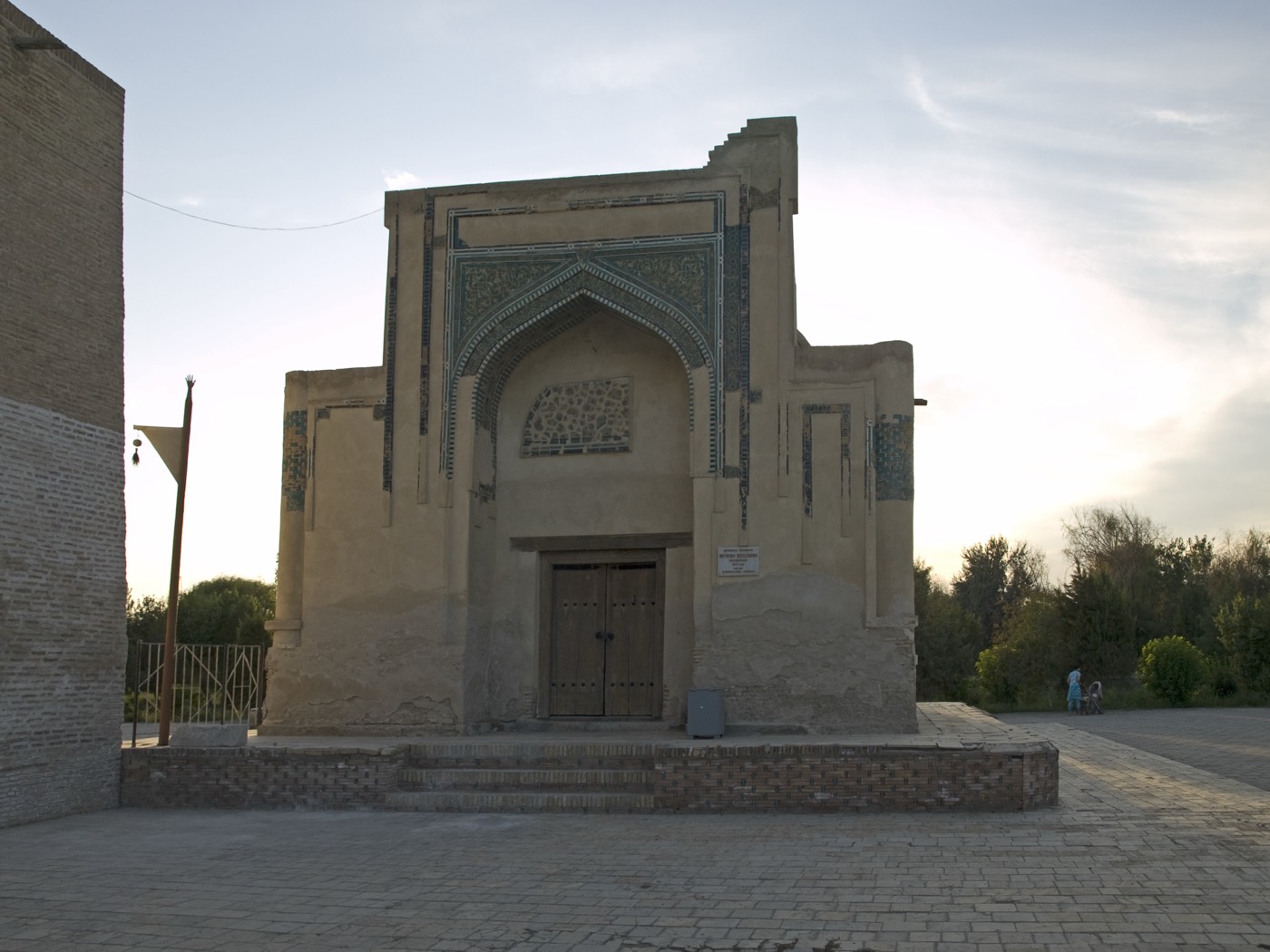
Buyan Quli Khan was a Muslim descendant of Genghis Khan who became the nominal ruler of a large part of Central Asia in 1348, while real power lay with the region’s warlords1,2. Encyclopaedia Iranica counts him among the last Chaghatayid khans of Transoxiana5. When he tried to assert his own authority he was killed by one of those warlords, in 1358 according to some V&A records and in 1359 according to others1,2. The murderer was soon driven out by his rivals, who raised the tomb over the khan’s grave in a cemetery at Fathabad, on the outskirts of Bukhara1,2,3.
The tomb stands next to the shrine of Sayf al-Din Bakharzi, a shaykh of the Kubrawi Sufi order who died in 1261; Iranica names the two as the monuments of Bukhara that survive from the Chaghatayid period (1227-1370)5,6. In 1899 the Victoria and Albert Museum in London acquired sections of the tomb’s inscription friezes, a tile with the khan’s name and a column capital; several pieces were bought from a seller in Batumi, Georgia, and one frieze section is recorded as taken from the facade1,2,3,4. The V&A calls the tiles from this tomb the most important surviving examples of a technique used in Central Asia only from about 1350 to the early 15th century1,4.
معماری
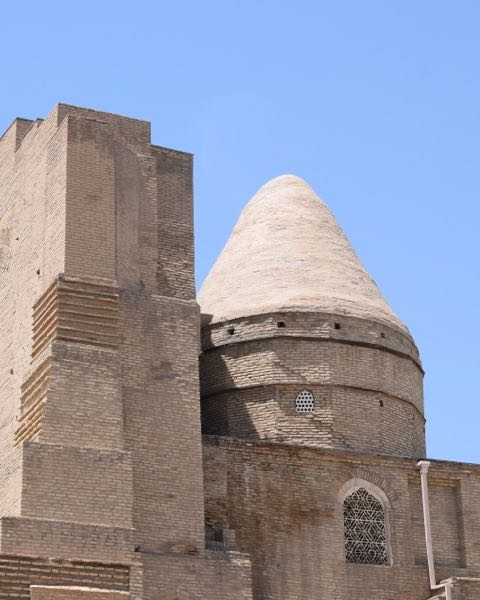
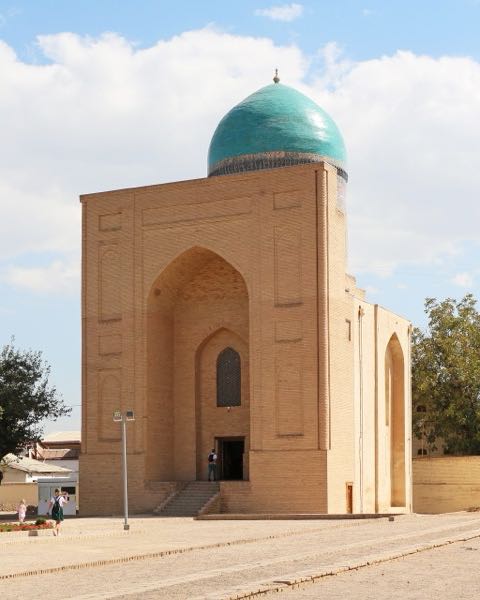
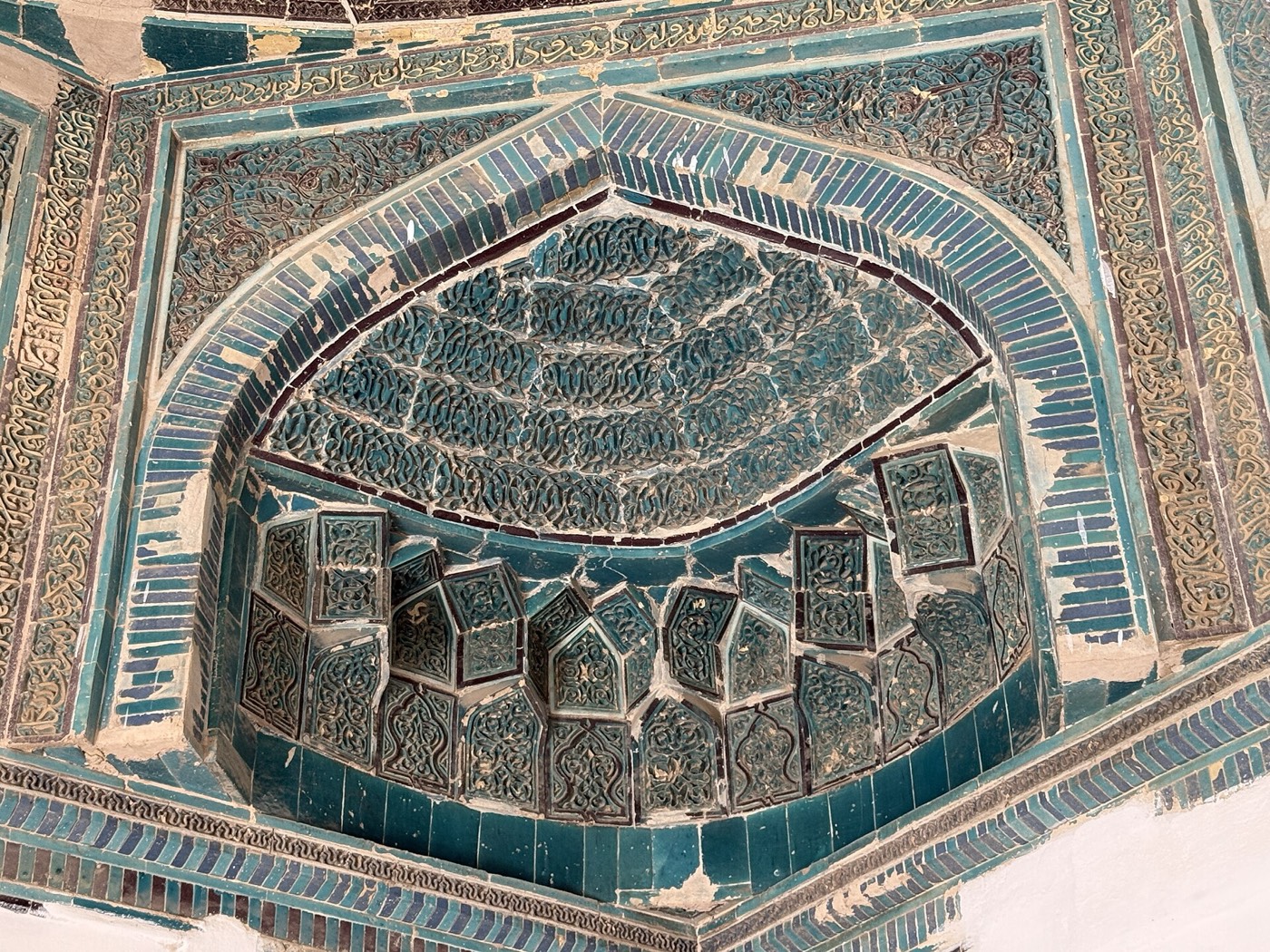
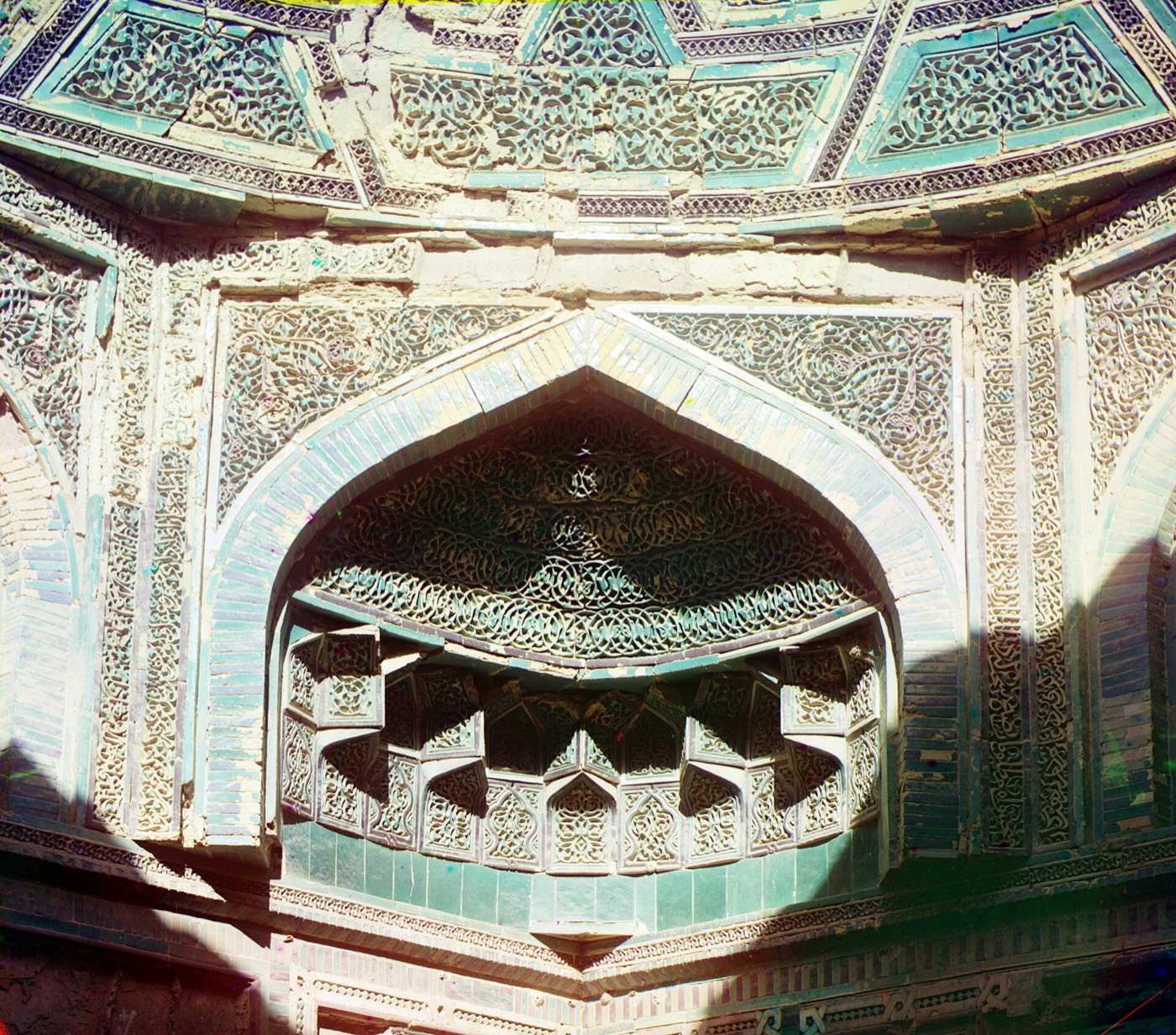
The V&A describes the tomb as a square, domed building with a monumental entrance, sheathed inside and out with tiles that were deeply carved with inscriptions and ornament and covered with coloured glazes before the final firing1,2. A long frieze with an Arabic inscription, which named the khan, ran round the outer edge of the entrance arch; its words were picked out in white glaze against arabesques in blue-green1,4. An engaged column stood beside the entrance; its capital, with two faces set at a right angle, is carved with leafy scrollwork glazed white, turquoise, blue and black3.
درون بنا
آنچه باید دید
- Carved glazed terracotta panels preserved in the tomb chamber5.
- Tiles deeply cut before glazing, in turquoise, white, blue and black1,3.
- The square, domed form with a monumental entrance2.
- The neighbouring shrine of Sayf al-Din Bakharzi, from the same period5,6.
- Sections of the tomb’s friezes in the Victoria and Albert Museum, London1,4.
بازدید
- The tomb lies at Fathabad, on the outskirts of Bukhara, beside the shrine of Sayf al-Din Bakharzi3,5,6.
- Sections of its tilework are in the Victoria and Albert Museum in London, acquired in 18991,4.
مسیریابیباز کردن در OpenStreetMapتورهای همراه با راهنما در بخارا