この部分はまだ翻訳されていないため、英語で表示しています。
歴史
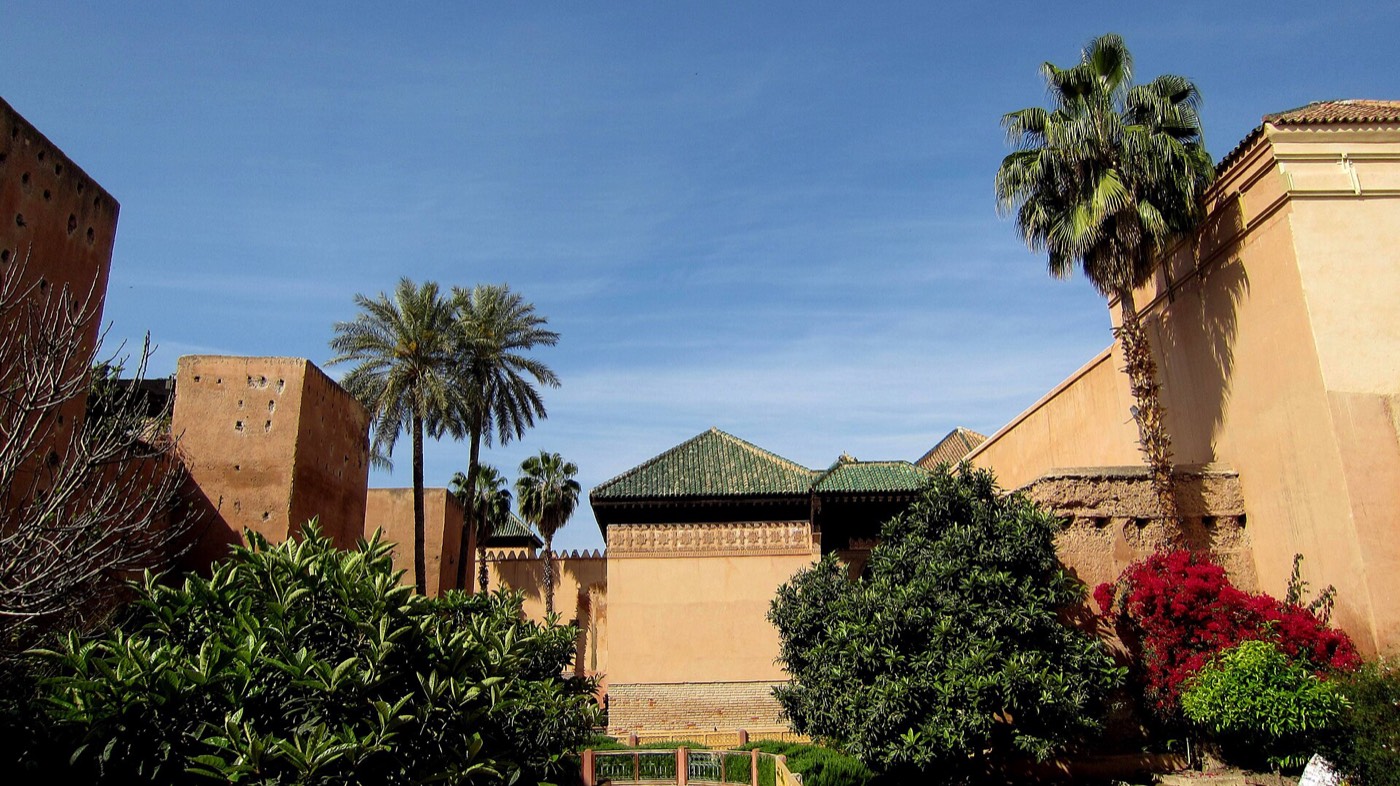
The necropolis lies in the kasbah of Marrakesh, against the south wall of the Almohad mosque of Ya'qub al-Mansur, the mosque of the kasbah4,3. Historical texts call it Qubur al-Ashraf, the tombs of the sharifs3. Discover Islamic Art notes that Almohad and Marinid ruling families had already buried relatives beside this mosque, although the present buildings are all Saadian3. According to Morocco’s Ministry of Culture, Sultan Abdallah al-Ghalib established the core of the necropolis in 1557 to house the tomb of his father Muhammad al-Shaykh, founder of the dynasty2. Al-Ghalib, who died in 1574, was also buried here, as were several other members of the Saadian family2.
Ahmad al-Mansur, who reigned from 1578 to 1603, restored Marrakesh to its former grandeur, according to Britannica7. He buried his mother Lalla Mas'uda here in 1591 and enlarged and embellished the necropolis2. Archnet dates the second and larger mausoleum, al-Mansur’s own, to 1591-16034. He died at Fez in 1603 and was buried here with several of his heirs7,2. Archnet records that the necropolis was sealed off in 1677, yet the ministry names among its tombs that of the Alawite sultan Moulay al-Yazid, who died in 17924,5,2. In 1917 the Service des Beaux-Arts et des Monuments found the complex, and the same service restored it2,6.
建築
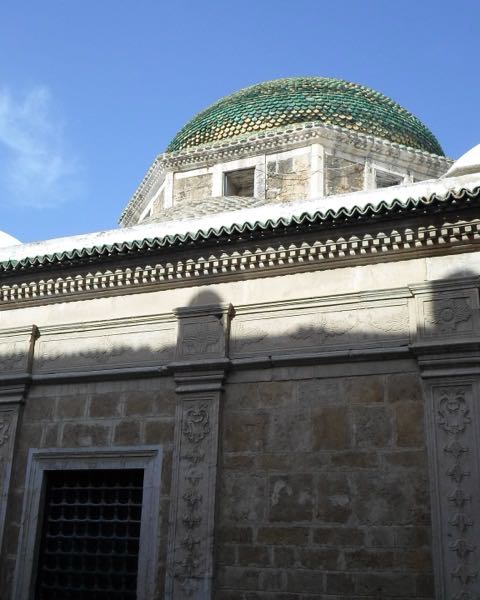
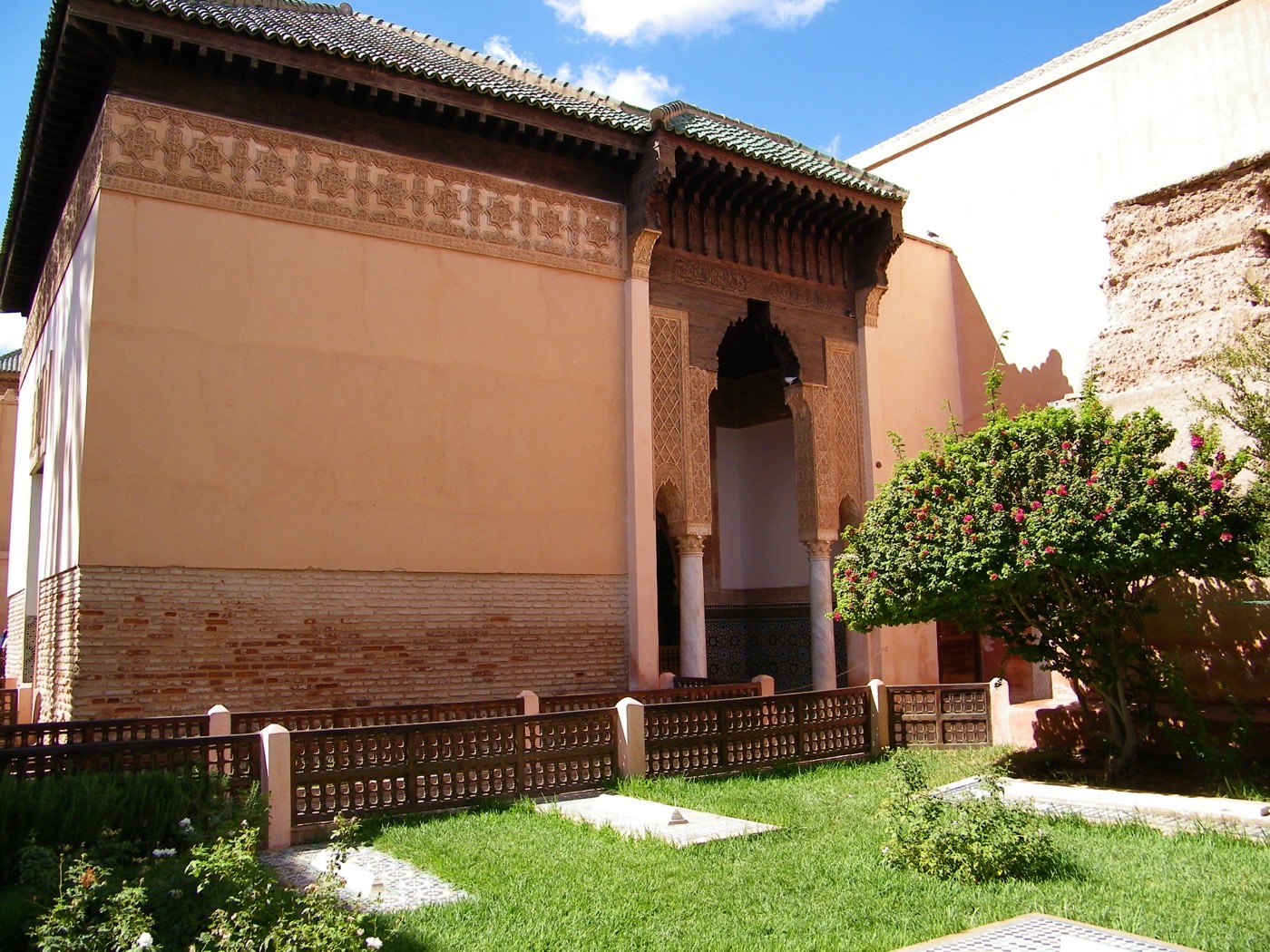
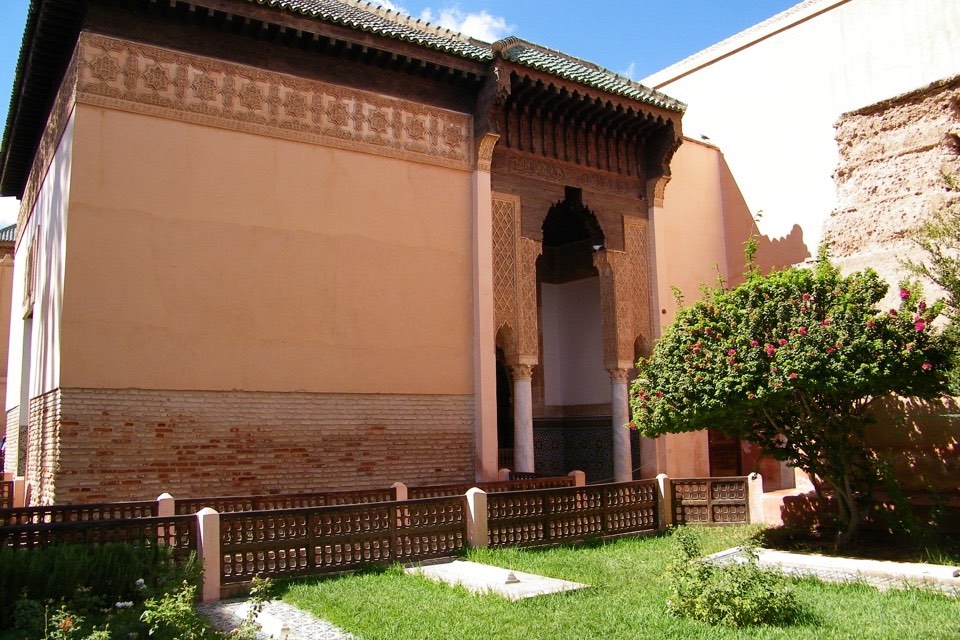
UNESCO lists the Saadian tombs among the works of architecture and art in Marrakesh that could each, on its own, justify recognition of outstanding universal value1. A walled garden of 85 by 25 m holds two mausoleums and is entered from the west through a narrow open-air corridor about 13 m long4. The older one, on the north side, began as al-Ghalib’s domed qubba, a cubic chamber about 4 m wide with muqarnas niches and carved plaster picked out in polychrome gilding4,3. In the 1590s al-Mansur wrapped it in a room of about 10 by 6 m and two loggias with paired white marble columns and cedar lintels carved with inscriptions, forming a pavilion 10 m square under a green tiled roof4. The ministry calls this part the Qubba of Lalla Mas'uda2,8.
Al-Mansur’s own mausoleum, along the west wall, measures about 15 by 23 m4. From south to north it holds a prayer hall with a mihrab, the Hall of Twelve Columns and the Hall of Three Niches3,2. The central hall is 10 m square and 11.5 m high according to Discover Islamic Art (12 m according to Archnet); twelve columns carry three muqarnas arches on each side, and a muqarnas cornice frames its geometric wooden ceiling3,4. Zellij covers the floors and the walls up to about 2 m, below carved stucco with inscription bands and a cedar entablature4. Abbey Stockstill notes that the tombs are thought to follow the Marinid necropolis at Chellah, and the ministry sees both Marinid and Andalusian influences in the decoration5,2.
内部
In the Hall of Twelve Columns, five large cenotaphs, al-Mansur’s among them, stand in the central space, and smaller ones lie in the surrounding gallery4. Muqarnas arches span the galleries, with small square domes at the corners3. The prayer hall to the south is divided into three aisles, and its wooden ceiling is covered with geometric knotwork except behind the mihrab, where muqarnas take over3. In the older pavilion lie Muhammad al-Shaykh and al-Mansur’s mother Lalla Mas'uda4,2. The tombs are pyramidal in shape and faced with marble or zellij2. Discover Islamic Art counts 56 stelae and about 100 tombs in the chambers and the walled garden3.
見どころ
- The Hall of Twelve Columns, with muqarnas arches around a geometric wooden ceiling3.
- Al-Mansur’s cenotaph among the five large ones in the centre of that hall4.
- Paired white marble columns and inscribed cedar lintels on the loggias of the older pavilion4.
- Zellij on the floors and lower walls, below carved stucco with inscription bands4.
- Outdoor graves of royal servants and soldiers among the plants of the garden5.
見学案内
- Tickets are sold online on the Ministry of Culture’s e-services portal2.
- The entrance is on the west side, through a narrow open-air corridor about 13 m long beside al-Mansur’s mausoleum4.
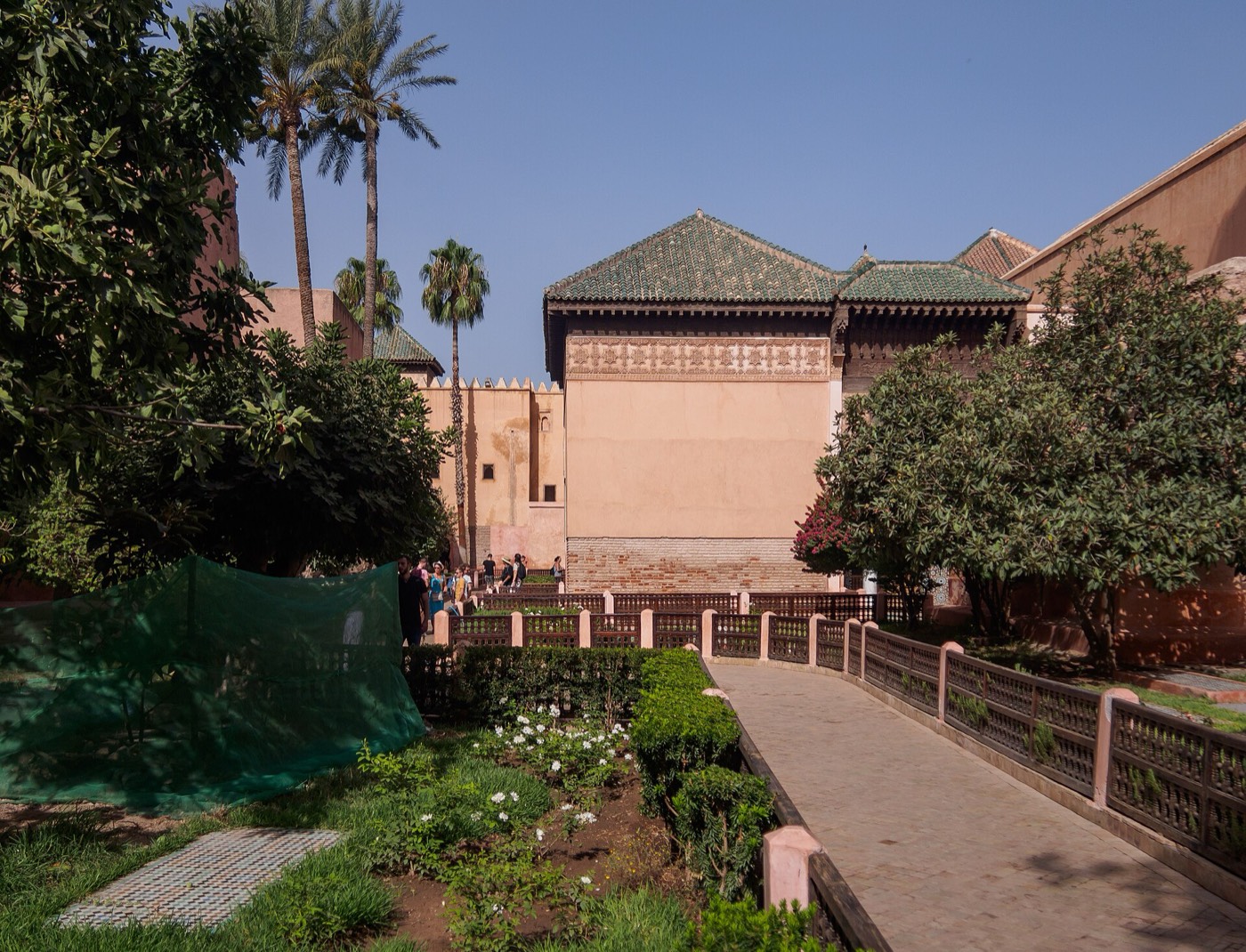
- A tiled walkway runs through the garden, among outdoor graves of royal servants and soldiers5.
公式情報: Morocco’s Ministry of Culture; UNESCO notes that its Regional Inspection for Historic Monuments and Sites manages the historic monuments of the medina経路案内OpenStreetMapで開くマラケシュのガイドツアー