这部分尚未翻译,暂以英文显示。
历史
Süleyman I, known in Turkish as Kanuni ('the Lawgiver'), ruled the Ottoman Empire from 1520 to 15662,4. Sinan built the Süleymaniye complex for him in 1550-1557, and UNESCO cites the complex with its imperial tombs as one of the supreme examples of Ottoman religious ensembles1. The walled cemetery behind the mosque's qibla wall had already received the tomb of his wife Hürrem Sultan, who died in 15583,5,7. Süleyman died during the siege of Szigetvár in Hungary on the night of 6-7 September 15664. His death was kept secret: the body was embalmed and brought back with the army, and the news was announced only when the new sultan, Selim II, reached Belgrade4.
Back in Istanbul, the funeral took place at the Süleymaniye Mosque on 23 November 1566, and after the prayer led by the chief mufti (şeyhülislam) Ebussuud Efendi he was buried beside the mosque4. TDV says Sinan built the tomb a few weeks after the death; Yavuz Sezer dates it to 1566-1568, noting that the plot had been reserved for it in advance3,5. Archnet names Süleyman's son and successor, Selim II, as its patron14. According to Sezer, the endowment deed assigned Qur'an reciters to the tombs of Süleyman and Hürrem5. His daughter Mihrimah Sultan was buried beside him in 1578, and the tomb later received two sultans: Süleyman II in 1691, laid to his right, and Ahmed II in 16959,10,11.
建筑
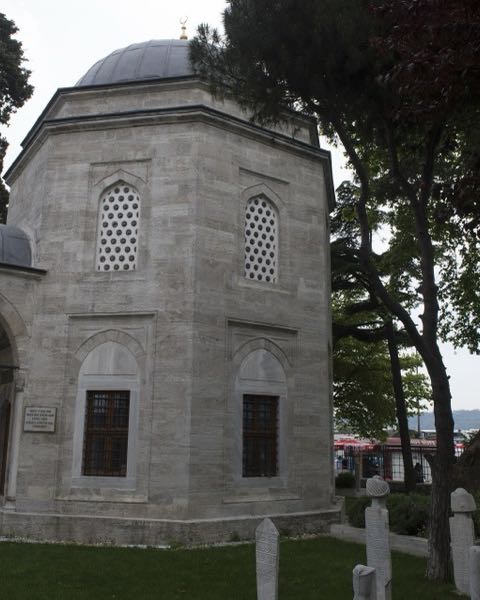
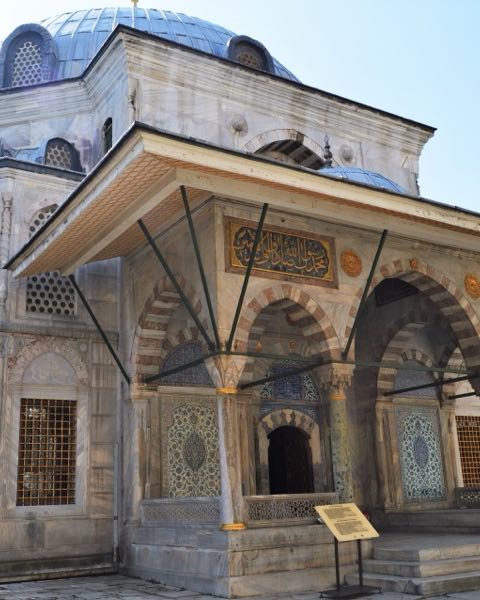
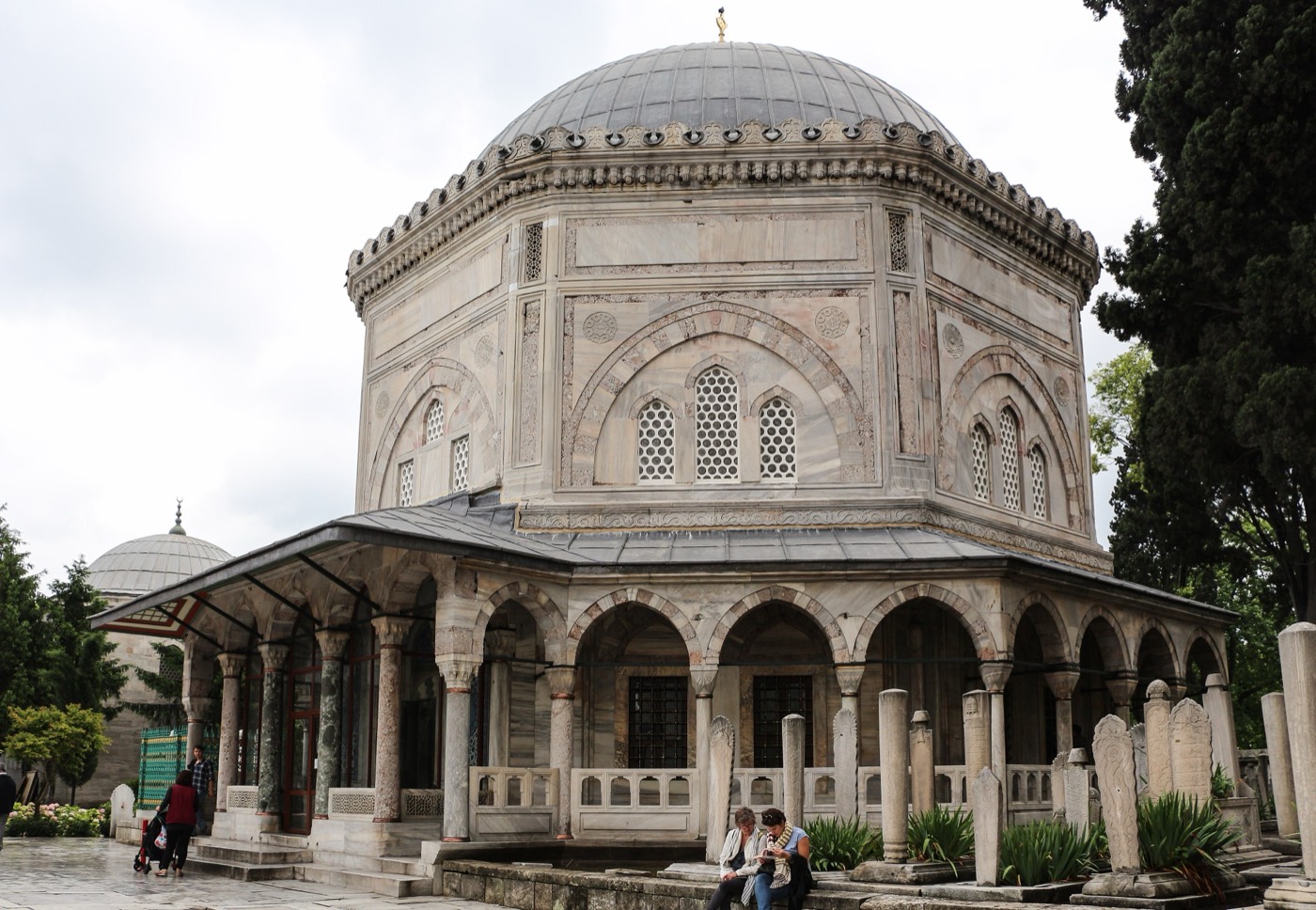
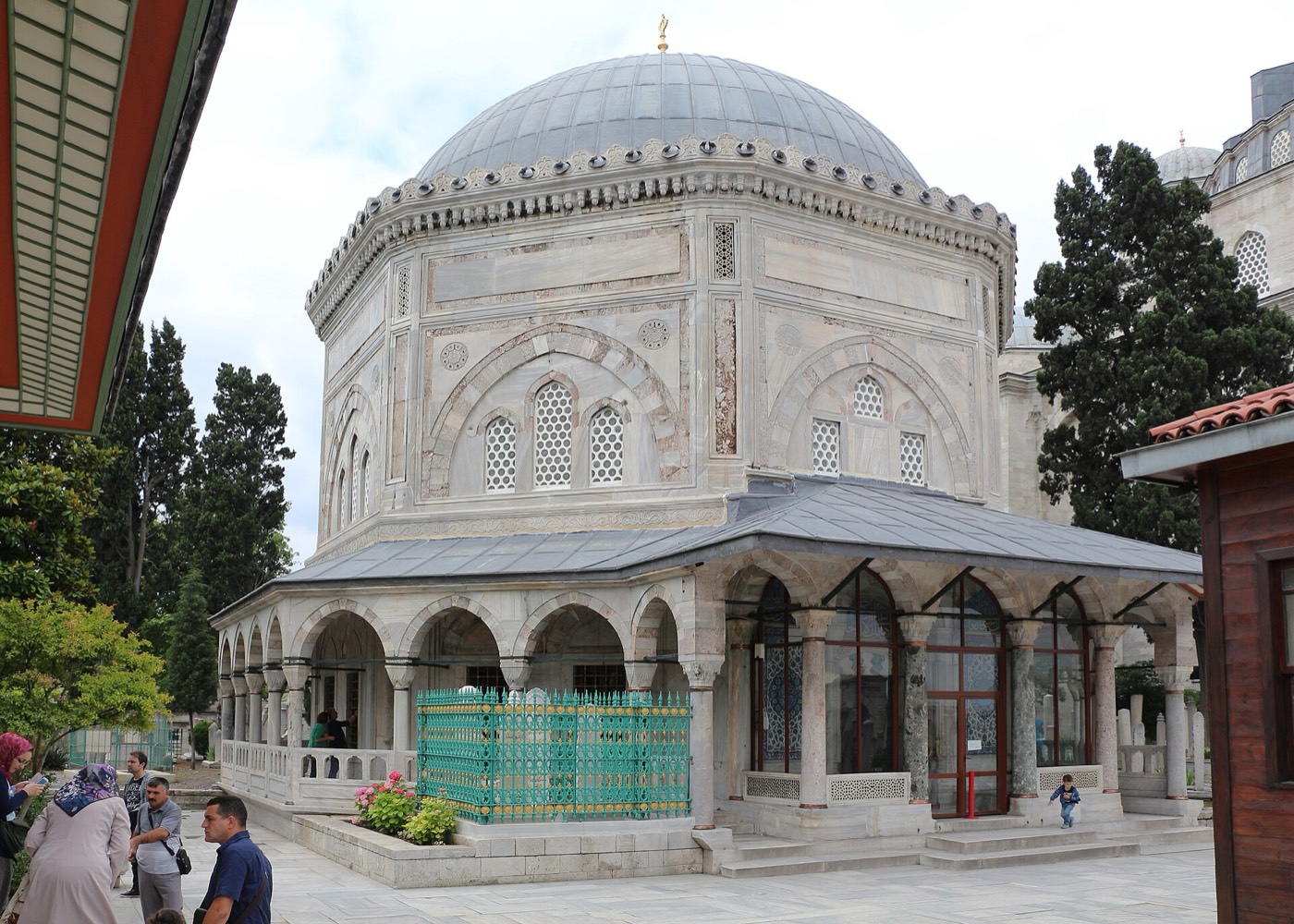
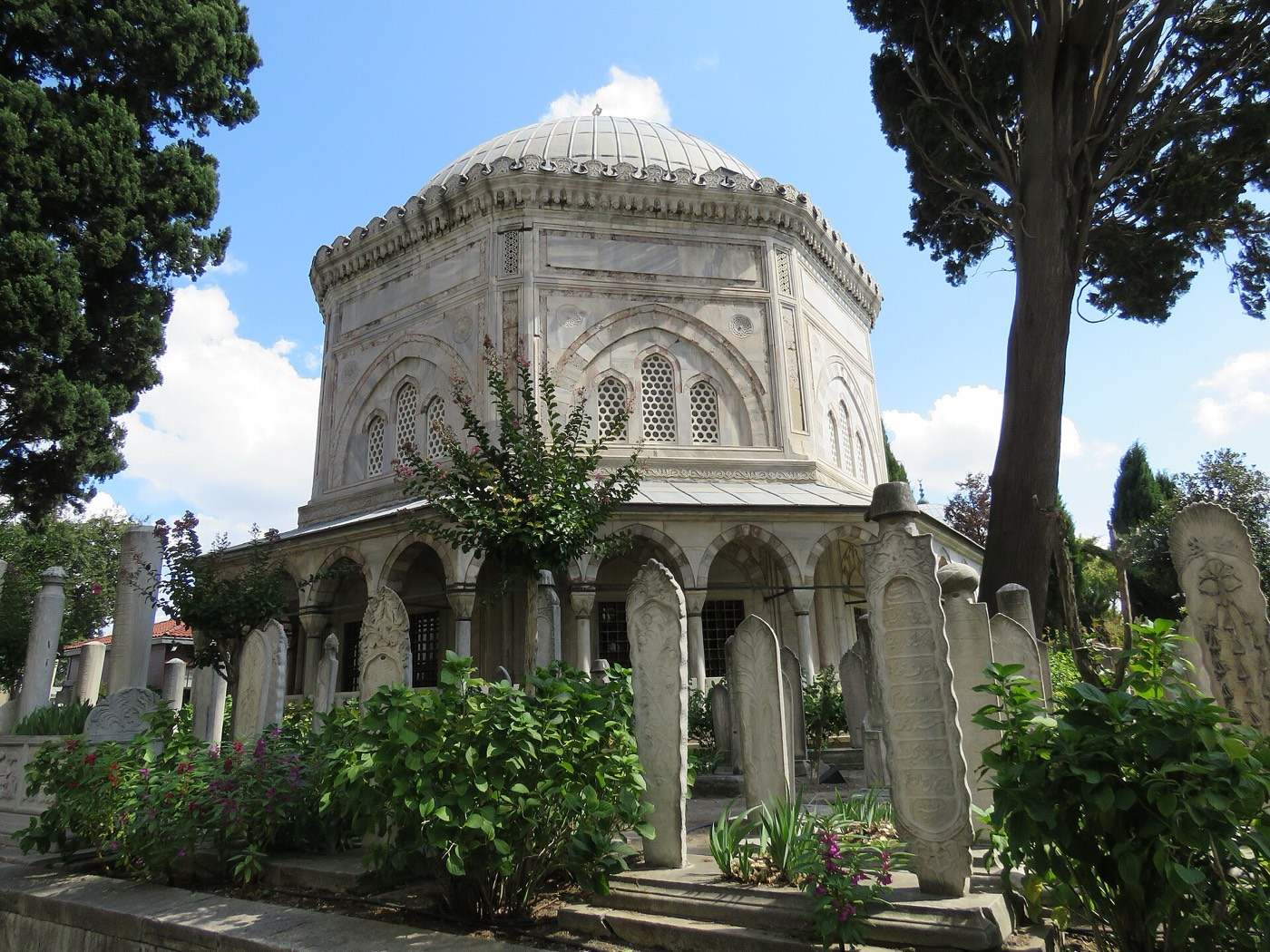
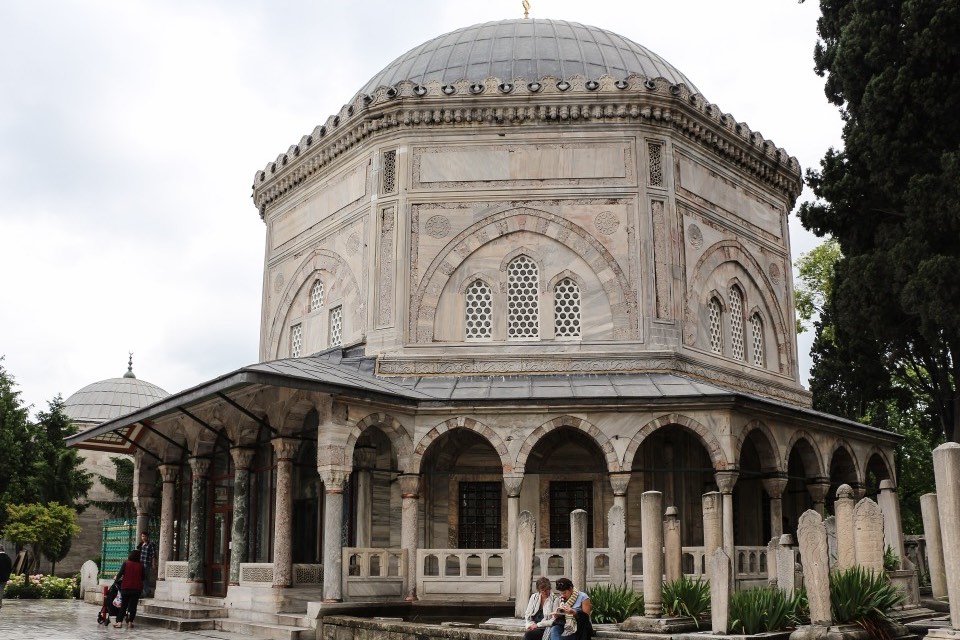
The tomb follows the octagonal plan of earlier sultans' tombs, but a portico of columns and arches, sheltered by a sloping roof, wraps around its lower part, a feature that TDV says sets it apart from other sultans' tombs3,6. Archnet describes the two tombs in the walled cemetery as domed octagons, Süleyman's being the more elaborate7. Above the portico each face has a group of three windows under an arch with coloured keystones, crowned by a heavy cornice; TDV sees here the most careful and colourful stonework of the period3. The Iznik tile panels under the portico use the new emerald green introduced around 15658.
Scholars connect the design with two older domed octagons5,6. Following Gülru Necipoğlu, Sezer and Mårtelius compare the ambulatory around a taller domed centre, the double-shell dome and the crystals in the inner dome with the Dome of the Rock in Jerusalem, a fitting model for a sultan named after Solomon5,6. Doğan Kuban stresses instead its likeness to the late Roman mausoleum of Diocletian at Split, where a domed octagon also rises above an outer colonnade5,6. Mårtelius also notes that a fragment of the Kaaba was set into the tomb, a practice found in Ottoman mosques since the Eski Cami in Edirne6.
内部
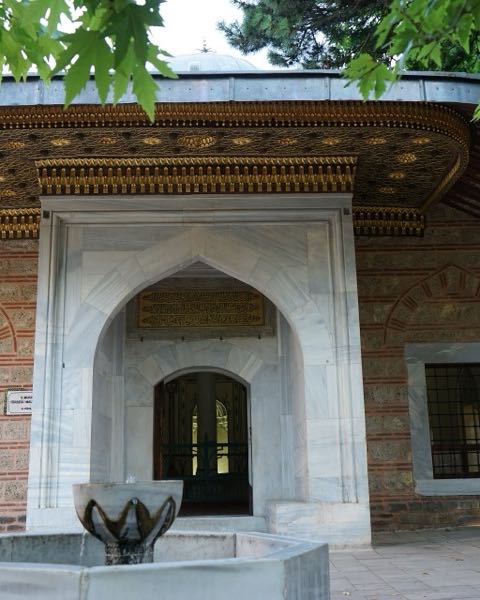
Inside, eight columns placed in front of the octagonal walls carry arches, a dense structure for so small a space, under a double-shell dome whose inner face is richly painted3. Sezer notes crystals set into the inner dome, and six-pointed stars known as the Seal of Süleyman on the windows5. Tiles of the classical period and coloured stonework add to the decoration, and TDV counts the door leaves, inlaid with mother-of-pearl and ivory, among the few such examples of their period3. The tomb holds the graves of Süleyman I, Süleyman II and Ahmed II, and TDV places Mihrimah Sultan's grave beside her father's4,9,10,11.
观赏要点
- The arcaded portico wrapped around the octagon, unusual among Ottoman sultans' tombs3,6.
- Iznik tile panels under the portico, using the emerald green introduced around 15658.
- The door leaves inlaid with mother-of-pearl and ivory3.
- Six-pointed stars, the Seal of Süleyman, on the windows5.
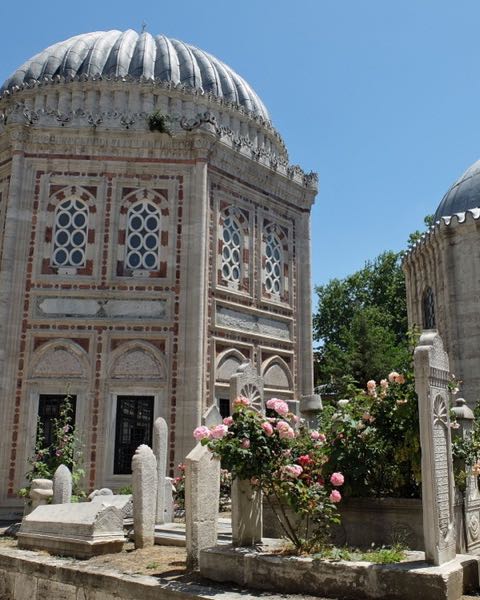
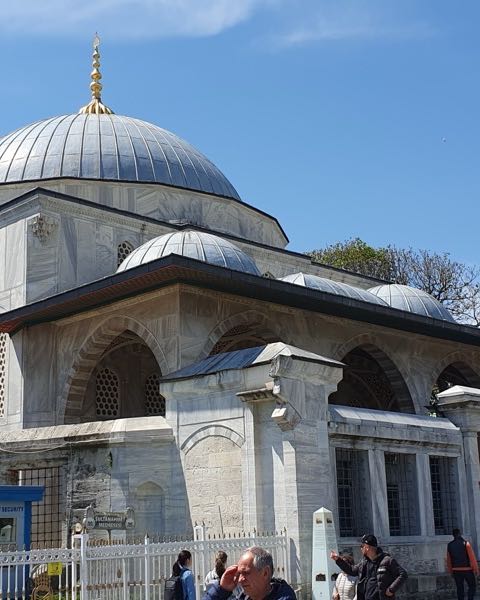
- Hürrem Sultan's octagonal tomb (1558), also by Sinan, to the southeast3,5.
参观信息
- The tomb stands in the walled cemetery behind the qibla wall of the Süleymaniye Mosque, next to the tomb of Hürrem Sultan3,7,13.
- It is one of the 122 tombs in Istanbul assigned to the culture ministry's Istanbul Tombs Museum Directorate12.
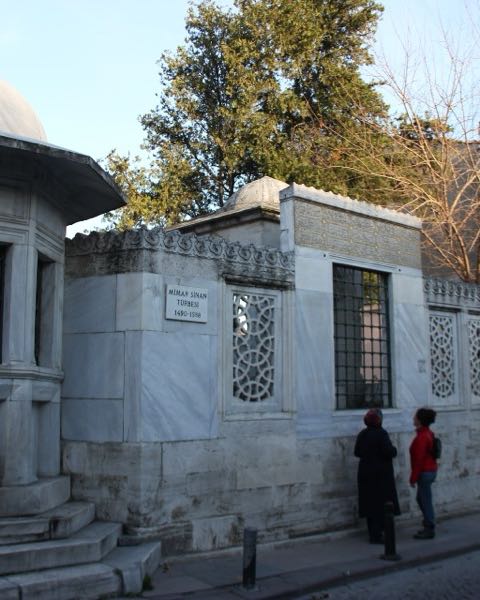
- Sinan's own tomb, shaped like an open garden pavilion behind a domed water fountain (sebil), lies north of the mosque near the Third (Sâlis) Madrasa3.
官方信息: Istanbul Tombs Museum Directorate (İstanbul Türbeler Müzesi Müdürlüğü), Republic of Türkiye Ministry of Culture and Tourism路线在 OpenStreetMap 中打开伊斯坦布尔导览游