这部分尚未翻译,暂以英文显示。
历史
Farid al-Din Attar, a Persian poet and Sufi, was born in Nishapur about 1145-46 and kept a pharmacy there, the trade his name refers to1,5. Encyclopaedia Iranica says he was killed in the Mongol massacre of the city in April 12215. His tomb lies in the old Shadyakh quarter, south-east of the modern city3,7. The Mir’at al-Mamalik, a travel account written in 1556-57, already mentions visits to the graves of Sheikh Attar and of Imamzadeh Mohammad Mahruq, the shrine beside which Omar Khayyam’s tomb now stands3. Ali-Shir Nava’i built over the grave in the reign of the Timurid sultan Husayn Bayqara, and in 1496-97 he ordered the decayed tombs repaired4,7.
Under Mohammad Ali Shah Qajar a governor of Khorasan planned a new building over the grave, but unrest in the country stopped it1. In 1958 the Society for National Heritage, then building Nader Shah’s tomb in Mashhad, decided at the Shah’s wish to start building the tombs of Khayyam, Attar and the painter Kamal-ol-Molk to Houshang Seyhoun’s designs, so that the Shah could open them together with Nader’s2. An inscription on the new gateway of the Imamzadeh garden lists Attar’s tomb among the works restored, rebuilt or completed under Seyhoun between 1959 and 19683; Encyclopaedia Iranica counts the work on it as a repair6. Visit Iran says it took its present form then and was partly restored again in the 1990s1.
建筑
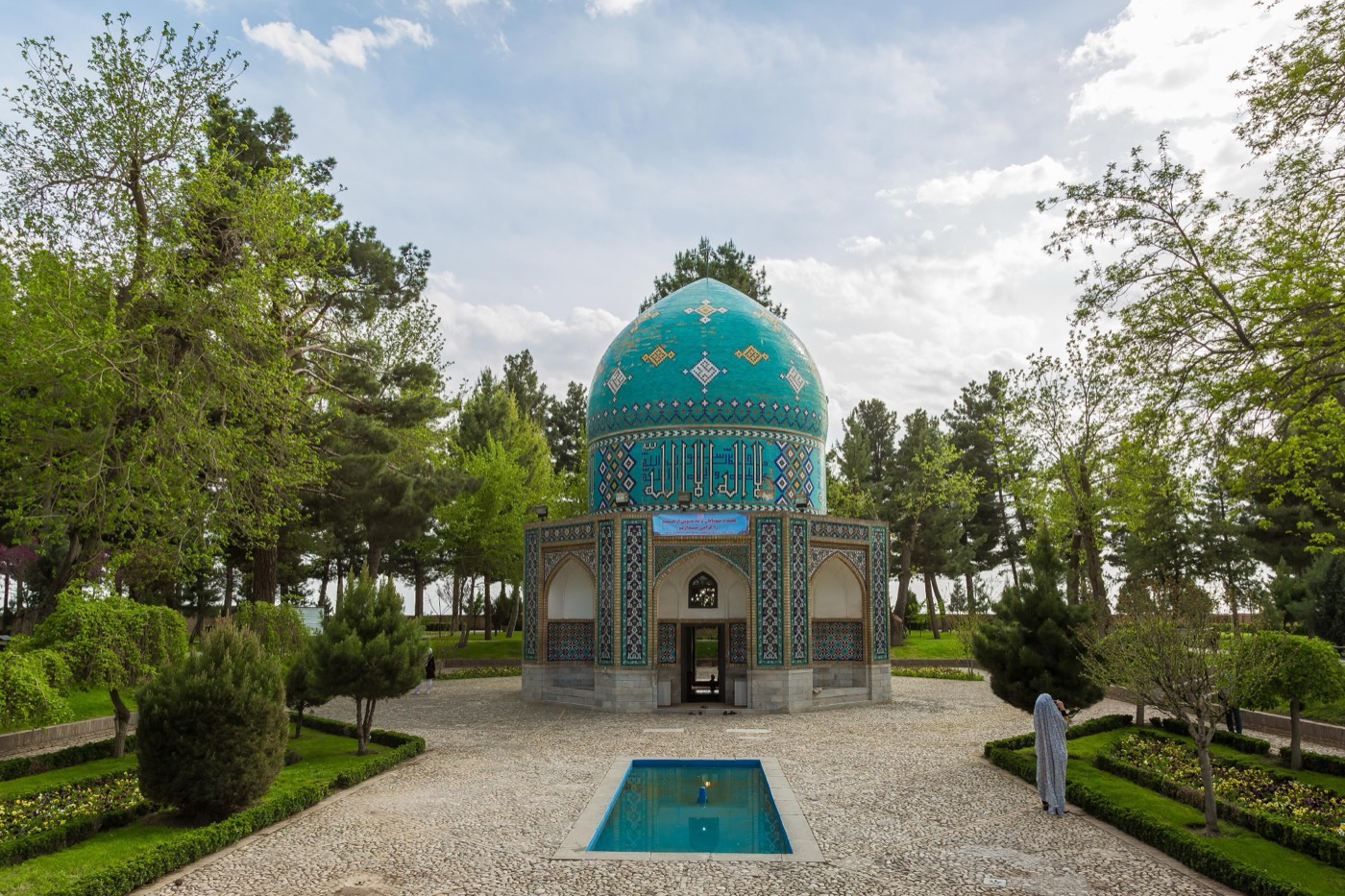
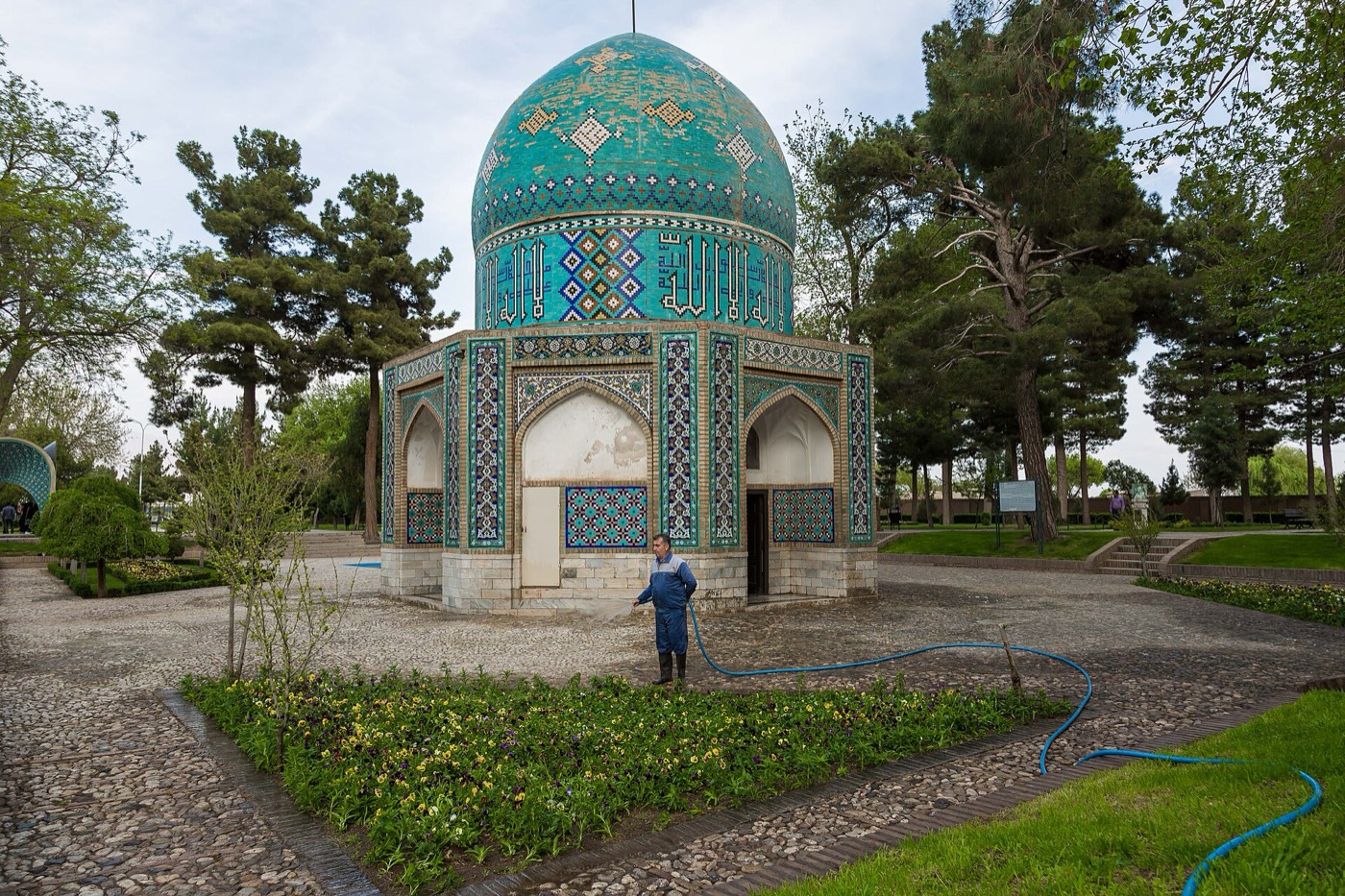
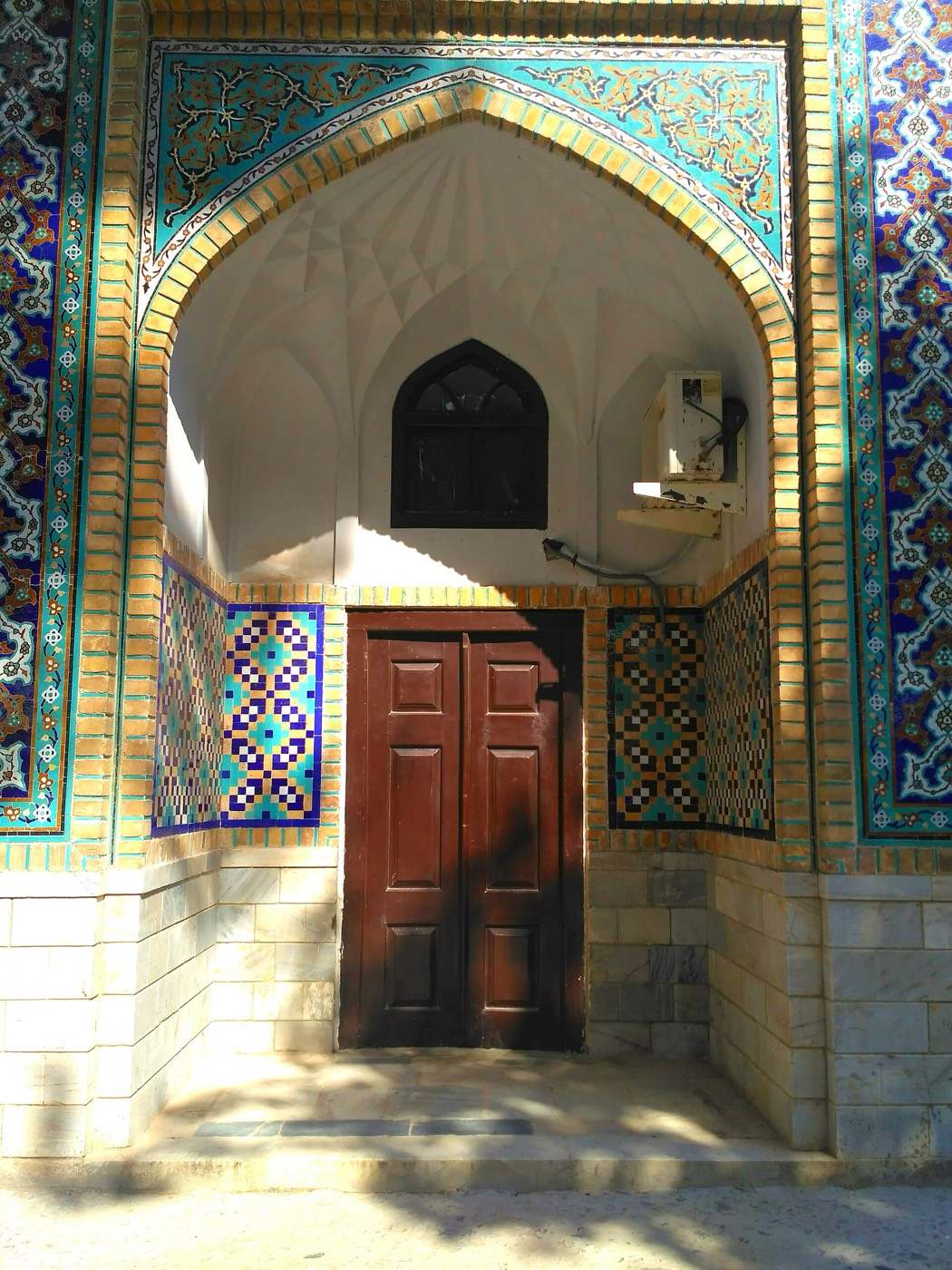
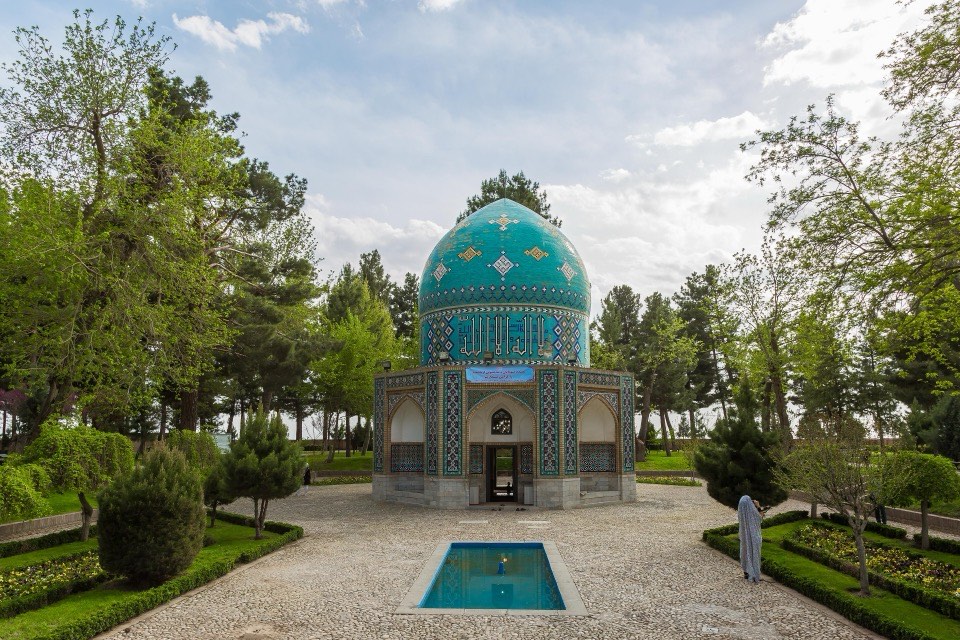
The tomb is an octagonal domed chamber4. Outside, entrance iwans on the main axes alternate with semi-octagonal niches, under a bulbous double dome on a high drum7. Photographs taken in 1908-09 show the building without any exterior tilework and without the outer shell of the dome7. Bernard O’Kane notes that a single chamber is not what the khanqah described by the chronicler Khvandamir would lead one to expect, and that it is much smaller than the domed chambers Ali-Shir Nava’i built at Langar and Azadan: both are arguments against a Timurid date7. According to Archnet, the tilework of the exterior and the layout of the garden date from the restoration of the 1960s4.
The tomb stands in a garden that also holds the tomb of the painter Kamal-ol-Molk, designed by Seyhoun; Visit Iran points out how closely the two buildings match, so that they read as parts of one complex1. In the same programme of the 1960s a tree-lined avenue with three roundabouts was laid out to link Attar’s tomb with Omar Khayyam’s3. The composer Parviz Meshkatian is also buried in the garden1.
内部
When O’Kane recorded the building in 1975, four windows above a tall dado alternated inside with shallow semi-octagonal niches, and the dome rose on smooth pendentives7. The grave is marked by an elaborate Timurid tombstone4. It is a tablet attached to an octagonal shaft: blessings on the twelve imams run round the top of the shaft, the date 891 AH (1486) is cut in figures on its back, and the 28-line inscription on the tablet, mostly a Persian poem, praises Attar, names Sultan Husayn and Ali-Shir Nava’i, and ends with the name of its maker, Muhyi al-Din ibn Kamal al-Din7. O’Kane notes that what the poem says about Attar’s death cannot be reconciled with the Mongol sack of 12217.
观赏要点
- The Timurid tombstone of 1486, a tablet on an octagonal shaft inscribed with a long Persian poem4,7.
- The octagonal chamber, with entrance iwans alternating with niches under a bulbous double dome4,7.
- The tilework of the exterior, from the restoration of the 1960s4.
- The neighbouring tomb of Kamal-ol-Molk by Houshang Seyhoun, in close harmony with Attar’s1.
- The 1960s avenue with three roundabouts linking Attar’s tomb with Omar Khayyam’s3.
参观信息
- The tomb stands in a garden on Erfan Street, on the road from Nishapur towards Mashhad1.
- The tombs of the painter Kamal-ol-Molk and the composer Parviz Meshkatian are in the same garden1.
- A commemoration of Attar is held every year on 25 Farvardin of the Iranian calendar (mid-April), Attar Memorial Day1.
官方信息: Iran’s Ministry of Cultural Heritage, Tourism and Handicrafts (official Visit Iran portal)路线在 OpenStreetMap 中打开内沙布尔导览游