이 부분은 아직 번역되지 않아 영어로 표시됩니다.
역사
Hızır, known as Hayreddin and in Europe as Barbarossa, was born around 1478, a son of Yakub, a cavalryman (sipahi) settled on Lesbos2. Europeans first gave the name Barbarossa, “red beard”, to his elder brother Oruç, and Sultan Selim I named him Hayreddin2. Received by Süleyman I in December 1533, he was appointed grand admiral (kapudan-ı derya) on 6 April 1534, and in September 1538 he routed the allied fleet of Andrea Doria off Preveza2. After his last great campaign, to Nice in 1543, he died after a short illness on 5 July 1546 and was buried in his tomb beside the madrasa he had built in Beşiktaş2.
The inscription over the door is dated 948 AH (1541-42), about five years before his death1,3. Düzenli counts the tomb among Sinan's first works, the next after the Haseki Hürrem complex of 1538-1540, and it appears in the lists of Sinan's buildings4,5. It stood on Deve Meydanı, now Barbaros Square, beside his mansion, madrasa and bath, of which only the tomb survives1,3. A custom grew up for the fleet leaving for the Aegean to anchor off Beşiktaş by the tomb2,3. A monument to Barbaros was unveiled beside it in 1944, after the graveyard around it had been partly cleared1,3. Under a 1979 protocol the tomb is in the care of the Naval Museum3.
건축
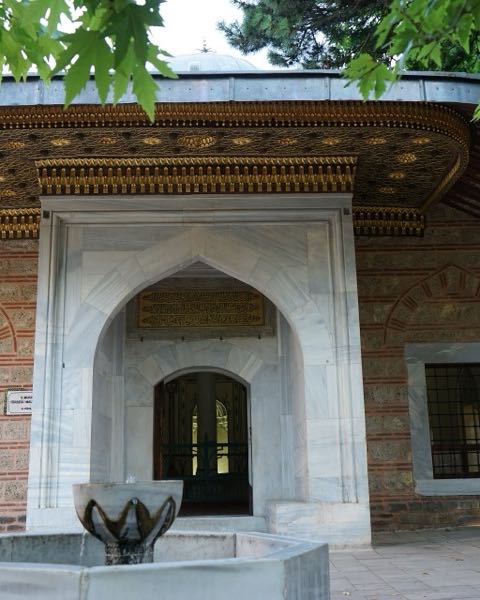
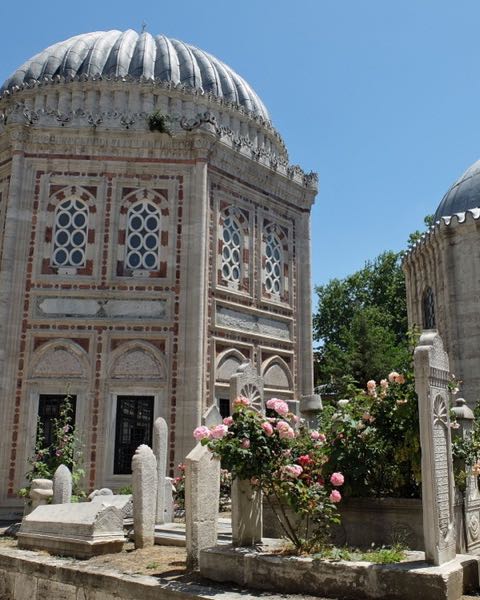
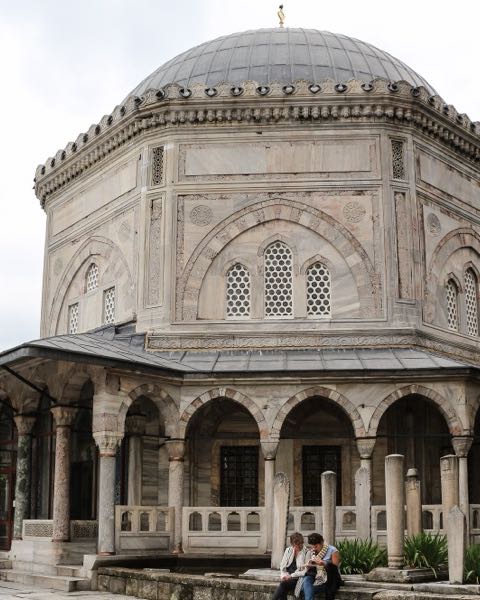
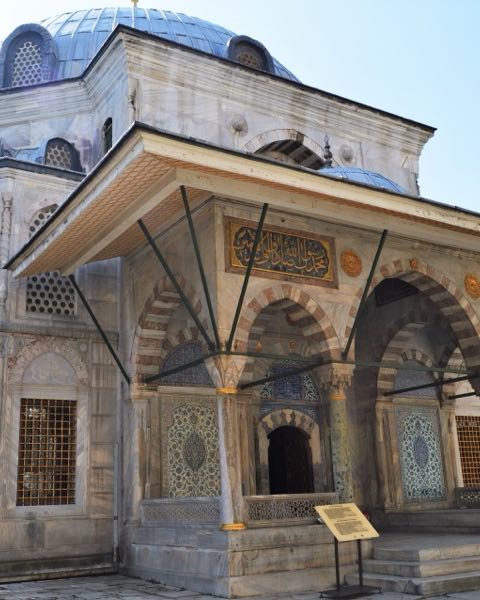
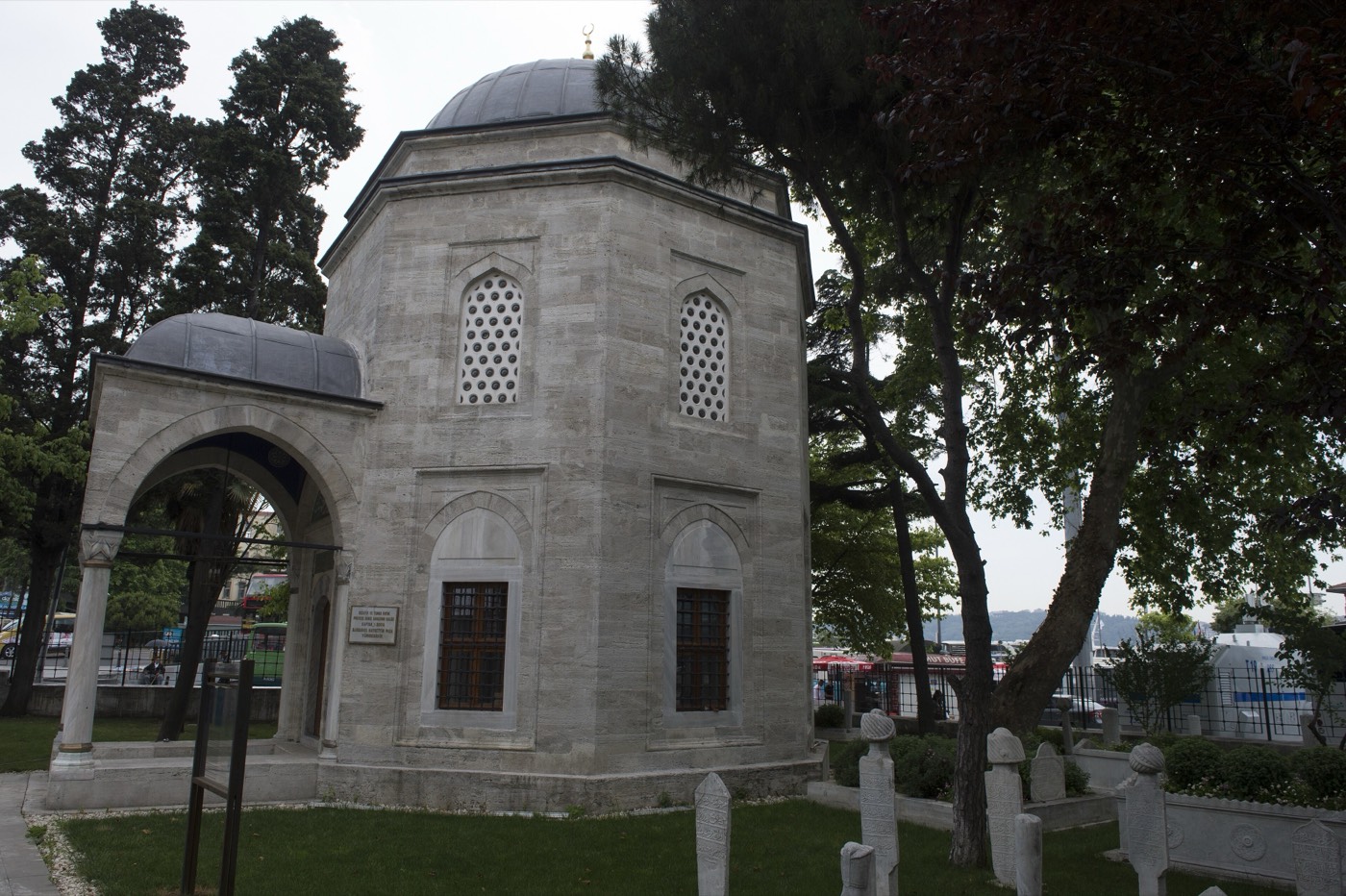
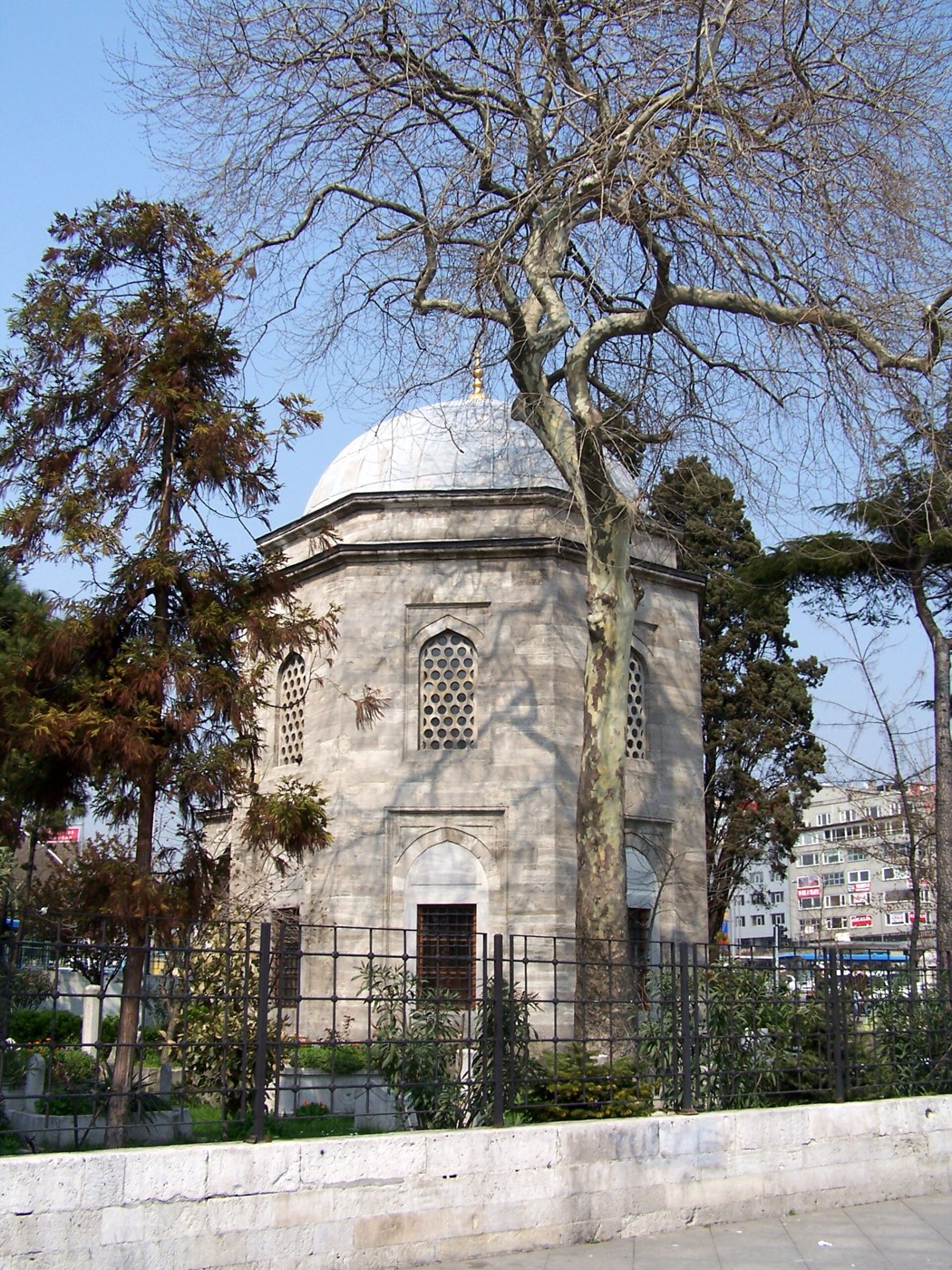
The tomb is a classical octagon of cut küfeki stone, plain on the outside, with a lead-covered dome on a low octagonal drum1,3. All the faces are alike, and each, except the entrance side, has two windows: the upper one pointed and filled with a plaster grille and coloured glass, the lower one rectangular, with a marble frame and an iron grille1,3. A porch with a mirror vault on pointed arches and marble columns with lozenge capitals shelters the door1,3. Turgut Cansever, quoted by Düzenli, saw in these closely paired, framed windows the beginning of the facade style that Sinan developed up to the Selimiye Mosque4.
Over the door, a two-line thuluth inscription reads “Hâzâ türbe-i fâtih-i Cezâyir ve Tunus merhum gazi kapudan Hayreddin Paşa rahmetullâhi aleyh, sene 948” (“This is the tomb of the conqueror of Algiers and Tunis, the late gazi admiral Hayreddin Pasha, God's mercy be upon him, year 948”)1,3. In the arch above it, a prayer in large thuluth script asks God to open for him the gates of His mercy1,3.
내부
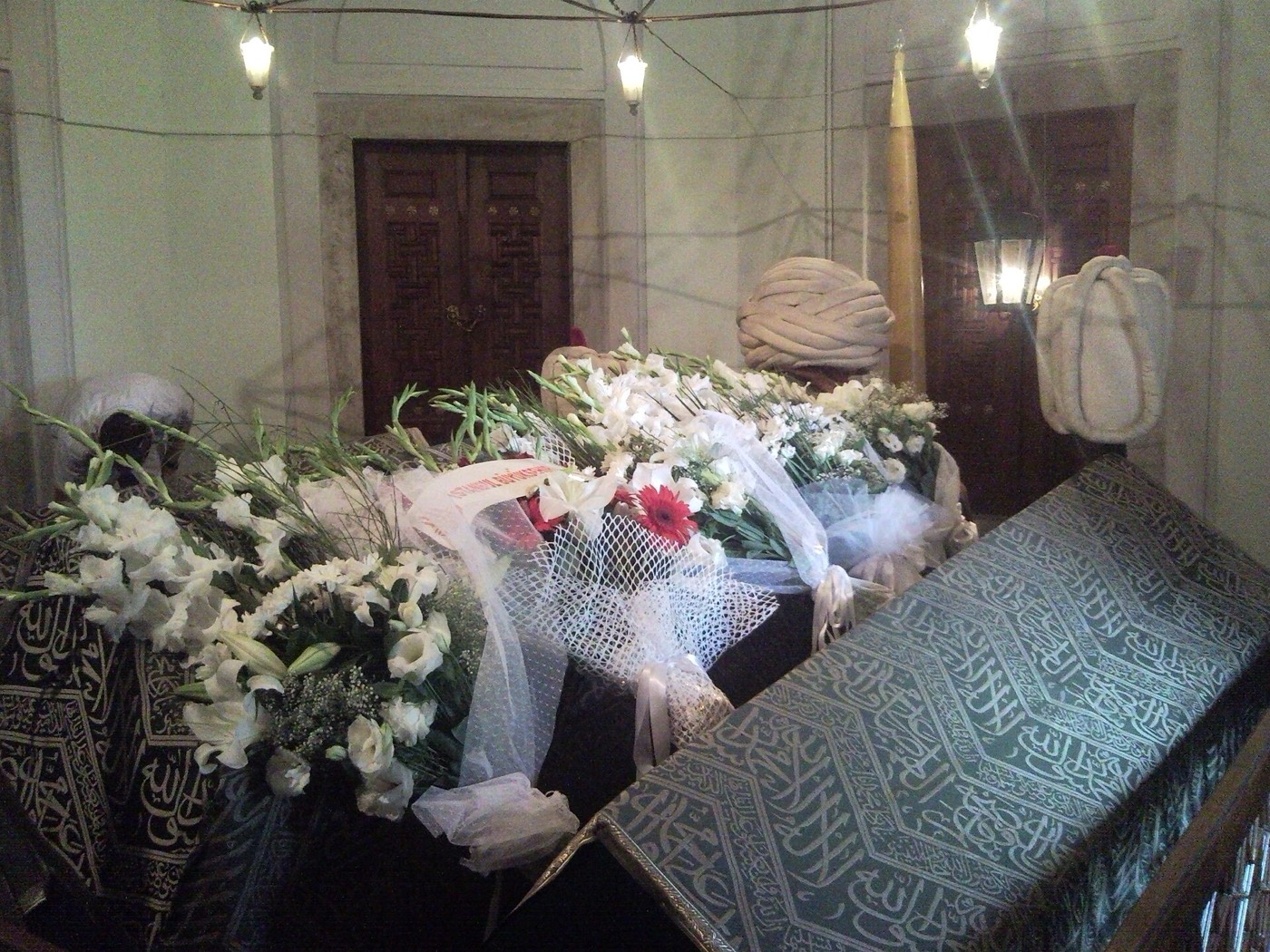
Inside, the plain scheme of the facades continues, which gives the room a spacious feel1. Four wooden cenotaphs stand on a raised platform within a wooden grille; from the right they mark Grand Admiral Cafer Pasha (d. 1608), Barbaros Hayreddin Pasha, his son Hasan Pasha, three times governor of Algiers, and Barbaros's wife Bala Hatun1,3. The dome rests on muqarnas squinches, and its painted rumi scrolls, palmettes and medallions on a dark blue ground frame a central medallion with the basmala and part of verse 89 of Surat al-A'raf in gold1,3. The upper windows have coloured glass in decorated plaster frames, and the door of interlocking wooden panels (kündekâri) was made by the craftsman Asaf Çakır during the 1958 restoration3.
감상 포인트
- The 948 AH (1541-42) door inscription calling Barbaros “conqueror of Algiers and Tunis”1,3.
- The paired windows on each face, which Cansever read as the start of Sinan's facade style4.
- The four wooden cenotaphs under the gilded medallion of the dome1,3.
- The Barbaros monument of 1944 between the tomb and the Naval Museum3.
관람 안내
- The tomb stands on Barbaros Square in Beşiktaş, in the Sinan Paşa quarter, next to the Naval Museum1,3.
- Since 2019 it has been open on the days the Naval Museum is open3.
공식 정보: Istanbul Naval Museum (Deniz Müzesi), Turkish Naval Forces Command, to which the tomb was allocated by a 1979 protocol with the General Directorate of Foundations길찾기OpenStreetMap에서 열기이스탄불 가이드 투어