이 부분은 아직 번역되지 않아 영어로 표시됩니다.
역사
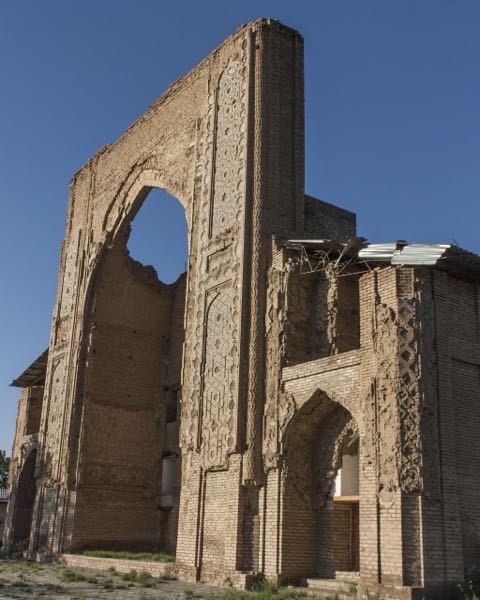
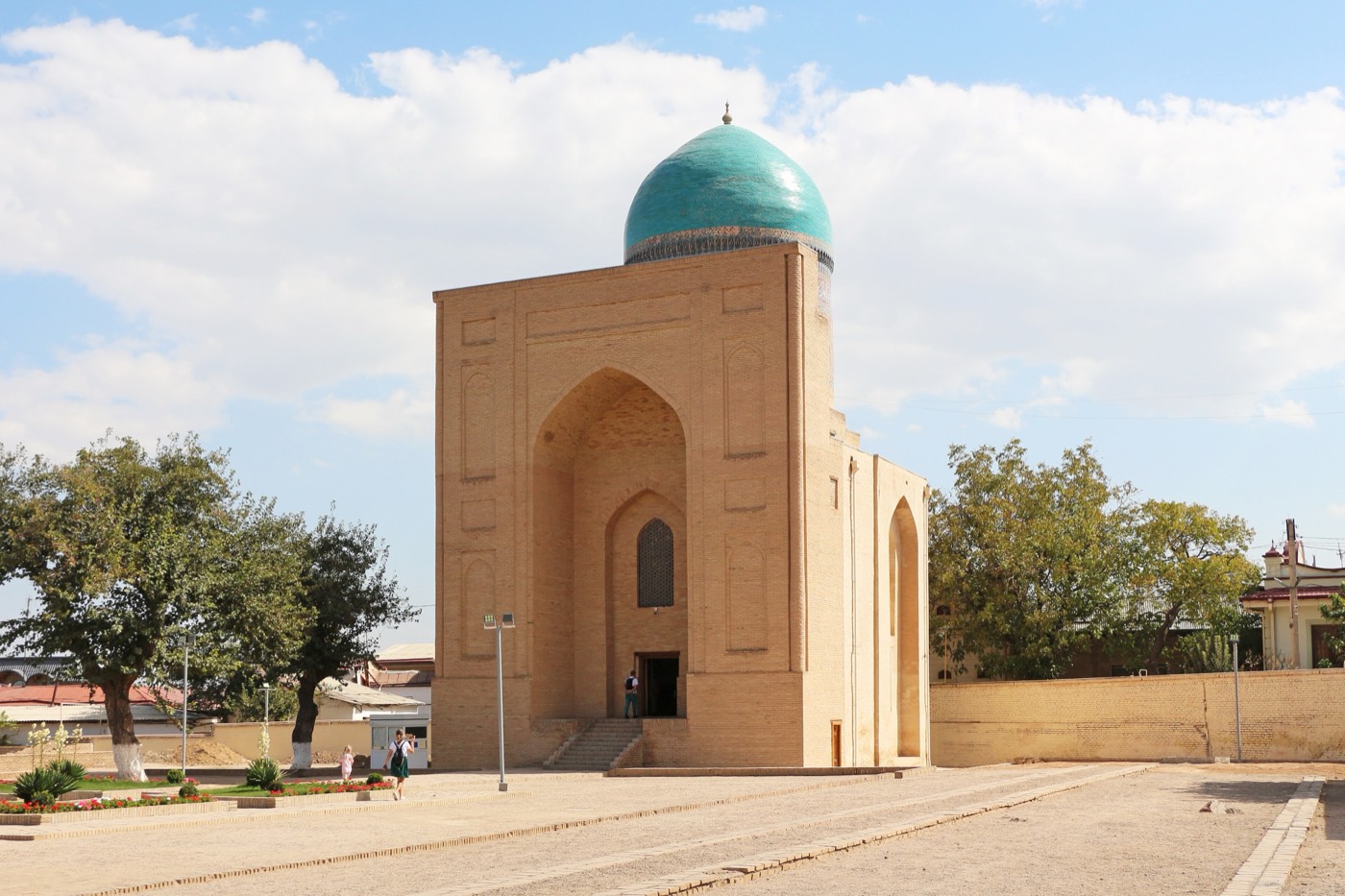
Timur commissioned the congregational mosque of Samarkand, now known as the Bibi Khanym Mosque, after his Indian campaign, and ICOMOS dates it to 1399-14052,4. Across the road his chief wife, the Chinggisid Saray Mulk Khanum, built a madrasa; the two main entrances faced each other on the new trading street from the Iron Gate to the bazaar at the Registan4. Returning in the autumn of 1404, Timur found his mosque’s portal lower than hers and ordered it rebuilt, and late in 1404 he stayed at her madrasa while supervising the work4. The Castilian envoy Ruy González de Clavijo, who saw the work, described the mosque as built in memory of the mother of Timur’s wife, the Great Khanum6.
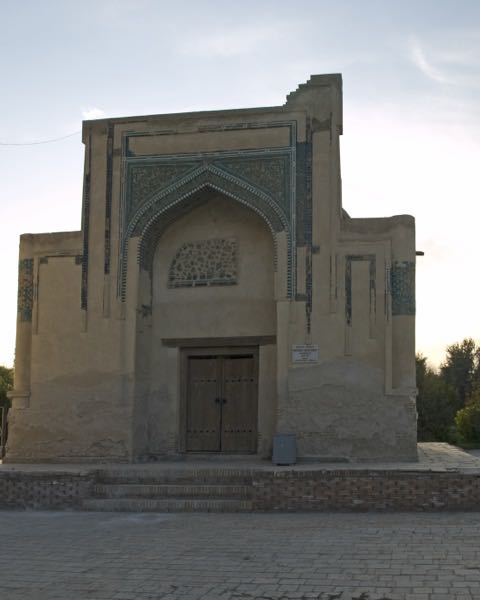
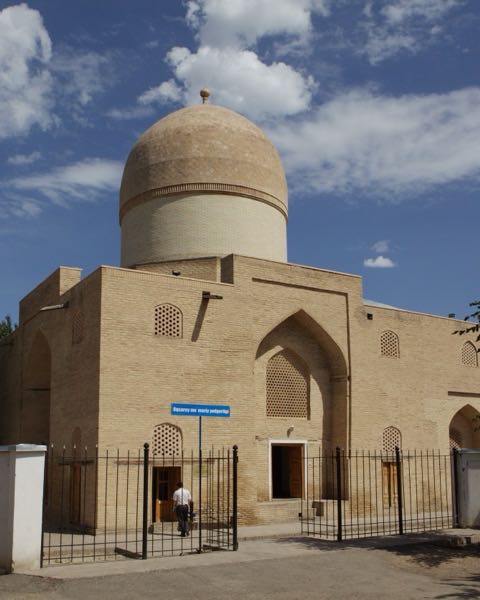
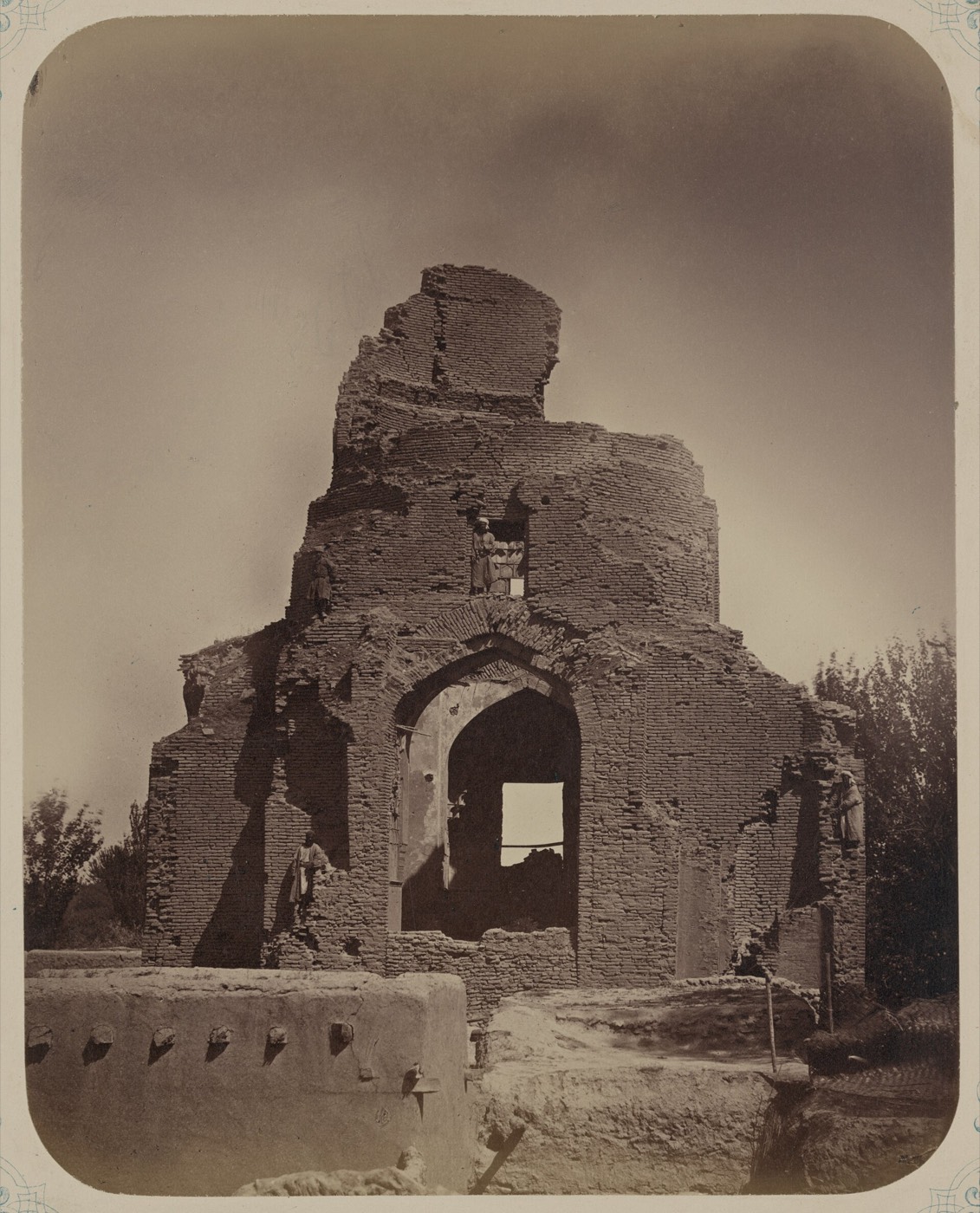
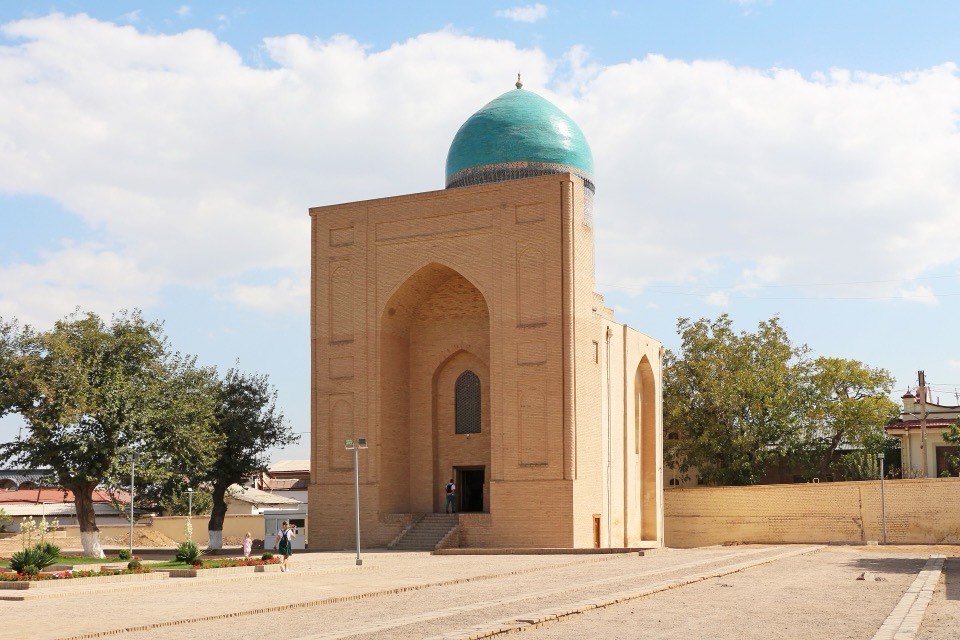
Archnet describes the domed tomb as built for Saray Mulk Khanum, and Leiden dates it to the early 15th century3,5. Abdullah Khan II of Bukhara destroyed the madrasa at the end of the 16th century, leaving only the mausoleum4. P. Zakhidov held that the queen was buried in her madrasa, but the female burials found in the mausoleum in 2005 are of a later date4. The octagonal building had been reduced to ruins; in 2005-6, before Samarkand’s 2750th anniversary in 2007, it was given a new dome on a high drum and rebuilt facades with arched portals5. UNESCO names the Bibi-Khanum Mosque and Mausoleum among the major monuments of the World Heritage property1.
건축
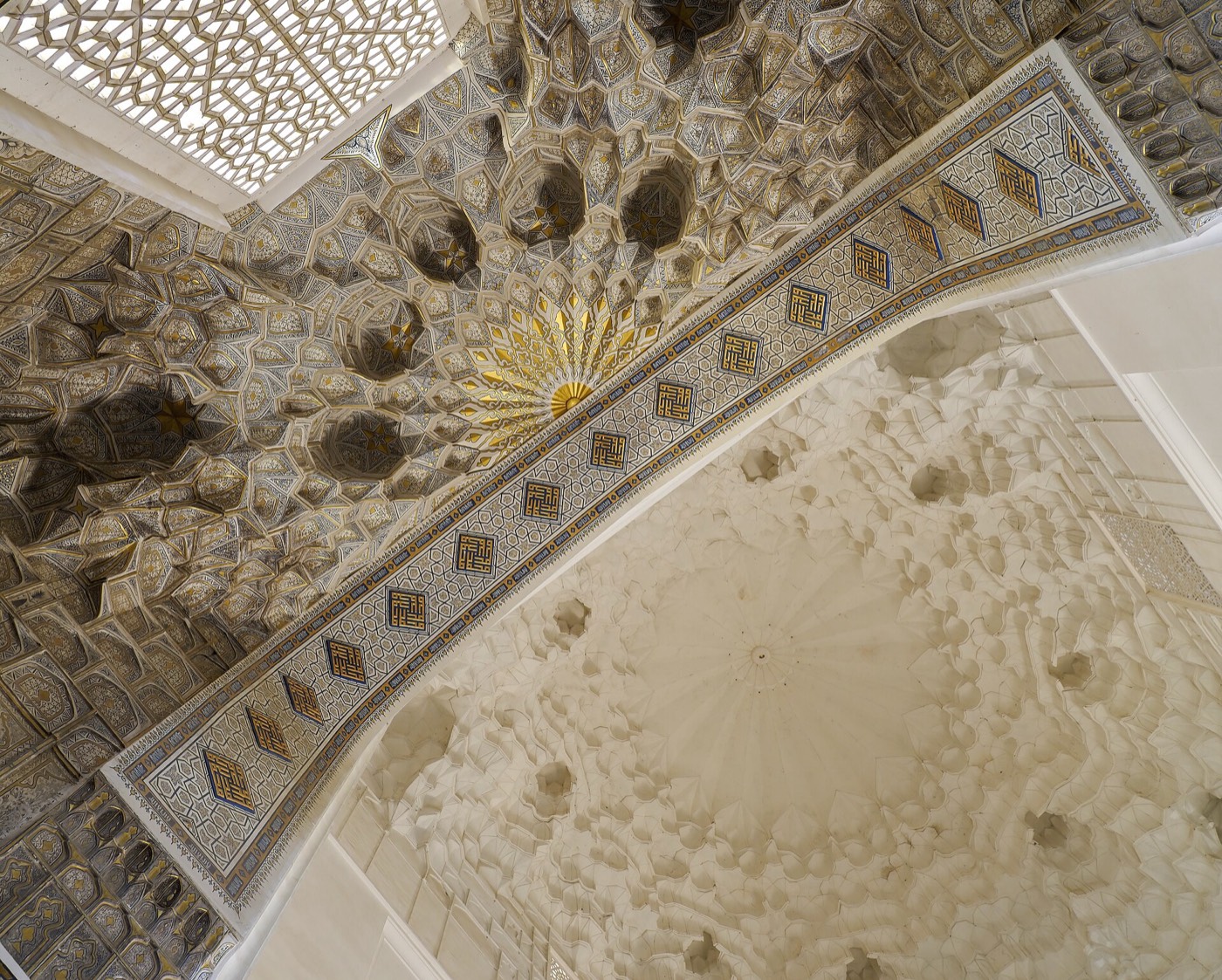
The mausoleum is an octagonal domed building; its dome on a tall drum and its facades with arched portals date from 2005-6, and Leiden calls the new dome ‘pseudo-Timurid’5. In a study of 1950, Sh. E. Ratiia reconstructed the madrasa as a four-iwan building on the scale of the mosque, with the tomb in the middle of its southern side; Zakhidov objected that such a plan would run beyond the city wall, and Paskaleva concludes that the madrasa was much smaller, with the tomb most likely on its long axis4. Mosque and madrasa formed a kosh, two buildings facing each other across a square, a layout known in Samarkand since the 11th century4. During the works for the 2007 anniversary the outer wall of the vanished madrasa was built up above ground in modern brick, marking the presumed position of its corner towers5.
내부
감상 포인트
- The new dome on a high drum, added in 2005-6 over the ruined octagon5.
- The view across the road to the portal of Timur’s congregational mosque, with which the madrasa formed a kosh4.
- The outer wall of the vanished madrasa, built up in modern brick5.
- The square between mosque and mausoleum, refurbished for Samarkand’s 2750th anniversary in 20075.
관람 안내
- The mausoleum stands across the road from the Bibi Khanym Mosque, and ICOMOS treats both as one ensemble2.
- The dome and drum were added and the facades rebuilt in 2005-6; they are not Timurid work5.
공식 정보: State Samarkand Historical-Architectural Reserve, under Uzbekistan’s culture ministry and the Samarkand regional government (as described by UNESCO)길찾기OpenStreetMap에서 열기사마르칸트 가이드 투어