이 부분은 아직 번역되지 않아 영어로 표시됩니다.
역사
Pécs surrendered to Sultan Süleyman's army in July 1543 and stayed Ottoman until 16868. Idris Baba was a dervish in the Ottoman town; the historian Balázs Sudár identifies him as a member of the Bektashi order2,5,6. Two Ottoman writers are the main sources on him2,5. Ibrahim Peçevi, a historian born in Pécs in 1574, wrote that he met the dervish (in 1591, according to TDV) and mentions a high dome over his grave2,4,7,8. Evliya Çelebi, who visited Pécs in 1663, wrote that many miracles were told of him; these are legends, not records2,5,7,8. The date of his death is unknown; TDV places it in the late 16th or early 17th century4,7.
The türbe went up after his death and stood by about 1640, when Peçevi wrote; Sudár dates it around 16004,6. After the Habsburg capture of Pécs in 1686, the Jesuits used the building as a chapel from the 1690s4,6,7,8. From 1793 it was the city's gunpowder store, with its windows and door walled up4,6. István Möller restored it in 1913, and in 1917 students led by Ernő Foerk surveyed it, labelling it only “Turkish tomb in Pécs”4,6. In November 1961 Győző Gerő and Mária Sándor found the dervish's skeleton in a grave cut into the rock below the floor; a restoration designed by Károly Ferenczy then returned the building to its Ottoman form4,6,7,8,9.
건축
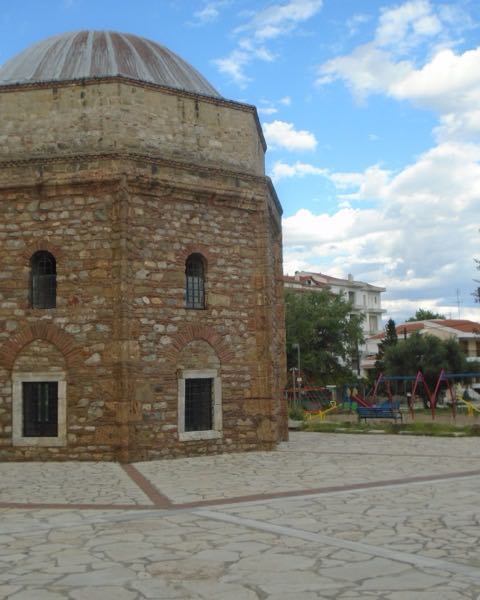
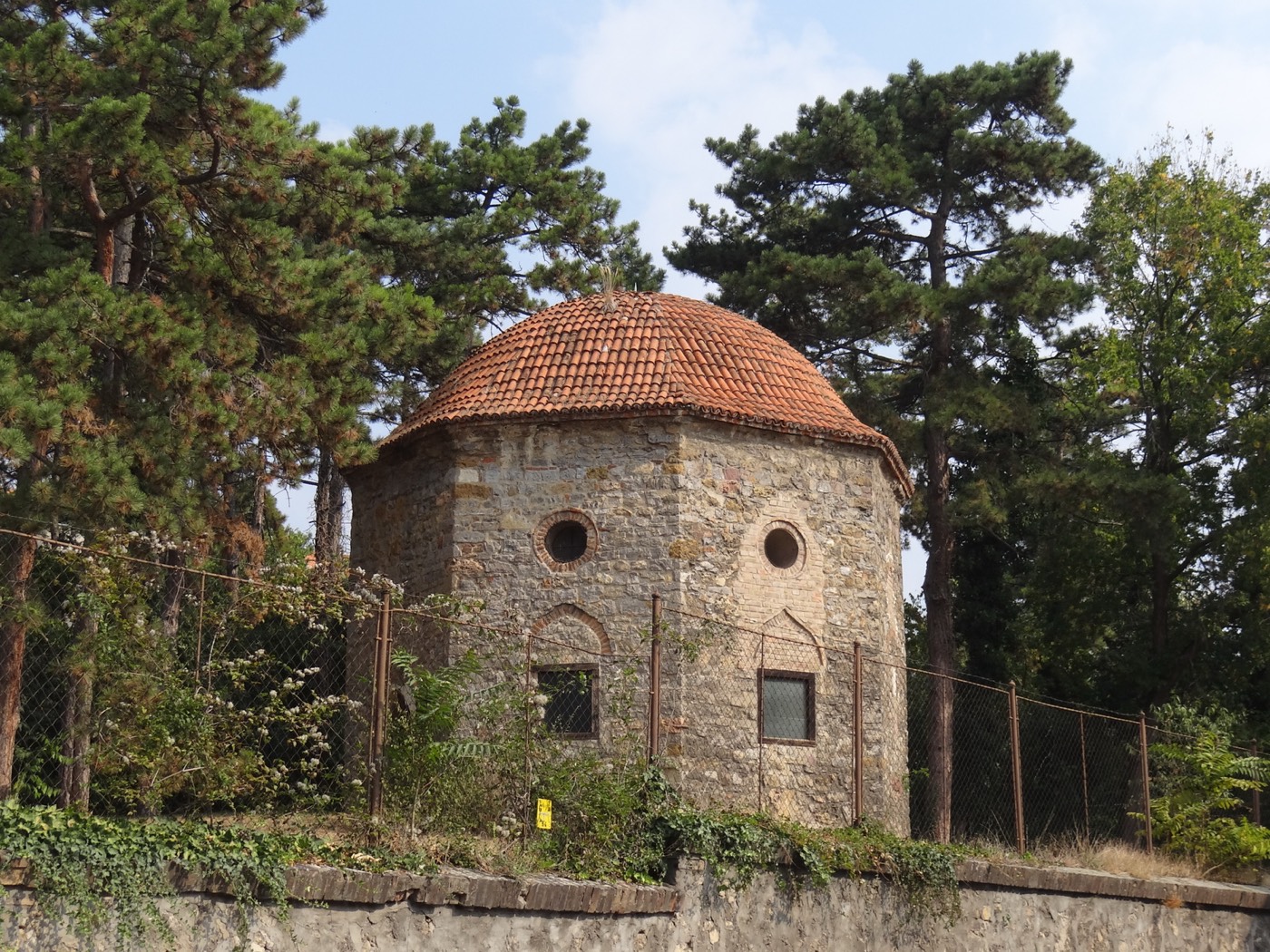
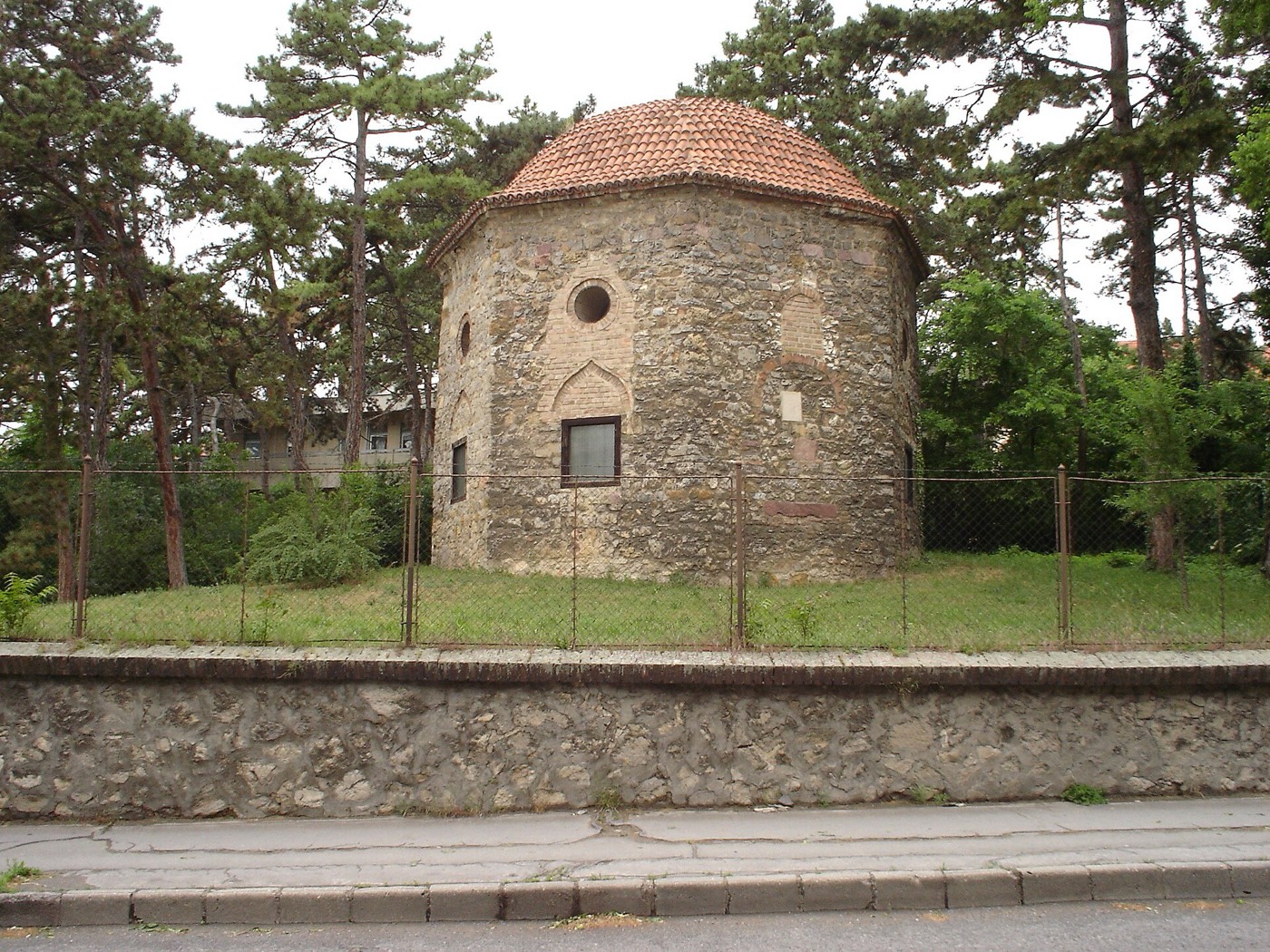
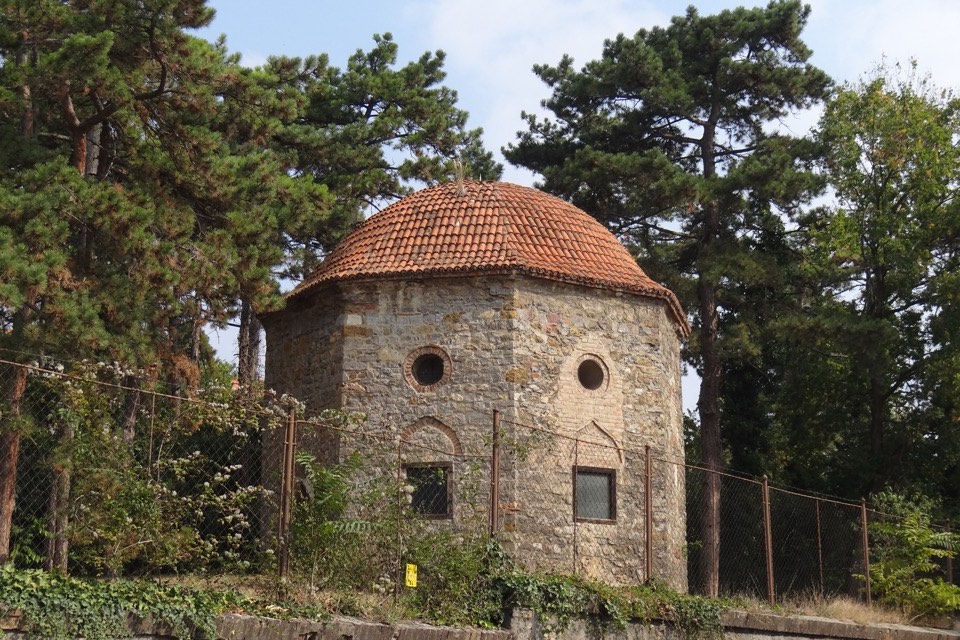
The türbe is an octagon covered by a hemispherical dome, as was usual in Ottoman architecture of the 15th and 16th centuries4. Its walls are rubble stone with some irregular courses of brick, and the dome is built of limestone blocks under red tiles laid in the 1961 restoration; tile fragments from the excavation indicate that it was tiled from the start4. Light enters through two tiers of windows: three small, nearly square windows under recessed ogee arches, and three round windows above them4. Kovács and Rabb found that the interior was set out in arşın, the Ottoman builder's cubit: 8 arşın across, exactly as in the türbe of Gül Baba in Buda, and 10 arşın high5.
The materials set it apart from the türbe of Gül Baba, which has walls of cut limestone and a lead-covered brick dome4,5. Recent surveys link the rubble walls, the two tiers of windows and the tiled dome to türbes in the Balkans, and read the plan as Ottoman standard practice carried out by local masters in local stone4,5,6. Later owners left their marks: the Jesuits set a pointed-arched stone doorframe in Gothic style into the west wall and opened large round-headed windows on the north and south sides, since bricked up4. The Ottoman doorway, with a flat brick arch over wooden lintels, was on the north-west side, opposite the qibla; its outline was marked in brick in the 1960s4,6. The surveyors recommend restoring the finial (alem) on top of the dome, now missing4. In 2020-2021 the Gül Baba Heritage Foundation and NÖF, which manages the state-owned building, carried out conservation work4.
내부
The interior is a single octagonal room, 6.10-6.15 m across at the level of the lower windows and 7.56-7.59 m high under the centre of the dome4,5. Pointed arches across the corners carry the dome4. The walls are bare stone: in Ottoman times they were plastered and whitewashed, and fragments found in 1961 suggest painted inscriptions, but the whitewash planned in 1961 was never applied4. The floor is concrete4. The dervish's grave lies under the floor, cut into the rock; the 1961 excavation found his skeleton there, and TDV notes that he still lies in it4,8. Over the grave, TDV describes a cenotaph within a wooden railing, with furnishings such as candlesticks and prayer rugs7.
감상 포인트
- The red-tiled dome and rubble-stone walls, unlike the cut stone and lead roof of Gül Baba's tomb in Buda4,5.
- Small, nearly square windows under recessed ogee arches, with round windows above them4.
- The pointed-arched stone doorframe in Gothic style that the Jesuits set into the west wall4.
- The outline of the original Ottoman doorway on the north-west side, opposite the qibla4,6.
- Bricked-up round-headed windows on the north and south sides, left from the Jesuit chapel4.
관람 안내
- Visits are guided and must be arranged in advance through the Yakovali Hassan Pasha Mosque1,2,3.
- The mosque is about fifteen to twenty minutes' walk away, and a guide can accompany visitors from there to the türbe2,3.
- The türbe stands on the Rókus hill (Rókusdomb) in north-western Pécs1,6.
공식 정보: NÖF Nemzeti Örökségvédelmi Fejlesztési Nonprofit Kft. (National Heritage Protection Development Nonprofit Ltd), the nonprofit company that manages the state-owned building and arranges visits from the Yakovali Hassan Pasha Mosque; the City of Pécs lists the türbe among the city's sights길찾기OpenStreetMap에서 열기페치 가이드 투어